
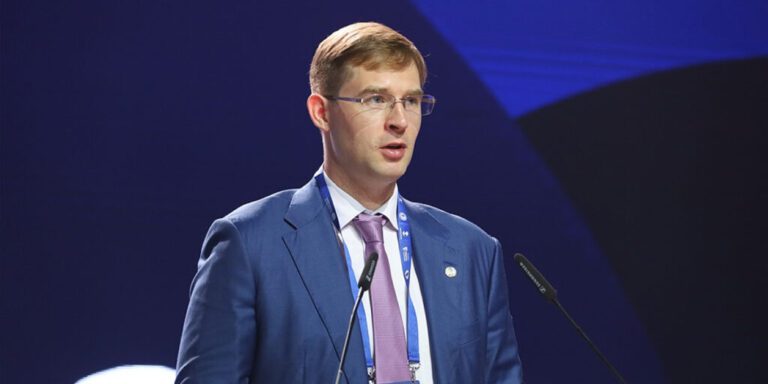
On September 26, national federations will elect a new FIDE president. Three businessmen are running for the presidency: Jan Henric Buettner, Wadim Rosenstein, and Timur Turlov. Their running mates are Malcolm Pein, Gordon Tang, and five-time world champion Viswanathan Anand.
Each candidate has his own vision for how chess should develop. Buettner is betting on commercialization and new formats; Rosenstein is emphasizing his experience organizing major tournaments. Timur Turlov is offering a different vision: FIDE should be seen not only as the global governing body for chess, but also as a platform capable of providing federations, players, and schools with modern services and the tools they need to grow.
Over the past several years, the Kazakhstani entrepreneur has already implemented many of the ideas he is now campaigning on – first in Kazakhstan and later through international school chess. Turlov is looking to build on this progress, setting an ambitious goal for both himself and the federation.
“We need to become an Olympic sport and I think we have a very good chance to become an Olympic sport,” he said. “It’s not fast, but at least I want to come as close as possible to this moment in the next four years,” Turlov told IntelliNews.

A Century-Old Organization
FIDE was founded in Paris in 1924. Since then, it has become the world’s leading international chess organization. Today, it represents more than 200 national federations and is responsible for the rating system, international titles, competition rules, world championships, and Chess Olympiads.
At the same time, FIDE’s role is gradually expanding beyond tournament organization. Chess has long competed with esports, video games, and other forms of digital entertainment for audience attention. Online platforms have turned chess into a mainstream digital product, while the biggest tournaments now attract audiences that organizers could only have dreamed of twenty years ago.
That is why the current election is, to a large extent, about one central question: what should FIDE become over the next decade?
What Turlov Changed in Kazakhstan
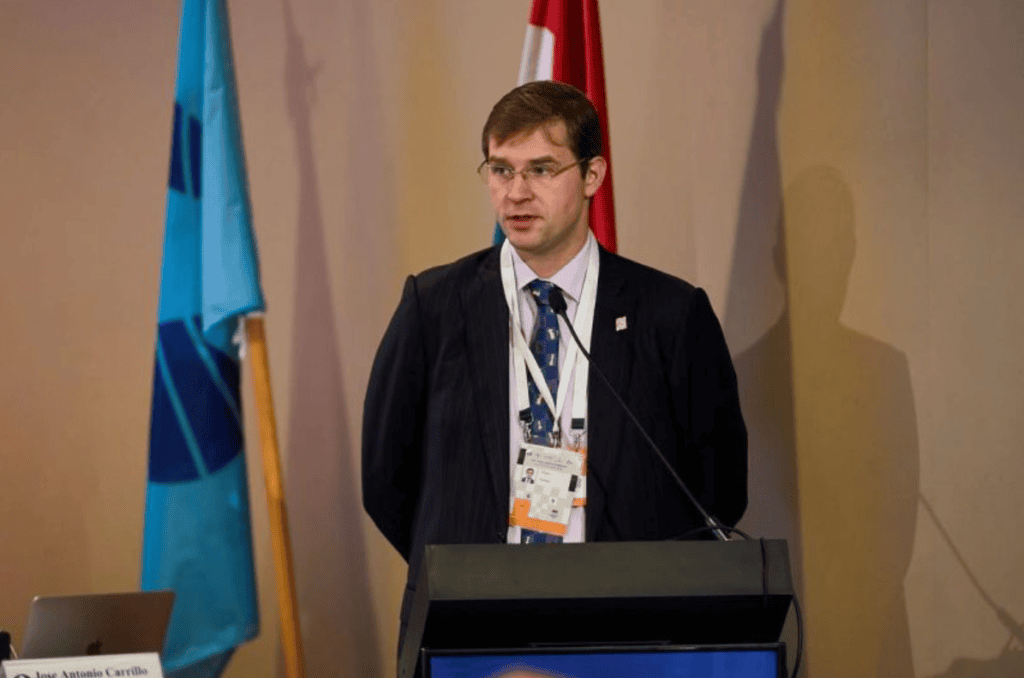
Timur Turlov became president of the Kazakhstan Chess Federation in January 2023. What followed was a rapid expansion of the country’s chess infrastructure. The federation opened regional offices in all 20 regions, increased support for national teams and young players, and began investing more actively in training and participation in international competitions.
Kazakhstan also sharply increased the number of tournaments it hosted. In 2023, 1,538 tournaments were listed in international databases. By 2025, that figure had risen to 3,853.
The largest initiative has been the “Chess in Education” program. Today, it covers more than 1,500 schools and around 60,000 children. Approximately 2,800 teachers have received training, while teacher-training institutions have begun preparing prospective chess instructors.
International results have improved as well. Kazakh chess players won 126 medals at official international competitions in 2023, 160 in 2024, and 162 in 2025. In 2024, the women’s national team won silver at the Chess Olympiad for the first time. Kazybek Nogerbek became the Under-20 World Junior Champion.
Of course, none of this can be attributed to one person alone. The development effort has been supported by the government, the federation, coaches, schools, and private-sector partners. But this is precisely the experience Turlov now points to as the main real-world evidence supporting his campaign.
Betting on Schools
Timur Turlov heads the International School Chess Federation, an organization established in 2024 and affiliated with FIDE. Its purpose is to connect chess federations with schools, universities, teachers, and national education systems.
In 2025, the ISCF and FIDE jointly organized the World Schools Team Championship and an education summit in Washington. The two organizations later declared 2026 the Year of Chess in Education.
The logic behind the initiative is straightforward. Elite tournaments and star players generate audiences, but mass participation does not begin with the World Championship – it begins at school. If a child gains access to chess at the age of seven or eight, they are more likely to remain involved in the game as a player, competitor, parent, coach, organizer, or spectator.
A Single Account for Chess
Today, chess infrastructure is highly fragmented. A player may have a FIDE profile, accounts on several online chess platforms, tournament registrations with different organizers, and separate relationships with a national federation, coaches, schools, and clubs. These systems often have little or no connection with one another.
Timur Turlov proposes creating a unified FIDE digital platform. “I think I can help with digitalization, with building a strong digital platform to be able to regulate this digital growth,” he told IntelliNews.
His proposed model is that a chess player would have a single account containing their rating, results, tournament history, and achievements. The same account could be used to register for competitions, access educational materials, and use other services.
His platform also includes greater use of artificial intelligence, ranging from game analysis and coaching tools to stronger fair-play monitoring.
The second major issue is money. Turlov believes FIDE should help national federations not only by providing grants but also by giving them tools to generate their own revenue through sponsorships, digital services, and commercial products.
This is especially important for smaller federations. Some of the world’s leading chess nations have substantial resources and well-developed infrastructure. Many others operate with far more limited means.
Another key plank of Turlov’s platform, therefore, is giving every federation access to a basic set of technologies, educational products, and commercial tools, regardless of its size or resources.

The Business Case
Timur Turlov, founder and majority shareholder of the international fintech group Freedom Holding Corp. In October 2019, shares of Freedom Holding Corp. began trading on Nasdaq. At the time, the company was valued at around $800 million. Today, its market capitalization is around $9 billion. Freedom evolved from what was primarily a brokerage business into an international fintech group spanning brokerage, banking, insurance, payments, telecommunications, and lifestyle services.
More than 14 million customers use products across its ecosystem. The group operates in 24 countries. Its European business has been growing particularly quickly. The Freedom24 platform serves more than 600,000 clients, with more than $11 billion in client assets. The company is building local teams across Europe and seeking to replicate the ecosystem model it developed in Kazakhstan.
Another major market is Türkiye. This summer, Freedom completed the acquisition of a controlling stake in Turkish Bank, which the group plans to use as a platform for building a digital banking business.
At first glance, the connection between a banking app and an international chess federation may not be obvious. But Turlov is trying to make his entrepreneurial track record a central part of his campaign. His argument is that the same principles he used to build an integrated business across multiple services and markets can also be applied to FIDE.