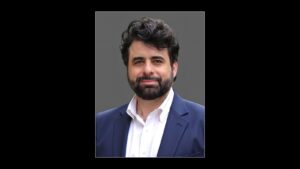
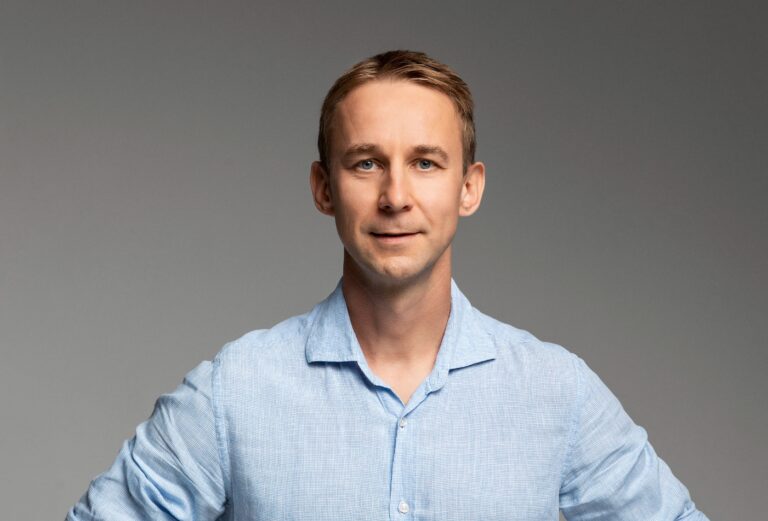
Solo GPs are on the rise. Funds are shrinking, the number of managers is multiplying, and capital looks like it’s decentralizing. At first glance, that reads as fragmentation. Nikolay Kirpichnikov, co-founder of Pre-Seed to Succeed, partner at AltaIR Capital, and GP at SPC, sees a bigger shift underneath: AI automation is quietly rewriting who – or what – actually gets to be a GP. His argument centers on a new category called “Synthetic GP.”
Venture capital is no longer just a people business. It is becoming a systems business, and faster than most in the industry care to admit.
By 2025, 67% of new VC funds were under $25M, up from 49% in 2020. Solo GPs now anchor 27% of early-stage rounds, compared to just 12% in 2021. At first glance, this looks like fragmentation – more managers, smaller funds, a decentralization of capital.
But that interpretation misses the point.
What we are witnessing now is the unbundling of the GP role itself, and the real shift is that much of what defined this role no longer requires a human to do it. The phenomenon that emerges instead, we can describe as the Synthetic GP.
Who is a Synthetic GP
A Synthetic GP is not a person. It is a configuration. It can take different forms: a solo operator running a $10M fund from a laptop, an established $500M firm that has quietly stopped replacing junior hires, or a family office that no longer allocates to venture funds at all.
AI is absorbing the cognitive overhead that used to define the job. The first place this becomes obvious is in sourcing. For decades, sourcing was treated as a human moat driven by networks, intuition, and access. That is no longer true.
Platforms like Harmonic track signals that no analyst team could realistically process at scale: founder departures, domain registrations, hiring patterns, patent filings. Some of the largest firms in the world have gone further and built proprietary versions of the same idea.
EQT Ventures, the venture arm of EQT, a global investment firm with over €200B AUM, developed an in-house AI platform called Motherbrain that monitors over 10 million companies across dozens of datasets. When Motherbrain identified a promising startup, EQT reached out with a line that has since become emblematic: “Motherbrain informed us we had to talk to you.”
No warm introduction or prior relationships. A machine identified the opportunity. The same logic applies to solo operators. Neil Murray, working effectively as a solo GP, wrote the first cheque into more than 50 companies, including Lovable, now a unicorn. One person with the output of a team. The difference was the system behind him. The implication is clear: the firms that see more will win, and seeing more is no longer a human skill.
The same shift is happening inside established firms, but more quietly. At Bessemer Venture Partners, AI cut manual research, document processing, and repetitive analytical tasks by more than 50%. That matters because the analyst function was historically built around exactly those tasks – roughly 90% data processing, 10% judgment. AI is inverting that ratio.
The efficiency of Synthetic GPs
Analyst hiring slows down, salaries decline. The traditional entry point into venture begins to contract, and firms are not just becoming more productive. They are becoming smaller by design, because the work that justified larger teams is disappearing.
But the most disruptive shift is on the LP side. Family offices now represent approximately 31% of startup funding, with more than half already using AI in their investment processes. The majority of their deals are executed through co-investments or club structures, bypassing the traditional fund model.
At the same time, they are hiring former venture partners, building internal investment teams, and replicating the sourcing and diligence capabilities they previously outsourced to GPs.
LPs that can source deals, run diligence, and allocate directly no longer need a GP as a gatekeeper. For the GPs who fail to adapt, the intermediary role doesn’t get disrupted – it simply disappears.
Taken together, these dynamics define the Synthetic GP, which is not in smaller teams or better tools. It’s a fundamentally different operating model from what we are used to. AI handles sourcing, screening, first-pass diligence, and portfolio monitoring. What remains human is narrower but more important: building trust, exercising judgment, and maintaining the relationships that no algorithm can replicate.
The implication for GPs is clear: treat AI as a productivity layer, and you become faster within the existing model. Those who rebuild their operating models around it will start operating in a different category entirely.
It’s not correct to define the Synthetic GP by team size, but it is defined by what the team no longer needs to do. The firms that understand this early will not just outperform. They will make the old model increasingly irrelevant.