
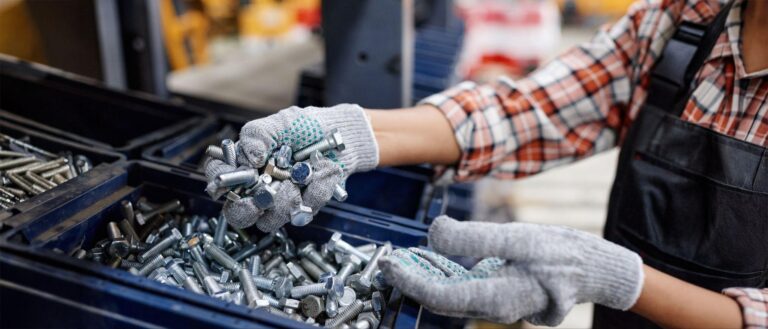
Purchase orders, bin counts and rush shipments put fastener costs on payroll, which unit-price comparisons exclude.
Hourly compensation in U.S. manufacturing was 4.5% higher in the second quarter of 2026 than a year earlier, according to revised figures from the U.S. Bureau of Labor Statistics. Plants pay that rate for the time staff spend counting, ordering, picking and expediting fasteners, time that doesn’t show up on a supplier quote.
A quote lists a price per piece and a lead time. Purchasing departments sort inventory with ABC classification and put fasteners in the C class. These parts carry low unit values and high part counts, and their handling cost has little to do with their price. Plants pay for that handling through payroll, not the hardware budget. A unit-price comparison captures the savings on the part and misses the labor.
Those hours start in the stockroom. At a multi-shift plant, workers check bins against what the line used and reorder the difference across hundreds of part numbers, most worth a few cents apiece. The work comes in short stretches spread across the stockroom and line supervision.
The hours are also growing. BLS found that manufacturing hours worked rose 2.9% at an annual rate in the second quarter as output increased 5.4%, the largest quarterly increase since 2021. Unit labor costs in the sector were 3.4% higher than a year earlier.
Every restock carries a purchase order. Processing one costs organizations anywhere from $14 to more than $54, according to April 2026 data from APQC, a nonprofit benchmarking organization. APQC also said the spread adds up to millions of dollars a year for organizations issuing tens or hundreds of thousands of orders. A plant issues far fewer orders, but each one takes the same work regardless of size. Staff receive a $30 order of washers and match it to an invoice just as they would $3,000 of specialty bolts. For a plant buying 40 fastener lines from several suppliers, a restock of a few boxes of screws can cost more to process than to buy.
Fewer suppliers mean fewer orders. Fasteners Direct, an inventory solutions and production support partner that runs kitting and managed inventory programs for manufacturers, puts fasteners, fittings, electrical supplies and cutting tools on one account.
On the line, workers pull each fastener for a build from its own bin, and every pull risks a wrong length or a miscount. Kitting combines them in one pre-counted package for a fee. Fasteners Direct builds its kits to a customer’s bill of materials and labels them with the customer’s part number.
“A kit is worth what it takes out of production, and that differs by operation, so we look at how a plant consumes and stores hardware before we recommend where kitting fits,” said Gary Parr, CEO of Fasteners Direct.
A shortage forces a rush order at a freight premium, and sometimes a substitute part that needs approval first. Overstock costs labor too. Staff store parts the line isn’t using then count and reconcile them at inventory time. Setting minimum and maximum stock levels from actual consumption addresses both problems. Under a vendor-managed arrangement, the supplier takes over monitoring and replenishment. Fasteners Direct says its program, Sure Stock, is designed to improve fastener supply, reduce costs and keep high-quality products consistently on hand. Some suppliers go further and station an employee in the plant to do the work.
Parr added, “When a supplier puts a person in your building for free, somebody is paying for that person. At the end of the day, it is you.”
Plants can measure this before they change suppliers. A year of fastener purchase orders, rush shipments and stockroom hours gives a buyer a working figure for what the hardware costs to handle, and a number to weigh against the fee for kitting or managed inventory.