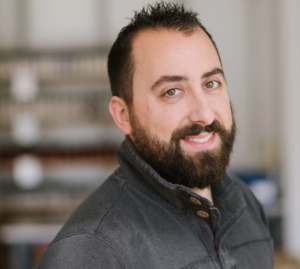
Mars Zhang has spent the better part of two years building a robotic arm in his bedroom. He did not start with a research grant, a university lab, or a team of engineers. He started with two broken arms, a question he could not stop thinking about, and the willingness to teach himself whatever the next version required. The result is Orion, a gesture-controlled assistive robotic arm now in its third iteration, developed with the guidance of a faculty mentor and competing at the international level, built at a fraction of the cost of anything currently on the market.
The origin is specific. The first fracture happened when Mars reached out instinctively to slow himself on a slope and failed. The second, more serious injury occurred when he lost his balance on a bicycle and fell, suffering a both-bone forearm fracture that left his ulna and radius broken simultaneously, his forearm bent at a ninety-degree angle. Both injuries required surgery and roughly six months of recovery each, during which nails in his bone kept his right elbow fixed in place. Everyday tasks that rely on a dominant hand, such as getting dressed, writing, and holding objects, became difficult or impossible. It was during that second recovery that Mars began thinking seriously about whether something could be built to assist patients in that situation, something more functional than a brace and more affordable than what the market offered.
The Gap in the Market
When Mars looked at existing assistive technology options, the landscape was clear. Passive recovery aids in China ranged from 100 to 20,000 RMB but were designed to support healing, not to perform functions in place of a hand. Electronic robotic arms and exoskeletons started at 10,000 RMB, with more advanced medical robots running from 20,000 to 100,000 RMB. For many families, those figures are out of reach. Mars set out to build something functional that cost a fraction of those prices, using materials sourced entirely online.
Three Versions, Three Lessons
The development of Orion has moved through three distinct stages, each one informed by what the previous version failed to do. V1 was constructed from metal and controlled via hand gesture recognition through a camera connected to a computer. The concept was functional in principle but struggled in practice: the gesture recognition was not accurate enough for consistent object handling, and the arm could not grip reliably. Rather than refine the same approach, Mars reconsidered the control system entirely.
V2, developed with input from his faculty mentor, is the most technically sophisticated version to date. It is constructed entirely from 3D-printed components, has six degrees of freedom, and is controlled through a computer or touchscreen using a 3D simulation environment that allows precise positioning before the arm executes a movement. A locking mechanism holds the arm in position when powered off, reducing electricity consumption without sacrificing stability. The grip mechanism is calibrated to handle both a heavy bottle and a fragile egg without breaking either. The remaining limitation is that V2 is fixed to a wooden base and cannot move independently.
V3 addresses this with a small mobile vehicle base and a reduced jaw, making the arm portable for the first time. The current prototype costs approximately 3,000 RMB in materials.
Affordability as a Design Principle
The cost target for Orion is not an afterthought. From the beginning, Mars made deliberate material and software choices to keep the device within reach of families who cannot afford existing alternatives. Every component is 3D-printed from plastic and sourced from standard suppliers available online. The software relies on open-source tools rather than proprietary systems. These were engineering decisions, but they were also ethical ones, reflecting a clear position on who the device is actually meant to serve.
That same orientation shapes his research collaboration with a professor at NYU, where Mars is examining the impact of deepfake technology on media credibility and the communication ethics challenges it creates. The research focuses on how AI-generated content erodes trust in information systems and what mechanisms might address that erosion. The work sits at a different point on the technology spectrum from Orion, but it comes from the same concern: what happens when the consequences of a technology for the people most affected by it are not adequately considered during its development.
Competition and External Validation
The Conrad Challenge provided the most rigorous external test of Orion. Mars and his team assembled the arm, prepared a formal presentation, and demonstrated its functionality live in front of judges, practicing the demonstration repeatedly beforehand. The team received a Gold Medal, with judges recognizing the project’s potential as a commercially viable product rather than a purely academic exercise. At the IDUSA International Invention Exhibition in Pittsburgh, the project received a Youth Gold Medal from a separate international judging panel. A third recognition came from the iENA International Invention Exhibition in Nuremberg, where the project received the First Prize of China.
What the Project Still Needs
Mars is candid about where Orion stands. The V2 prototype still has exposed wiring and requires configuration across multiple programs before use. Real-world testing with disabled individuals has not yet taken place, and a standardized production model does not exist. Outreach to rehabilitation centers has so far gone unanswered. The next phase of the project requires moving out of the prototyping stage and into structured user testing, which will determine what the design needs to change before it can be practically deployed.
The longer-term goal is a standardized model that can be produced at a cost that meaningfully undercuts what the current market charges. Mars intends to pursue a career at the intersection of engineering and social science, working on technology designed with its human consequences considered from the outset. Orion and the NYU research are not separate tracks. They are the same question approached from two directions: what does responsible technology development actually look like, and who does it need to account for in order to be worth building.
He does not have a finished answer yet. But he has a working prototype, a research collaboration in progress, three international competition results, and a clearer picture of the problem than he had when he started. For a project that began with a question asked during a recovery he did not choose, that is a reasonable foundation to build from.