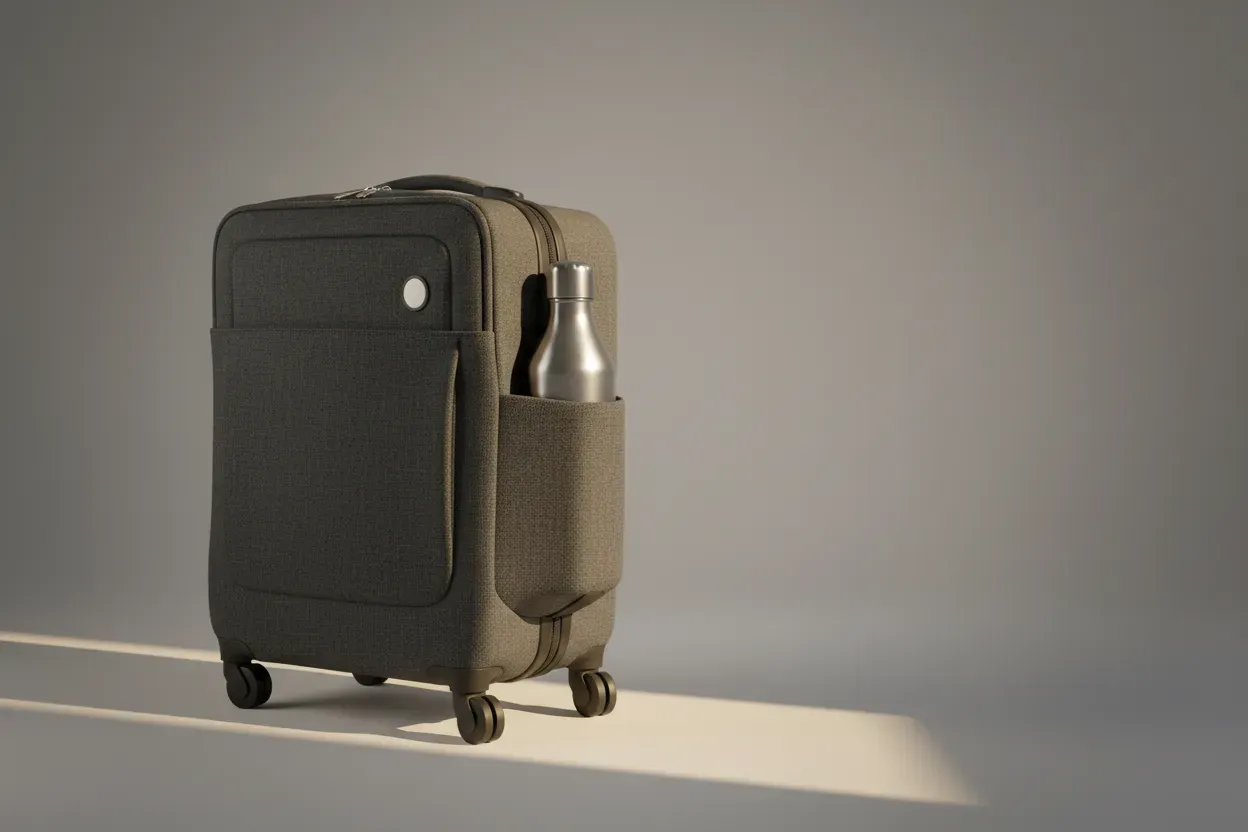
Travel doesn’t have to come at the expense of the planet. This guide compiles practical advice from sustainability experts and seasoned travelers who have found ways to reduce their environmental footprint without sacrificing meaningful experiences. These 25 strategies prove that small, intentional shifts in how we move through the world can create lasting positive change.
- Carry a Refillable Canteen on Safari
- Ditch Disposable Bottles with Purifier Pods
- Live the Place, Build Relationships
- Support Neighborhood Businesses and Culture
- Track Full Costs and Reduce Waste
- Book Close to What You Need
- Stay Longer and Go Deeper
- Choose Reef-Safe Views from Boats
- Cut Idle Time with a Simple Rule
- Sail Clean and Optimize Hardware
- Favor Protected Waterways over Hotspots
- Adopt Electric Outboards for Quiet Runs
- Refill Reusables Instead of Minis
- Swap Short Flights for EV Drives
- Make Fewer, More Purposeful Trips
- Pick Plant-Based Meals on Journeys
- Let Constraints and AI Guide Choices
- Prefer Digital Memories over Trinkets
- Adapt to Local Limits with Respect
- Release Control and Trust the Road
- Shift Dates to Shoulder Season
- Ride Scooters or Bikes Abroad
- Blend Work with Longer Stays
- Pack Light with Versatile Essentials
- Consider Coaches over Planes
Carry a Refillable Canteen on Safari
One small change I made to my travel habits is switching to a reusable water bottle on every safari. I carry a solid one and refill it at our eco lodges or camps instead of using single-use plastic bottles.
In places like the Serengeti and Ngorongoro, where water is scarce and waste is hard to manage, this simple swap stops plastic from harming wildlife and the environment. On a recent client trip through Tarangire, our whole group made the switch, and we avoided hundreds of bottles. It felt great knowing we left those beautiful parks a little cleaner.
My advice is to start easy. Pack a good reusable bottle with a filter or check with your operator about refill options. Pick lodges that focus on sustainability, like those running on solar power or recycling waste. These small steps add up quickly. They protect Tanzania’s wildlife, from the Great Migration herds to the rhinos in the Crater, and they make your trip more meaningful. It costs nothing extra and keeps the wild places special for everyone who comes after you.

Ditch Disposable Bottles with Purifier Pods
Two years ago I tried an experiment. For 1 month, I challenged myself to not use any single-use plastic beverage bottles. I got out my favorite reusable water bottles, filled them with water from my home filter system and made sure I had one with me every time I left the house.
I happened to be traveling to Peru at the end of that month and realized I needed to find a source for purified water after clearing TSA and while flying. During my search for solutions, I found an inexpensive water purification pod called “Go Pure Pod.” The water quality report for this pod was impressive. It not only filtered out almost all VOC’s, pharma waste, and chlorine, but it cleared out nearly all fluoride. There were no moving parts and no instructions other than to drop the pod into your bottle and refill with water as needed. The tiny pod could filter up to 261 gallons before it needed to be replaced. This was a gamechanger for me.
I ended up using the pod for the entire trip to Peru. The manufacturer recommended that for municipal water systems in foreign countries, you should let the pod sit longer than for domestic sources. I let it sit overnight and by bringing a second water bottle I could filter drinking water day and night. I could also use the water to wash fruit or share with companions.
After that 1-month trial, I decided to extend the experiment through the end of the year. At the end of 2024, I decided to do it in 2025. I traveled to Europe, Peru, and even the Galapagos Islands. Not once did I use a disposable plastic water bottle.
I’m not suggesting that everyone should do what I did. But I think there are ways to significantly reduce the number of single-use bottles/containers from beverages as well as on-the-go meals. Especially while in transit. When I look around airports now, I see the massive waste generated by people on the go.
If each of us adopted one small change to our consumption habits, just imagine how that would reduce overall waste. By making one small change in buying habits, with minimum effort, individuals can have a lasting affect on our earthly environment and actually shift the trajectory of how corporations package and sell products.
I’m into my 3rd year of “no single-use plastic bottles,” and heading to Peru again in March where I’ll be handing out pods to my travel companions who want to give it a try!
Live the Place, Build Relationships
My name is Olena Polotniana. I’m a communications specialist at VisitKyiv.com — an independent guide created by locals who love the city, and I live between my hometown Kyiv and my current base in Lisbon.
One small change I made to my travel habits was to shift from “consuming places” to integrating into them. Sustainable development is not just about your carbon footprint. It’s also about your emotional and social footprint and how you leave people and places behind.
After the full-scale invasion began, I met many foreigners who came to Ukraine, some for work, some for volunteering, and some just to understand. I was struck by the fact that the most meaningful experiences were not related to visiting landmarks. The deepest connections were made by those who decided to live the Ukrainian life while they were here. They were present. They attended local gatherings, supported small businesses, showed up after difficult nights of air strikes to help clean up, made donations at the local level, and listened more than they spoke. They became part of the community, even if only temporarily.
For me, sustainable tourism is not about taking photos at the highest-rated place on Google Maps. It’s sitting at the same table with people you care about, sharing borscht, having real conversations, understanding the context, and contributing even in a small way to the place that welcomes you.
My advice is simple: travel slower and travel by building relationships. Spend your money locally. Learn a few words in the local language. Approach people with curiosity and openness.

Support Neighborhood Businesses and Culture
The easiest and without a doubt best change you can make to make your trips more sustainable and enjoyable is to engage with the local businesses in the destination you’re visiting.
Eat the local food. It will most likely be a lot cheaper and tastier than going to any global chain. You can surely survive a few days without a Big Mac or a Tall Latte.
Avoid mass-produced souvenirs. Sadly, this can be trickier to spot sometimes. In many touristy places, there are local markets, and if you can’t find them just ask in your hotel or accommodation and they may be able to suggest where to go. You will be supporting the local economy and getting something original to remember or to gift when you return home.
Make your trips all about experiencing new things, new flavours, new connections. Let yourself be surprised by the wonders that exist out of your comfort zone. This will be sustainable, easier on your wallet, and a lot more memorable.

Track Full Costs and Reduce Waste
I travel often with my husband and two kids. We’ve been to Europe, Costa Rica, Mexico, a couple Disney Cruises, and many trips around Canada and the US. Before I married, I was a single parent to my oldest child, and I did many trips with just her and I. Needless to say, finding a way to make travel sustainable has been a necessity in order to keep doing it.
I always figure out what the last trip cost us, after all the add-on, unexpected and spontaneous costs are added (including airport snacks, souvenirs, taxi rides, and entertainment). A trip that costs $5k upfront can almost double in price once you add on all those extras, especially if you’re a family travelling. I use the total cost as a budget of what the next trip, and any other future trips will cost. From keeping track of spending, we know exactly how much ‘over’ our budget we tend to go, and that makes it easier to budget or decide on upcoming trips.
Did you mean sustainable in terms of the environment? If so, that’s something I’m very passionate about. One habit I’ve done to make my trips sustainable for the planet is avoid any single use plastics. We carry reusable water bottles from home. We also avoid buying souvenirs that we don’t really need or want. A big threat to the environment is overconsumption, especially when it comes to textiles (clothing), so I avoid buying clothes that I don’t need; at home and abroad. As a vegetarian, I never eat meat and I avoid dairy. I can’t say the same for my family, but overall, because of my plant-based tendencies, we eat fewer animal products than what most people would consider typical, which I know has a positive impact on the planet.

Book Close to What You Need
One small change I made that had an outsized impact was shifting from “convenience booking” to “proximity booking.” Instead of choosing hotels or short-term rentals based purely on price or aesthetics, I now prioritize staying within walking distance of the places I plan to visit. It sounds minor, but reducing daily rideshares and car rentals significantly cuts emissions, and it also changes how you experience a destination.
When I first made the switch, I realized I wasn’t just lowering my transportation footprint; I was engaging more deeply with the local environment. Walking to meetings, restaurants, or attractions naturally led me to discover neighborhood cafes, small retailers, and community spaces I would’ve otherwise passed by in a car. Sustainable travel isn’t just about carbon math; it’s about being more intentional with your presence and spending.
For others looking to travel more sustainably, I recommend starting with one habit that fits seamlessly into your existing behavior. You don’t have to overhaul everything. Maybe it’s packing a reusable water bottle, choosing direct flights when possible, or supporting locally owned accommodations. Small decisions compound quickly over multiple trips.
The key is reframing sustainability from sacrifice to strategy. When you design your travel around efficiency, location, lighter packing, and slower pacing, you often spend less, stress less, and connect more. Sustainability becomes less about restriction and more about smarter choices that benefit both the traveler and the destination.

Stay Longer and Go Deeper
My name is Johan Siggesson. I am a fine art wildlife photographer from Sweden but based in Malta. On my website, www.johansiggesson.com, I share images that come from my time spent in the field, often in Africa. I photograph wild animals in a way that feels respectful and real, showing them as they are in their own environment.
Over the years I have changed the way I travel. I used to move around a lot, trying to see and photograph as much as possible in one trip. It felt productive at the time. Now I do the opposite. I plan fewer journeys and stay longer in each place. That choice means fewer flights, but it also means I can slow down and concentrate more on what is happening around me.
When you stay in one area for an extended period, your connection to it changes. You begin to recognise individual animals. You start to understand patterns in the light, the weather, and the behaviour of the wildlife. You also get to know the guides and the people who live and work there. By returning to the same lodges and supporting the same local teams, you contribute in a more steady and meaningful way.
From a photographic point of view, this slower approach has made a real difference to my work. I am not chasing moments. I am waiting for them. The images that come from that patience tend to feel more real and sincere.
If I were to offer one piece of advice, it would be this: go deeper rather than farther.

Choose Reef-Safe Views from Boats
Managing eco-tourism at Robbie’s Marina in the Florida Keys, I specialize in creating low-impact experiences that educate visitors on fragile coral ecosystems like Cheeca Rocks.
I have shifted my travel habit to “passive observation,” choosing glass-bottom tours over snorkeling to eliminate the risk of physical reef damage or chemical sunscreen runoff. By using a Seakeeper-stabilized vessel like the Transparensea, I can view nurse sharks and turtles in a way that respects their habitat without entering the water.
My advice is to specifically book tours using modern, smoke-free engines and open-air boat designs, which reduce both noise pollution and the carbon footprint of your excursion. Choosing newer vessels built with these standards, such as those from 2023, ensures that sensitive marine wildlife remains undisturbed by old engine emissions.
Cut Idle Time with a Simple Rule
I run a solar + home energy company and I’m in and out of job sites all over East Tennessee, so I watch my miles closely the same way I watch a system’s kWh. The smallest travel change with the biggest payoff for me was switching to “no-idle by default” (engine off if I’m stopped more than ~30 seconds).
On a typical week I’ll have 10-15 quick stops (site checks, supply runs, customer walkthroughs). Cutting idling by ~10 minutes per stop is 100-150 minutes/week; at roughly 0.2-0.5 gallons/hour of idle burn, that’s about 0.3-1.25 gallons saved weekly and less wear on the vehicle.
Advice: treat idling like a leak–measure it once, then fix it. Set a simple rule (“stop >30 seconds = off”), use remote start only when safety/weather requires it, and track fuel spend for two weeks before/after so you actually see the delta.

Sail Clean and Optimize Hardware
I manage yacht sales and market strategy at Norton Yachts, where I help clients transition into vessels that balance luxury with modern efficiency. My work with brands like Jeanneau and Saffier gives me a front-row seat to the evolving technology of the luxury marine landscape and the shifting needs of high-end collectors.
I’ve moved away from traditional diesel-auxiliary cruising for regional trips in favor of electric-powered daysailing on models like the Saffier SE 24 Lite. By utilizing its Aquamot 2.2 kW electric POD system and a 4.1 kWh lithium battery, I can navigate the Chesapeake Bay with zero emissions and total silence during harbor transitions.
To do the same, invest in high-efficiency hardware like Elvstrom Premium Laminated sails, which maintain a better aerodynamic shape in light air. This allows you to stay under sail power much longer and avoids the need to fire up the engine when the wind speed drops slightly.

Favor Protected Waterways over Hotspots
Running daily charters through Fort Lauderdale’s 150+ miles of sensitive waterways and Bahamas cays has made me attuned to marine ecosystems like mangroves and coral reefs.
One small change: I now route at least every other trip to Whiskey Creek’s mangrove canal instead of crowded sandbars, avoiding propeller damage in shallow zones.
This 2-mile stretch in John U. Lloyd State Park showcases mangroves vital to Florida’s ecology, turning outings into low-impact nature immersion without the erosion risks.
My advice: Identify a nearby protected inlet via state park maps and alternate it with hotspot visits—guests rave about the seclusion and wildlife sightings.
Adopt Electric Outboards for Quiet Runs
As founder of Flux Marine, electrifying high-performance boating with zero-emission outboards, I’ve swapped gas chase boats for our electric systems on all demo and test trips.
This cuts fuel burn entirely—our 180 kW prototypes deliver 250 HP equivalence for 40+ nautical mile range on a single charge, powering waterski demos without fumes or refueling stops.
Others can start by demoing electric outboards from partners like Flux for weekend cruises, tracking 90% emission drops versus gas via simple apps. Scale up as infrastructure grows.

Refill Reusables Instead of Minis
I used to buy travel-sized toiletries before every trip. I would simply buy the travel-sized options of the products I use. Now, what I do instead of that is take reusable travel-sized bottles and fill them up with the products I already have. That way, I don’t have to buy any new products before each trip. I simply bring along what I already have in bottles I can reuse over and over again. This cuts down waste and is actually a lot easier too.

Swap Short Flights for EV Drives
As a third-generation leader at Benzel-Busch, Mercedes-Benz Dealer Board Chair, and EV advocate from my Car Dealership Guy Podcast talks, I’ve shifted my business travel by driving electric Mercedes EQ models instead of short-haul flights.
For last year’s Presidio U.S. Auto Retail Conference, I took the EQS SUV from New Jersey—cutting my carbon footprint by about 80% versus flying, per Mercedes’ lifecycle data, while enjoying 350+ miles of range.
My advice: Test-drive a luxury EV like the EQE for your next regional trip; pair it with Mercedes’ me Charge network for seamless public charging to make the switch effortless and cost-effective.

Make Fewer, More Purposeful Trips
The single biggest change I made to my travel habits was switching almost entirely to virtual-first client meetings and reserving in-person travel only for engagements that genuinely require physical presence. Running Software House, I used to fly internationally multiple times a month for meetings that could have been a video call. When the pandemic forced us remote, I realized that roughly 70 percent of my business travel was habit rather than necessity.
Now I batch my essential trips. Instead of flying to three different cities in three separate weeks, I plan a single multi-stop route that covers all meetings in one journey. This alone cut my annual flights by more than half. When I do travel, I choose direct flights whenever possible since layovers double the carbon footprint for marginal cost savings. I also started prioritizing hotels with genuine sustainability certifications rather than ones that just hang a green towel card and call it eco-friendly.
My advice for others looking to do the same is to start by auditing your last twelve months of travel. Ask yourself honestly which trips created real value that a Zoom call could not have delivered. You will likely find that a significant percentage were unnecessary. The goal is not to stop traveling entirely but to make every trip intentional. When you travel less but travel with purpose, you reduce your environmental impact while actually getting more out of each journey because you are fully present rather than exhausted from constant transit.

Pick Plant-Based Meals on Journeys
I’ve started taking plant-based meals on my adventures to mitigate the environmental impact of beef and dairy. On a recent weeklong vacation, our family dined in Mediterranean and Latin restaurants that served beans, rice, and grilled vegetables. The effect was that we felt lighter and more vibrant during the trip. It also transformed our dining-out experience – rather than defaulting to meat, we would ask servers about local produce and traditional plant-based dishes, which led us to unique family-owned restaurants and farmers’ markets. I would advise anyone to have a clear rule around travelling and plant-based eating, and plan ahead (especially in airports which can be expensive for meals). I also keep a list of easy-to-find meals on my phone to make choosing easier.

Let Constraints and AI Guide Choices
One small change I made is using AI as my first step for every trip so I stop making wasteful “just in case” choices, like last-minute taxi rides, unnecessary room changes, or buying extra stuff when I arrive. It started in Osaka during peak season when I used a postcode and walking radius to find a sleep booth option near where I needed to be, which meant less transit and fewer plan B purchases. Now I plan around walkable zones and public transport, book fewer moves between stays, and carry a small reusable kit, bottle, tote, and cutlery, so I am not defaulting to single-use. My advice is to tighten your constraints first, then use AI to find options that fit, because sustainability comes from fewer detours and less overbuying.

Prefer Digital Memories over Trinkets
For me, the small change that made my travel more sustainable is what I call the “Digital Souvenir Shift.” I stopped buying physical souvenirs and started collecting digital memories instead. It began as a way to avoid clutter at home, but it quickly became a more thoughtful way to remember my trips.
Instead of keychains, T-shirts, or novelty items that often end up in a drawer, I document moments. I take intentional photos, record short voice notes about how a place felt, and sometimes write a quick reflection at the end of the day. I’ll save menus, street signs, or museum placards as images rather than physical copies. The memory becomes the keepsake.
This small adjustment reduced the demand for mass-produced trinkets and the packaging that comes with them. My suitcase is lighter, and I’m not contributing to the cycle of buying something simply to prove I was there. When I do spend money, it’s more likely on a local meal, a workshop, or an experience that supports people directly.
What I’ve come to appreciate is that digital souvenirs often hold more meaning than objects ever did. A photo paired with a personal note brings me right back to the sounds and emotions of a place. I’m not holding a thing; I’m holding a story, and that feels far more lasting.

Adapt to Local Limits with Respect
One of the most impactful changes I’ve made is to never assume that things work the same way abroad as they do at home. So before travelling, I start by researching local infrastructure and adapting to it.
For instance, we often take our waste management systems for granted. In many destinations, like Bali, the local systems simply cannot cope with the sheer volume of tourist-generated disposable plastic. My advice is simple: ditch the takeaway coffee cup. While chains like Starbucks or Tim Hortons are everywhere, I make it a rule to sit down and enjoy my coffee from a real mug. Not only does it taste better, but it prevents unnecessary waste from entering fragile ecosystems.
The same applies to water conservation. In regions facing water scarcity—such as Morocco, Egypt, or parts of the Mediterranean—tourism is a vital source of income, but it shouldn’t come at the expense of the local population’s basic needs. I’ve learned to be mindful of my water usage, showering only as much as necessary rather than sticking to my ‘home routine.’
Do as the locals do. By observing and respecting local constraints, you don’t just protect the environment; you gain a far more authentic and rewarding travel experience.

Release Control and Trust the Road
How Letting Go of Control Made Travel Easier
One small but meaningful change I made to my travel habits was letting go of the need to control every detail. I used to be a very strict planner. I wanted to control everything—from what time I left, what I ate, where I went, who I saw, and even when I went to sleep. At the time, I thought that level of planning made travel easier and more efficient. In reality, it made it exhausting. The more I traveled, the more I realized that travel rarely goes exactly as planned. Flights get delayed, reservations change, and unexpected things happen. Early on in my work as a stress management coach, I read something that stayed with me: when you change how you look at a situation, the situation itself begins to change. That idea completely shifted how I approached travel.
From that point on, I started practicing flexibility. I also began intentionally looking for a silver lining in each situation. If a flight was delayed, instead of immediately getting frustrated, I reminded myself that there might be a reason—and that I would arrive when I was meant to. The same applied to hotel mix-ups or changes. Instead of reacting with stress or irritation, I stayed calm and worked with what was in front of me. More often than not, things resolved better than expected—sometimes I even ended up with a better room or a more comfortable experience.
What really changed was my internal experience. I felt less rushed, less reactive, and more present. By trusting myself to handle whatever came up, travel became far more sustainable—mentally and emotionally. My advice to others is to loosen the grip on perfection. When we manage our stress instead of fighting reality, we build self-trust, enjoy the journey more, and create space for travel—whether for work or pleasure—to feel supportive rather than draining.

Shift Dates to Shoulder Season
One small change I have made is planning trips in the shoulder season, just before or after the peak travel rush. On a family trip to Italy, we went in September instead of July, and it was noticeably less crowded while the weather was still great. For anyone looking to travel more sustainably, consider shifting your dates a few weeks earlier or later so you can avoid the busiest periods. When destinations are less packed, the experience tends to be calmer and you spend less time in lines and congestion. Start with one trip a year in the shoulder season, then build the habit from there.

Ride Scooters or Bikes Abroad
Some time ago, when I was living in Spain, I decided to use a scooter or bicycle as my primary mode of transportation because they’re more environmentally friendly than cars. So, for the past 10 years, I’ve preferred scooters to cars, even when traveling, especially to sunny countries.
I also launched a business in this area, BikesBooking.com, where I help travelers rent scooters and bicycles anywhere in the world. I encourage everyone to consider using these modes of transportation whenever possible to reduce air pollution.

Blend Work with Longer Stays
One small change I made was to use our remote-work-from-any-country benefit to combine travel with work for up to three months a year. That shift allowed me to travel without interrupting work and supported a better lifestyle balance. My advice to others is to coordinate with your employer to plan longer stays rather than frequent short trips so travel can be woven into your work routine. When we offered this flexibility to staff, offer acceptance rose nearly 20% and voluntary turnover fell by 15%, showing the approach can support both people and organizations.

Pack Light with Versatile Essentials
Wardrobe control counts. It’s one of the simplest, most practical ways I’ve made my travel more sustainable. I pack smarter, not heavier. I choose versatile pieces that mix and match so I can carry less, avoid overpacking, and limit laundry on the road. Fewer items mean lighter luggage, less fuel consumed if flying, and less wear and tear overall.
I also focus on essentials that last. I bring quality basics instead of fast fashion items I’ll only wear once. A few timeless pieces cover multiple outfits, which keeps both my suitcase and my footprint lean.
My advice for others is to think intentionally: bring what you need, choose durable and versatile, and avoid excess. Every small adjustment—lighter luggage, reusable water bottles, mindful souvenirs—adds up. Sustainability isn’t about perfection; it’s about making practical choices that reduce waste without sacrificing comfort or style.
It’s a simple mindset shift: pack for flexibility, pack for longevity, and let each trip reflect both purpose and responsibility.

Consider Coaches over Planes
Nowadays, sustainable travel is talked about more and more. One thing remains pretty clear is that the demand for travel continues to increase and so to counter this, we all need to consider what we can individually do to take the strain away from stretched resources.
As a specialist ski tour operator, the vast majority of our individual clients choose to travel by air – one of the most polluting forms of transport, but also one of the quickest. Our groups, however, generally travel by coach which is one of the most environmentally friendly modes of transport, but slower.
We continue to promote travel by coach, but it’s a tough sell, simply because the vast majority of people, whilst being sustainably aware, aren’t prepared to compromise convenience and comfort.
Our advice is simple, if we all do a bit, collectively we’ll make a change, but it’s a team effort and none of us can make a significant impact by ourselves. Consider other forms of transport over air – there are options, but it just means you might need to be a little more flexible.