
On any professional video shoot, whether that’s a feature film, a docuseries, or a high-volume YouTube channel, someone has to prepare the footage before a single creative cut is made. Files need to be copied off camera cards, external audio needs to be synced to video, lower-resolution proxies need to be generated, and every clip needs to be labeled and organized into a structure a lead editor can navigate.
For large productions, these tasks can consume a significant share of a project’s post-production time and budget, and they leave assistant editors buried in file management, transcoding, and metadata entry rather than developing the editorial skills their careers depend on.
Cocreate, a Mountain View–based startup that launched out of Y Combinator’s Summer 2025 batch, is building software that automates that entire pipeline, running it in the background during file backup so that by the time a memory card is copied, the footage is already synced, proxied, organized, and ready to open in whatever editing platform a team uses.
The Video Editing Problem No One Talks About
Before an editor opens a timeline, an assistant editor has already spent hours or even days doing the work that makes editing possible. That work includes downloading dailies from hard drives, transcoding footage to offline formats, syncing audio recorded on separate devices to the matching video takes, tagging every clip with searchable metadata, and building organized bin structures sorted by scene, camera, take, or interviewee. On multi-camera shoots with terabytes of raw material, the volume is particularly enormous.
The role has been compared to database management. Every piece of picture and sound arrives coded with time codes and file numbers, and it all must be tracked inside the editing software. A mislabeled clip or a drifting audio sync may not surface until deep into the editorial process, and fixing it can cost a production multiple days. The work demands extreme precision, but almost none of it is creative.
The problem is compounded by fragmented tools. Most production teams rely on three or four separate applications just to get from camera card to an edit-ready project: one for backup, another for audio sync, another for proxy generation, and another for organization. To make matters worse, many of them don’t communicate particularly well with each other.
The result is a process that is repetitive, error-prone, and slow, even for experienced teams with dedicated post-production staff.
What Cocreate Does Differently
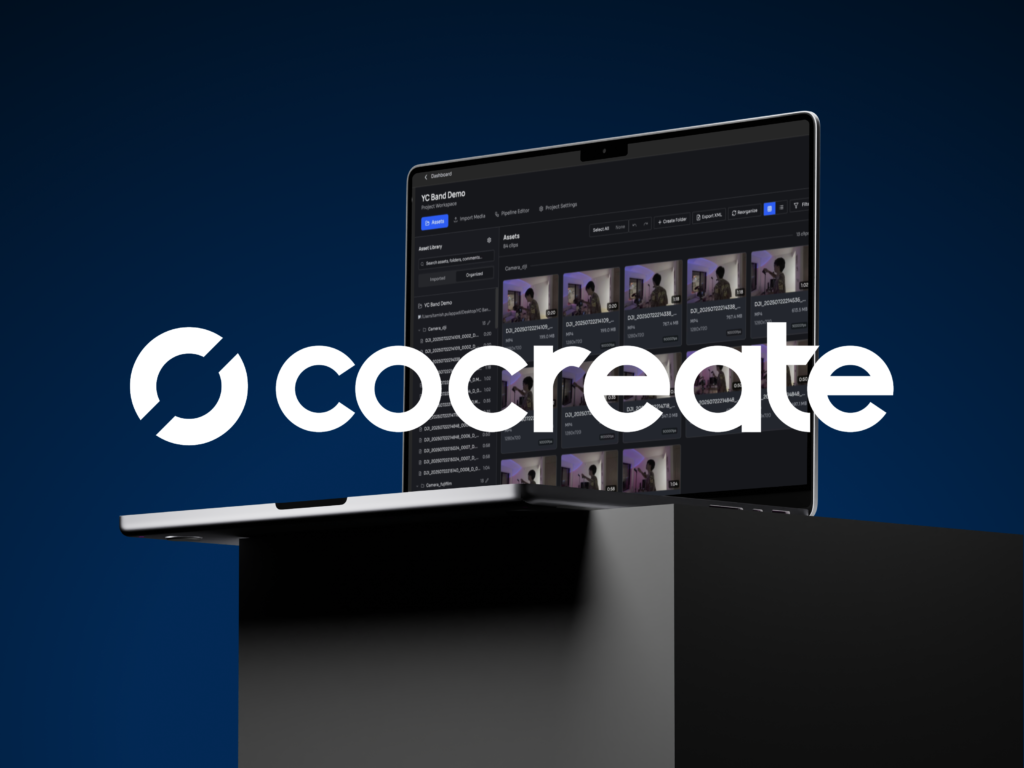
Cocreate seeks to address this problem by placing that fragmented pipeline into a unified, automated workflow. The second a user begins copying footage from a camera card, the software runs in parallel: it checksums files for data integrity, syncs external audio to the corresponding video, generates proxy files at the appropriate resolution, and organizes everything by scene, take, date, camera, and the people appearing in each shot. By the time the card backup is complete, the project is searchable and exportable in the format required by platforms like Adobe Premiere Pro, Avid Media Composer, Final Cut Pro, or DaVinci Resolve.
The tool is built for professional production environments dealing with large amounts of footage, whether those are post-production houses, indie film crews, or content teams producing at scale. Most importantly, the platform doesn’t try to make editorial decisions. There are no suggested cuts, auto-generated highlight showcases, or style recommendations. The software stays behind the scenes, handling mechanical prep so that editors can start their actual work sooner.
Considering the growing prevalence of AI-aided tools in filmmaking, this distinction is crucial for the platform, as many working editors have pushed back against that approach and have become wary of software that tries to replace their judgment. Cocreate takes the opposite tack, removing the tedious infrastructure work without touching the creative process, functioning more as an invisible assistant than a co-editor.
Early clients are already seeing the benefits of this approach. On a recent commercial shoot, a junior editor at a New York post-production house who tested Cocreate said the software heavily reduced their prep time. “Traditionally, a load in would take me multiple hours,” they said. “With Cocreate, I can do a full day of loading in under 20 minutes.”
The Founder’s Journey From Music to Media Technology
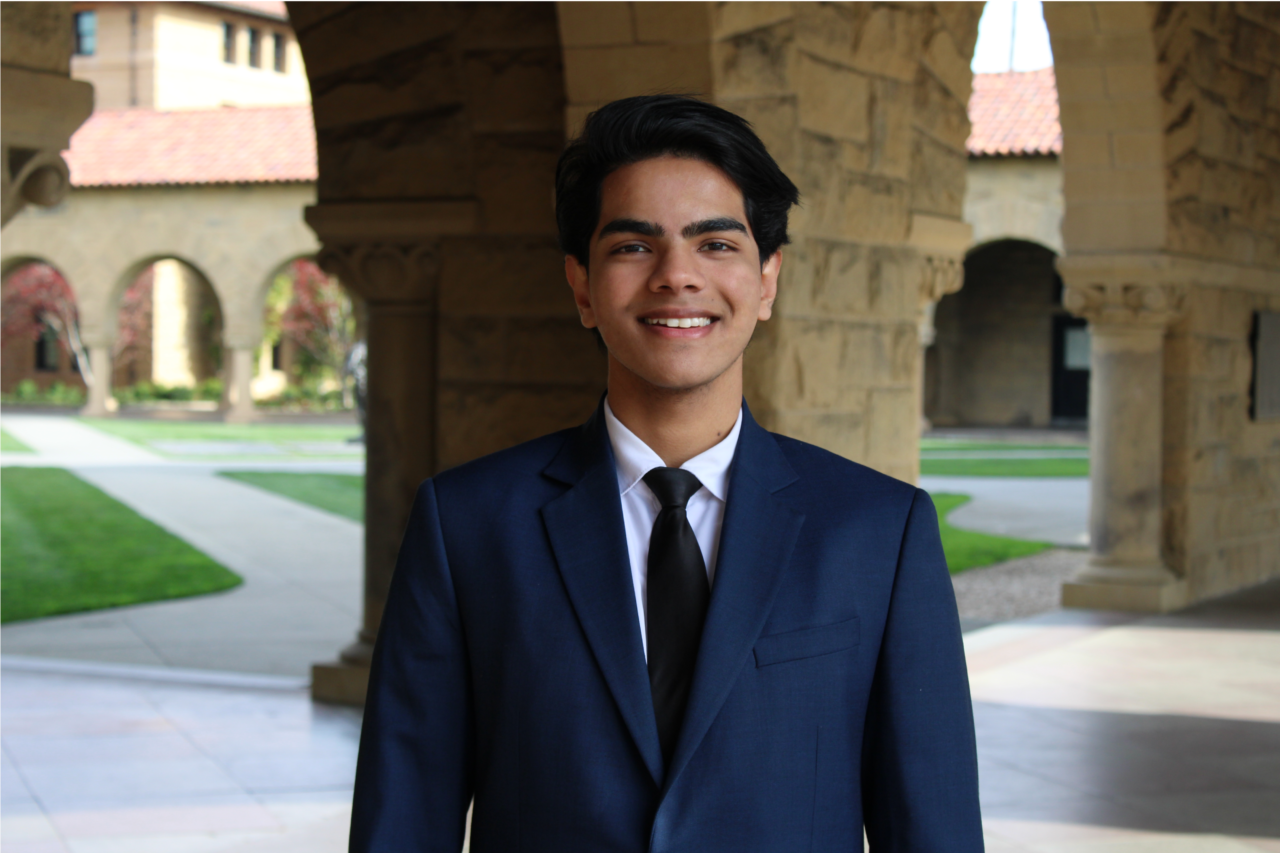
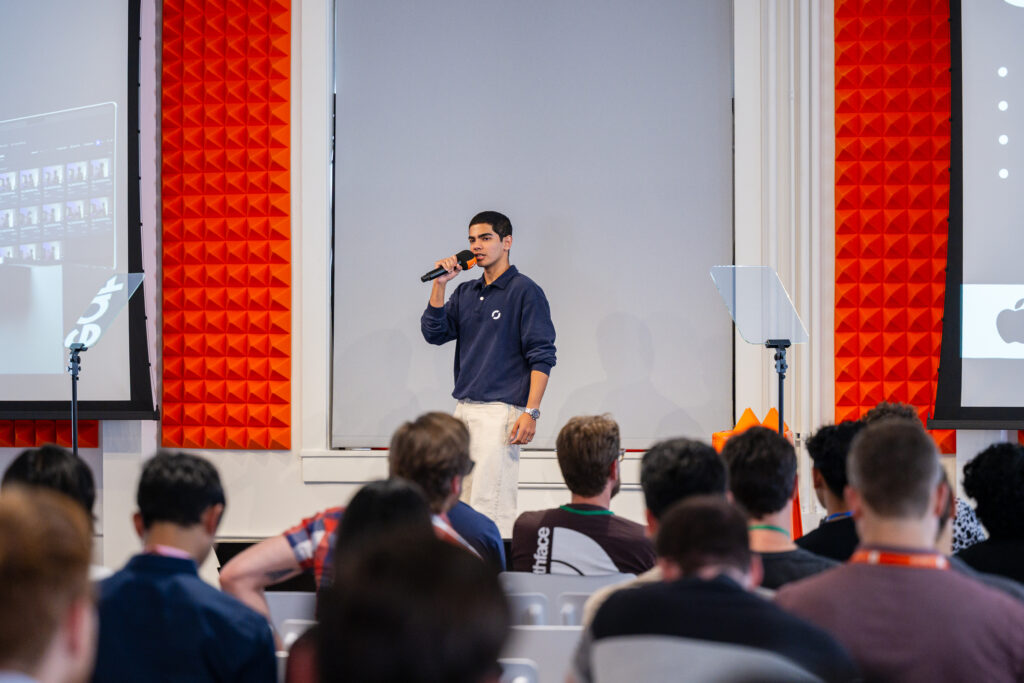
Tamish Pulappadi, Cocreate’s co-founder, arrived at the media prep problem through an unusual path. Originally from Bengaluru, India, he went to Stanford University to study computer science and music technology, his two main passions. At Stanford, he operated studios for the university’s professional content production division and worked on real-time data pipelines at a fintech startup. Before college, he’d already gained early exposure to audio and machine learning as one of the first hires at Beatoven.ai, a music technology company where he contributed to early product development during high school.
It was at Stanford that Pulappadi and two classmates, Archish Arun and Sid Yu, both musicians and CS students, began experiencing the media prep bottleneck firsthand. All three knew what it was like to spend seemingly endless hours organizing, filing, and pre-editing footage for their own projects, and conversations with professional editors and post supervisors confirmed the frustration wasn’t limited exclusively to them.
In 2025, the three co-founded Cocreate and were accepted into Y Combinator’s Summer batch, working full-time under partners including Gustaf Alstromer, Brad Flora, Eli Brown, Matt Riley, and Jon Xu. The team has since raised $500,000 in pre-seed funding to expand its outreach and improve its internal capabilities.
Pulappadi sees the industry splitting between tools that try to automate creative choices (which many professionals understandably resist) and tools that simply take care of the mechanical overhead surrounding creative work. His stated goal for Cocreate reflects both sides of that divide: making professional-grade media workflows faster for trained editors while making them accessible to creators without the post-production infrastructure to tell the stories they want to tell.
Redefining What Assistant Editors Can Do
The immediate value of a tool like Cocreate is measured in hours saved, with prep work that once stretched across a week being compressed into the duration of a file transfer. For production teams with tight deadlines and budgets, that compression has a tangible influence on how many projects they can take on and how quickly they can deliver.
But the longer-term implication may matter more. Assistant editors have traditionally spent the early years of their careers on logistics, learning the craft of editorial by managing the organizational backbone of post-production before graduating to creative work. If the mechanical portion of that role shrinks dramatically, it opens a question the industry has not fully addressed: what does the assistant editor become when the filing is already done?
For Tamish Pulappadi, Cocreate’s answer is that assistants will become more useful: spending less time preparing footage and more time developing the skills that eventually make them editors. As such, the first person to benefit from a faster post-production pipeline won’t be the studio or the producer but the assistant editor who finally has time to learn how to cut.