
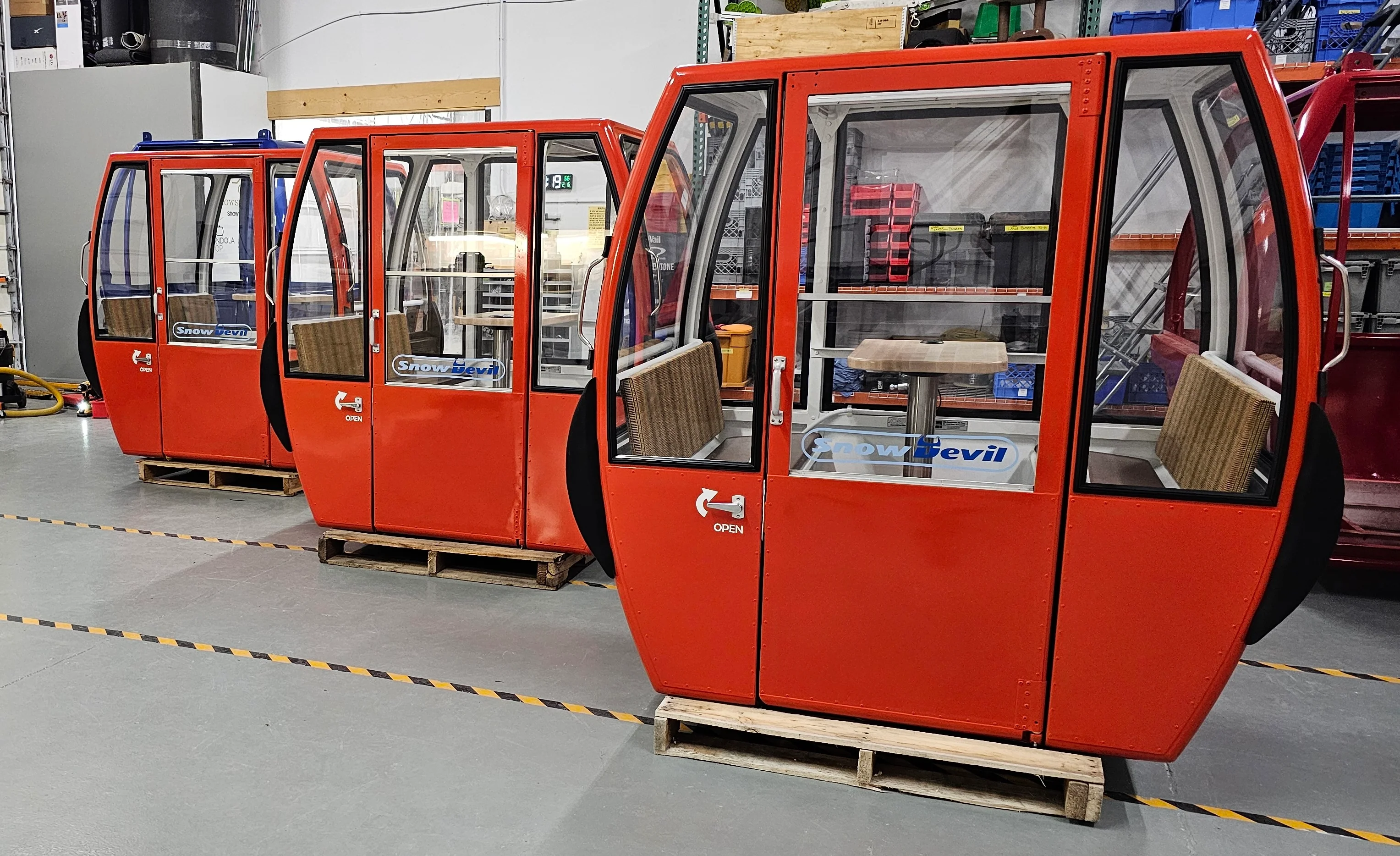
As ski season ramps up across North America and Europe, resorts face a familiar tension: delivering a premium guest experience while managing aging infrastructure that was never designed for today’s year-round demand. Few people understand that balance better than Dominique Bastien, founder of The Gondola Shop and one of the world’s leading authorities on gondola restoration.

For more than 27 years, Bastien has quietly built a business operating at the intersection of engineering, asset management, and guest experience. From Colorado to the Alps, her company works with major transportation operators and destination resorts to extend the life of gondola fleets that would otherwise require costly full replacement.
“Most cabins in service today were manufactured decades ago,” Bastien explains. “Structurally, many of them are still well within engineering tolerances. What fails first are the secondary components, windows, paint, seals, interiors, the parts guests interact with every day.”
That distinction has become critical as lift ticket prices rise and competition for guest attention intensifies. For many visitors, a gondola is the first physical interaction they have with a resort. “The gondola is usually the first lift a guest rides,” Bastien says. “Its appearance is the only thing they see. If it looks worn or neglected, that shapes their perception of the entire experience.”
The Gondola Shop was built around a simple but unconventional idea: restore what still works rather than replacing it prematurely. Bastien’s team developed proprietary systems that allow resorts to refurbish cabins with minimal operational disruption, often adding twenty years or more to a fleet’s usable life.
“Our restoration services cause very little, if any, disruption to lift operations,” she says. “When done regularly, we extend the life of gondola cabins by at least twenty years. Resorts restore a revolving number of cabins each off-season for a fraction of the cost of replacement.”
That fraction is significant. According to Bastien, restoring gondola cabins typically accounts for just 2 to 4% of the cost of a full gondola line replacement, before factoring in the economic impact of construction on surrounding hotels, restaurants, and retail spaces.
Full replacement, she notes, is rarely as simple as swapping cabins. “In most cases, changing to a new gondola system triggers a complete re-engineering of the lift,” she says. “New terminals, tower modifications, rope line changes, drive systems, surveys, permitting. And all of that has to be integrated into existing resort infrastructure.”
Those projects often take years to plan and can require extended closures of primary lifts, a risk many high-traffic resorts are unwilling to take. Restoration offers an alternative path. By retaining terminals, towers, and mechanical systems that remain sound, resorts can modernize the most visible and wear-prone elements without triggering a full redesign.
The Gondola Shop’s technical edge comes from years of reverse engineering components that are no longer manufactured. The company began by developing specialized methods to restore acrylic and polycarbonate windows through advanced sanding and multi-stage polishing. When restoration is no longer viable, Bastien’s team now produces custom replacement windows through a dedicated manufacturing partner.
“We are a very niche company,” Bastien says. “Both major lift and gondola manufacturers have told us we are the only ones in the world doing this at this level. Manufacturers build new systems. Restoration doesn’t align with their business model, so we had to develop our own techniques, procedures, and products.”
That expertise shows up most clearly in the field. Last season, a high-traffic resort in Utah faced rising guest complaints tied not to mechanical failures, but to degraded cabins, clouded windows, worn interiors, and faded branding. Rather than replacing the lift, the resort chose a phased, three-year restoration plan.
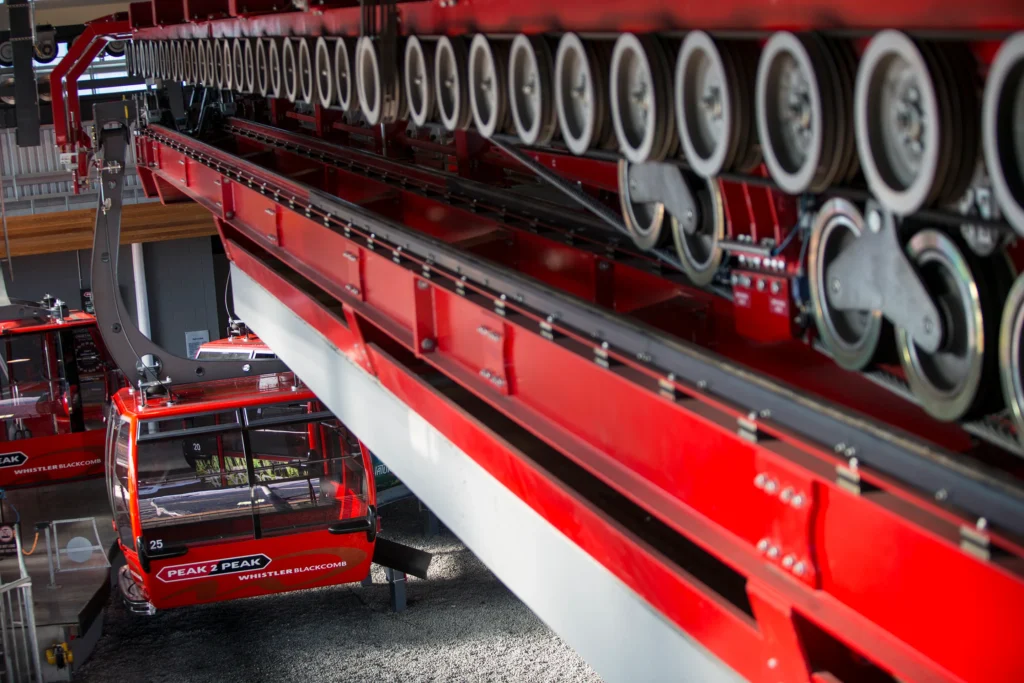
“Once the first batch of restored cabins went into service, guests were immediately impressed,” Bastien recalls. “They were actually waiting to get into the newer cabins.”
Beyond guest satisfaction, Bastien often sees a quieter operational benefit. “When cabins are brought back to a like-new condition, maintenance teams take more pride in them,” she says. “They are more proactive. Not because procedures change, but because the equipment is visibly worth preserving.”
From an environmental perspective, restoration also aligns with sustainability goals. Keeping large composite and metal assemblies in service reduces material waste, embodied carbon, and the need for extensive construction. It also avoids the environmental permitting challenges that come with tower or terminal replacement.
This winter, Bastien is seeing a broader shift in how resorts think about capital planning. “Operators are moving toward predictable lifecycle cost modeling,” she says. “Instead of waiting for failure, they are building multi-year schedules that include planned restoration alongside mechanical maintenance.”
As gondolas operate longer hours to support summer activities, asset longevity has become a strategic priority. Restoration, Bastien notes, now sits at the intersection of maintenance and capital investment, smoothing budgets while reducing unplanned downtime.
Coordination is key, especially during peak season. At Breckenridge, Colorado, The Gondola Shop works year-round on a fleet of 111 cabins, rotating them in groups of six. “At no point does it impact guest experience,” Bastien says. “The lift runs normally, staff workloads stay manageable, and the fleet steadily improves.”
Looking ahead, Bastien sees restoration reshaping best practices across the global resort industry. “It allows resorts to invest smarter,” she says. “They can spread costs over time, reduce disruption, operate more sustainably, and still deliver a high-quality experience.”
For an industry built on long-term assets and seasonal pressure, that balance may be the ultimate competitive advantage.