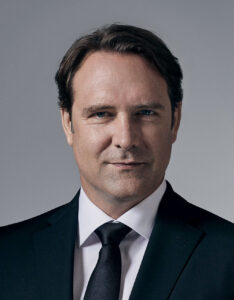

The floor of the New York Stock Exchange hums with history. Online, private Discord servers pulse with the energy of a new investing generation. Julia Rutzen moves between both with the same intent: to understand where trust forms in financial markets. Her analysis suggests that the geography of investor engagement has shifted—not from city to city, but from institution to community. The old model relied on brand prestige and mass advertising. The new one, which she has helped define, depends on proximity to real conversations about investing.
Rutzen’s research into micro-ecosystems — clusters of investors on Reddit, Discord, and Telegram — reveals a pattern: financial decisions are increasingly shaped in decentralized, peer-driven spaces. While avoiding speculative groups, the communities she studies are primarily forums where education circulates, and credibility is earned.
These insights shape her work at Public, where she demonstrates how a brokerage can enter these spaces not only as a sponsor but as a participant. By aligning product launches with educator-led content, she translates regulatory constraints into strategic clarity, ensuring that information is accurate, digestible, and delivered by trusted voices. The result is not just user growth, but informed adoption.
“When a product lands in a community that already understands it, the conversion isn’t just faster — it’s more durable,” she observes. “That’s the metric that matters.”
Why Broadcast Alone Isn’t Enough
Legacy brokerages still often depend on a broadcast logic: craft a message, buy reach, measure response. Rutzen’s findings suggest that financial companies need to pair the broadcast model with a community-driven approach of meeting investors in the online forums where they are. Millennial and Gen Z investors, she notes, do not trust brands that speak at them. They trust educators who speak with them.
Her framework treats creators not as megaphones, but as intermediaries who translate complex financial tools into lived understanding. At Public, she built a network of over 500 such educators, each serving as a node in a distributed trust system. For the launch of options on the platform, she partnered with more than a dozen options-focused communities, hosting live trading sessions, AMAs, and walkthroughs tailored to their members. These collaborations helped generate millions in options volume, driven not by paid media but by real-time engagement with investors who already understood the product.
This method has since influenced how other fintech firms approach go-to-market strategy. Product teams now consult community feedback before launch, and compliance teams emphasize that accessible, accurate education helps users adopt new products with clarity. Rutzen’s data shows that users acquired through educator networks exhibit higher retention and lower churn, outcomes that traditional acquisition models struggle to replicate.
Embedding the Brand in Real Conversations
Rutzen’s approach extends beyond digital channels. She designs in-person experiences that reinforce the same principles: proximity, dialogue, and mutual value. Events at Nasdaq and investor summits are not mere branding exercises; they are strategic initiatives. They are feedback loops, where educators meet leadership teams, and users shape future features.
Her management of a six-figure events budget reflects a disciplined philosophy: every dollar must deepen a relationship, not just amplify a message. These gatherings, attended by hundreds of high-intent investors, have become incubators for product insight. During the rollout of bond accounts, for example, conversations with investing community leaders surfaced messaging and onboarding feedback that directly shaped the final experience.
The implications are structural. Rutzen’s model suggests that in regulated markets, growth cannot be separated from education. Trust is not assumed; it is constructed through repeated, credible interactions. This shift, often referred to as the Great Wealth Transfer, represents more than $100 trillion expected to move from Baby Boomers to younger generations over the coming decades. As the Great Wealth Transfer accelerates, her analysis offers a roadmap: the firms that win will not be the loudest, but the most present in the conversations that matter.