
In a post-pandemic world awash with in-person events, the new challenge for founders and investors isn’t finding a conference to attend—it’s finding the right one. With an avalanche of offline events all competing for attention, the true currency has become quality and curation. For the venture capitalists, founders, and M&A professionals who descended upon the Grand Bay Hotel in Redwood City for the ACG Silicon Valley M&A Tech Connect 2026 conference, the event stood out for this very reason, proving that in a crowded field, a well-curated room is everything.
The Association for Corporate Growth (ACG) has long been a cornerstone of the middle-market M&A community, but its Silicon Valley chapter’s M&A Tech Connect has quickly become a must-attend event for anyone serious about the future of technology and innovation. It’s a place where serendipitous encounters in the coffee line can lead to eight-figure deals, and where the unscripted moments between panel discussions can reveal more than a dozen polished pitch decks.
The End of “Vision-Only” Funding
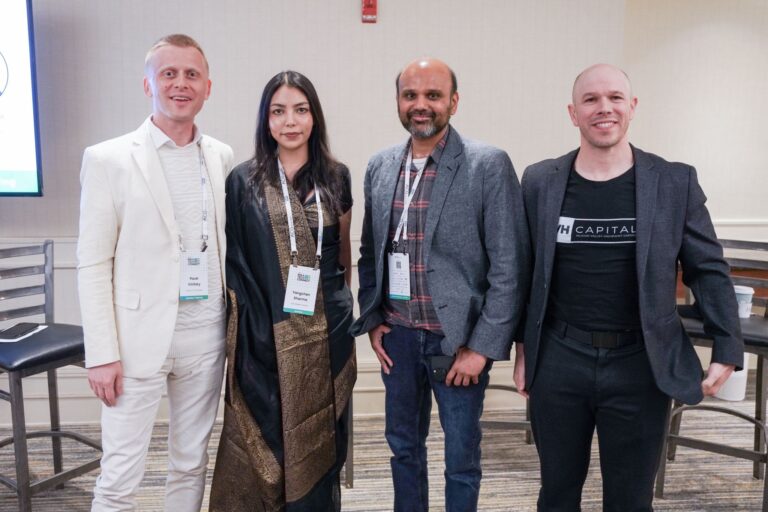
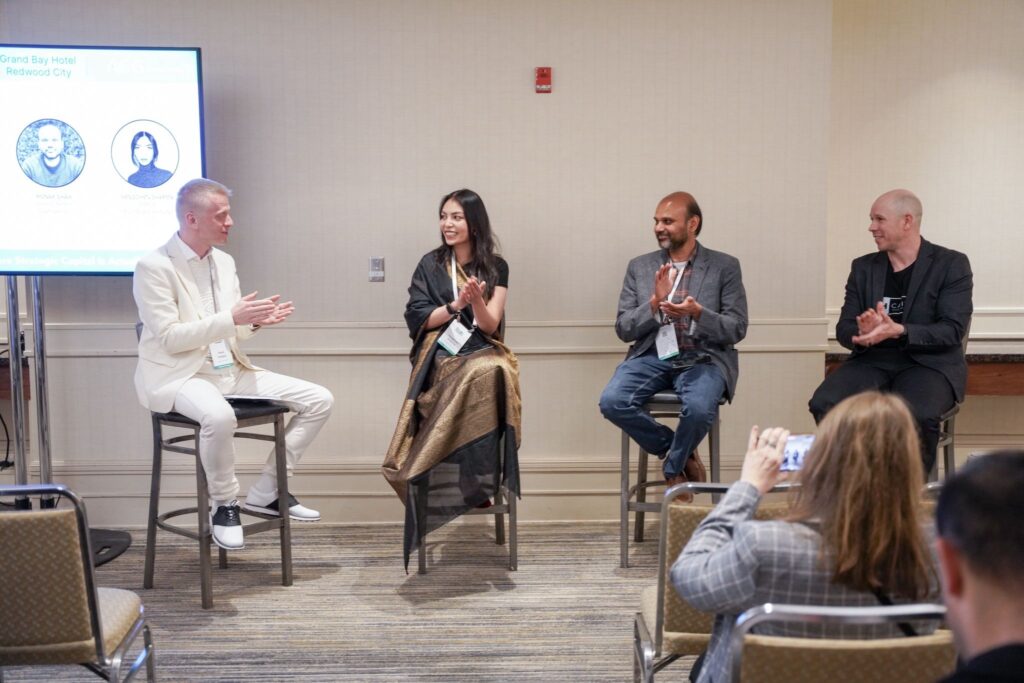
A particular highlight of the conference was the panel “Navigating the Paradigm Shift in Private Markets.” Moderated by Dr. Pavel Vinitsky, co-founder of Synexis, the discussion brought together a powerhouse of investors: Ronak Shah, GP at Daymaker Ventures and Managing Partner at Vicara; Shawn Flynn, Managing Director of Silicon Valley High Point Capital; and Yangchen Sharma, GP of Roundtable Ventures. The conversation was a candid, no-holds-barred look at the current state of the private markets, and the panelists did not mince words.
One of the most resonant themes was the definitive end of the “vision-only” funding era. “Capital has stopped subsidizing uncertainty,” declared Yangchen Sharma, whose firm invests in early-stage deep tech and healthcare. She noted that even at the pre-seed stage, the expectation has shifted dramatically. “In the previous years, you could raise capital with a vision, spend 18 months figuring out the product. Things have changed now… even at pre-seed, we have startups that have built production. They have real users and a track record of usage.”
- Image Credit: ACG
Redefining the Moat
Ronak Shah echoed this sentiment, emphasizing the need for defensible business models. “If speed is your only moat, then that’s not a moat,” he stated, a line that seemed to hang in the air long after he said it. In a market where AI has become table stakes, Shah argued that true defensibility now lies in deep domain expertise, a clear path to monetization from day one, and a product that enterprises are genuinely willing to pay for. The “subsidy” of the 2021 market, as he put it, is gone, and investors are now demanding “proof and durability.”
The Secondary Market’s Rise and Risks
Shawn Flynn, the investment banker on the panel, offered a fascinating perspective on the structural shifts happening in the market, particularly the rise of the secondary market. “Do you really wanna wait 10 years for something to go public when that technology can get disrupted in three?” he asked. With companies staying private longer and the pace of technological change accelerating, the secondary market has become a critical source of liquidity for early employees and investors. However, Flynn also issued a stark warning about the “Wild West” nature of this market, with its complex SPV structures and lack of regulation. “I think in the next year or so, there’s gonna be, when some of these companies do go public, I think there’s gonna be a lot of blow up,” he cautioned, stressing the importance of due diligence and a clean cap table.
The Great AI Hype Check
The panel also provided a much-needed reality check on the AI hype cycle. When asked what was overhyped, the answers were swift and telling: “AI and robotics,” said Flynn, with a touch of irony, given he is also bullish on the sector long-term. “Co-pilots,” offered Shah. “Any AI wrapper,” added Sharma. The consensus was clear: the future of AI investment is not in generic, horizontal solutions, but in vertical AI for regulated industries, AI infrastructure, and tangible applications like robotics that can demonstrably improve margins.
Flipping the Founder-Investor Script
Perhaps the most actionable advice for the founders in the audience came at the end of the discussion, when the panel addressed the biggest mistakes they see entrepreneurs make. Beyond the now-familiar refrains of raising too early or for the wrong reasons, Flynn highlighted a critical, and often overlooked, error: “Not asking the right questions to the investors.”
“99% of the time they’re talking to an investor that wouldn’t invest in their company,” he stated. “Their thesis doesn’t match, but they spend half the meeting, half the event, half the conference following that person around, asking for their time.” The solution, according to Flynn, is for founders to flip the script. “You have power on your side of the table,” he asserted. Instead of just pitching, founders need to be interviewing their potential investors, asking about their thesis, their process, and their expectations.
As the panel concluded and the attendees spilled out for the closing reception, the buzz was palpable. The insights from the Synexis panel were not just theoretical; they were a reflection of the real conversations happening in the boardrooms and on the deal tables of Silicon Valley. In a market defined by a paradigm shift, events like ACG’s M&A Tech Connect 2026 are more than just a conference; they are an essential part of the ecosystem, a place where the future of technology and finance is not just discussed but actively shaped. And for those who were in the room, the message was loud and clear: the game has changed, and the time to adapt is now.