
JOLYN had earned its place in the water long before Baywatch came calling.
The performance swimwear brand, founded by competitive swimmers and rooted in Southern California water culture, has been named the official swimwear category partner for the upcoming Baywatch reboot from FOX and Fremantle. For the 2026-27 season, JOLYN co-designed and produced three distinct versions of the franchise’s famous red one-piece, each created for a different character and made in the brand’s Foreverever® performance fabric.
That is a notable assignment for any swimwear company. The Baywatch suit is one of television’s most recognizable costumes, and the reboot’s cast, including Stephen Amell, Shay Mitchell, Jessica Belkin, Noah Beck, and Brooks Nader, gives the series a built-in cultural reach. But for JOLYN, the partnership is less about borrowing Hollywood visibility than proving a business thesis the brand has followed for more than a decade: build for the people who actually live in the water, and broader relevance can follow.
Built on a Lifeguard Stand
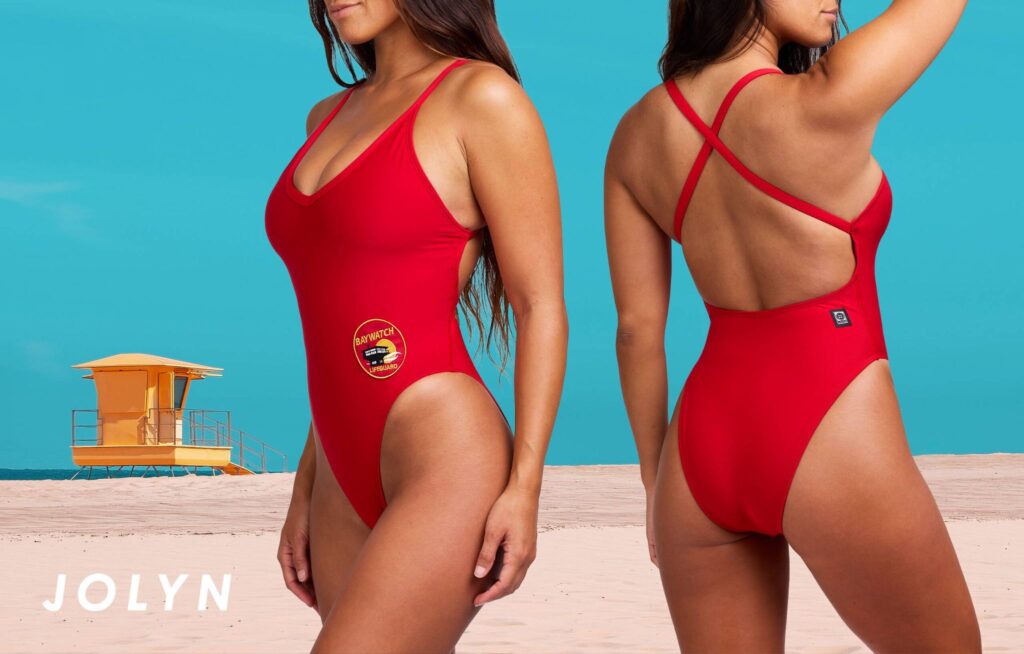
JOLYN’s origin story is central to why the Baywatch partnership makes sense.
The company was founded by competitive swimmers who understood a common problem in women’s swimwear: too many suits were designed to look good standing still, not to hold up through training, diving, racing, paddling, surfing, rescuing, and hours of sun and chlorine. From the beginning, JOLYN was built around the needs of women who actually move in the water.
Its Southern California roots are not incidental. They shaped the company’s early community and product point of view. Lifeguards were not a demographic JOLYN discovered later because beach culture became marketable. They were part of the brand’s world from the start.
“Lifeguards have always been part of our DNA. To bring that heritage to a cultural icon like Baywatch is incredibly exciting. The red one-piece is one of the most recognizable pieces of swimwear in the world, and we’re proud to reinterpret it with the performance and athlete-first design perspective that defines JOLYN,” said Mondy Herndon, CEO of JOLYN.
That credibility is difficult to manufacture after the fact. JOLYN built trust with swimmers, lifeguards, surfers, and athletes before it earned a television partnership. The Baywatch deal did not come out of nowhere. It came from years of building for the kind of customer the show dramatizes.
Performance Is Not One-Size-Fits-All
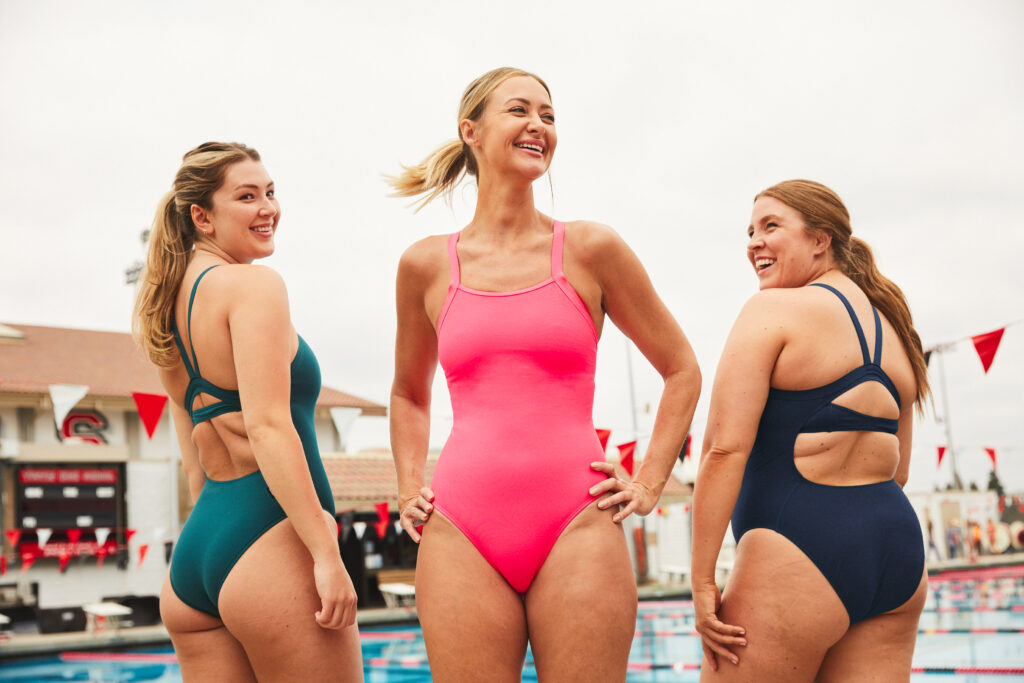
The partnership also highlights a less flashy but more important part of JOLYN’s business: the brand has built a product system around different kinds of water use.
At the center is Foreverever®, JOLYN’s durable performance fabric. Known for minimal stretch, compression, and long-term shape retention, it is designed for competitive athletes and frequent swimmers. It is also the fabric used for the Baywatch suits, a choice that reflects the demands of both screen and water performance. These suits are not simply costumes. They have to move, hold their shape, and survive repeated wear while staying visually consistent on camera.
JOLYN’s broader fabric lineup shows how the company thinks beyond one customer type. SplashTec offers a softer, stretchier, chlorine-resistant option for recreational swimmers who still want performance. SurfTec is made with 100 percent recycled materials and includes UPF 50+ protection, positioning it for ocean activity and sun exposure. Recycled Sea-Flex, made from reclaimed fishing nets and discarded nylon, brings sustainability into a fabric that remains chlorine-resistant and performance-oriented.
That range is the business story. A collegiate swimmer, a junior lifeguard instructor, a surfer, and someone who swims laps a few mornings a week may all care about fit and durability, but they do not necessarily need the same suit. By building fabrics around specific use cases, JOLYN can serve multiple segments of active women without diluting its performance identity.
The sustainability angle fits into that system because it is tied to materials, not vague messaging. Recycled nylon, reclaimed fishing nets, discarded nylon, UPF protection, and chlorine resistance are concrete product decisions, not campaign language.
With that context, the Baywatch partnership feels less like a surprise and more like a logical extension of the brand.
Authenticity as Brand Strategy
JOLYN’s trajectory offers a useful lesson in how consumer brands earn cultural moments.
The company did not begin by trying to position itself as a celebrity swimwear label. It built credibility with the athletes and professionals who are hardest to impress because they know what performance requires. Competitive swimmers, lifeguards, and ocean athletes do not judge a suit by a campaign image. They judge it by whether it stays on, holds up, and works after repeated use.
That kind of trust compounds. Over time, it becomes more than product loyalty. It becomes brand authority.
In a market where collaborations can feel forced and partnerships often read as paid proximity, JOLYN’s Baywatch role works because the connection is intuitive. The franchise needed a modern version of a lifeguard suit. JOLYN had already spent years building for lifeguards and the broader community of women who move in and around the water.
The red one-piece may be the headline, but the business story is more durable: JOLYN earned a mainstream cultural opportunity by staying close to the customers and conditions that shaped the brand in the first place.