
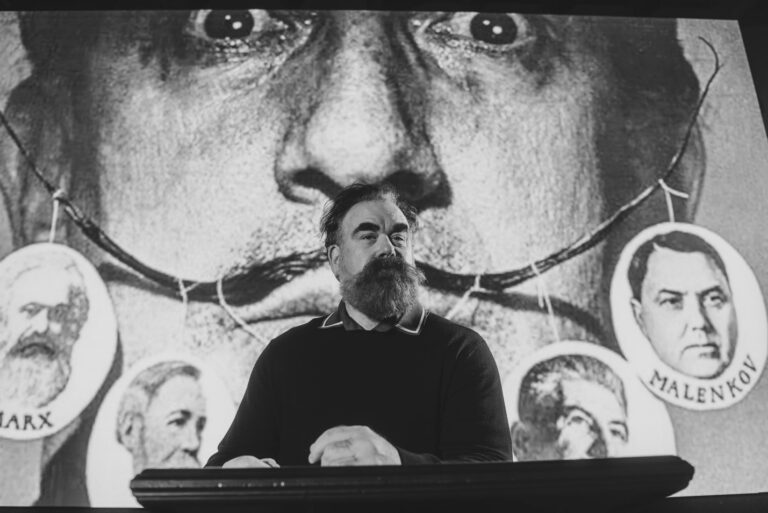
As Karl Marx sat at his desk decades before the invention of the automobile, the German philosopher could scarcely have imagined that his ideas would fuel a revolution in America’s service departments in 2026. As Chris Collins and his “Service Drive Revolution” co-hosts, Adam Krey and Chris Hogland, note on a recent episode of their podcast, it’s no surprise that technicians, traditionally neglected by dealership management, have begun to embrace the credo of “from each according to his ability, to each according to his need.”
In the episode, the trio reacts to a series of videos made by technicians who’ve walked away from the drive, citing poor compensation, over-engineered vehicles, warranty timing, and, above all else, the flat-rate model. Technician grievances over flat-rate pay are reaching a boiling point; the SDR hosts reference stories of entire shops telling management to give them hourly compensation, “or we walk.”
With clients in both automotive and trucking, Collins is uniquely positioned to offer some perspective on the great flat-rate vs. hourly debate. At the exact moment automotive technicians are agitating to make the jump from flat-rate to hourly, their compatriots in trucking service departments, where labor efficiency rates wallow below 60%, are fighting for the exact opposite. The reason is deceptively simple: flat-rate incentivizes production and rewards the most proficient technicians.

As fewer and fewer young technicians join the automotive trade, it’s unsurprising that the flat-rate model is losing some of its appeal. The Department of Labor recently advertised its initiative to train more than 6,000 new automotive technicians in the next four years; it’s not unreasonable to assume that, at least initially, these techs will struggle to keep pace. Given that, an up-and-coming technician may have a real reason to seek out the guarantee of an hourly wage rather than a performance-based alternative. As co-host Hogland notes, “as crazy as these things sound, the key is to understand.” Collins echoes the sentiment: “I personally don’t agree… but I understand why they feel the way they do—it’s unfair!” The mistake, however, would be to indulge the impulses of our youngest and most inexperienced technicians, an indulgence which assumes that they will never improve or be driven by performance. In fact, without flat-rate pay, there’s little incentive for them to be.
The trio argues that dealers don’t need to ditch flat-rate, but they do need to support it. Collins argues that it’s the owners’ responsibility to create a work environment that teaches techs to appreciate and leverage flat-rate, rather than falling victim to it. Collins rails against dealers who refuse to reevaluate their processes: “We can’t keep running our departments like it’s the 90s… the systems need an update.” Adjustments to warranty work timing, increased training, hands-on mentor-mentee relationships, and more offer proven pathways to increasing technician satisfaction and productivity.

Above all else, the automotive industry needs to pay attention to this looming socialist mindset. In a point that, in some respects, echoes Marx, Hogland notes that “if a technician doesn’t produce an hour of labor, we have nothing to sell.” Collins draws parallels between the hourly push among technicians to growing political support for socialism among young Americans. In a reference to ballooning student debt, Collins notes that “we sold these people a bill of goods… and now the workforce doesn’t match the needs of the economy.”
If dealers want to save their shops from the rising tide of Service Drive Socialism, the SDR team argues that it’s on us: we must show young technicians a clear path to getting the most out of flat-rate. In closing, Collins offers a stern warning to an industry with a bad habit of ignoring technician complaints: “We get what we deserve.”