Product development brand launches are part of a fast-paced digital ecosystem. Businesses are used to following a familiar script: build the product, set the price, write the copy, and finally, hire a designer to “make it look good.”
According to Brooklyn-based designer and architect Ingrid Schmaedecke, this sequence is the single most expensive mistake a company can make.
“By that point, a number of decisions have already been made without design looped into the thinking,” says Schmaedecke, an MFA graduate from the Rhode Island School of Design (RISD) with a background in architecture. “The designer ends up decorating instead of shaping.”
Schmaedecke, whose career spans from shaping the visual identity of one of Brazil’s oldest museums to co-founding the multidisciplinary Studio Bombus, argues that design’s true value lies in strategy, not just aesthetics. When brought in early, designers don’t just choose colors; they help define what a business actually is.
Shaping the Narrative: Avoiding “Unfinished Thinking”
The pitfalls of late-stage hiring are most evident in “unfinished thinking.” Schmaedecke notes that while many clients arrive with mood boards and competitor references, they often struggle to answer a fundamental question: ‘Why does this business exist beyond its competition?’
“I actually love that part of the work—sitting with a client and pulling those answers out together,” Schmaedecke says. “The challenge is understanding that this is a real step, not a warmup before the ‘real design’ starts. Without it, the designer is guessing, and guessing makes shortsighted work.”
This holistic approach proved transformative during Schmaedecke’s time on the design team at the Graphic Design Department at Museu Paranaense (MUPA), the third-oldest public museum in Brazil. Rather than simply refreshing a logo, Schmaedecke was involved in the institutional rebranding, from the ground up. By adjusting the naming and communication strategy before touching a single visual element, the team was able to shift public perception of the museum from overlooked to a part of everyday culture.

A Design Philosophy Built With An Architect’s Eye
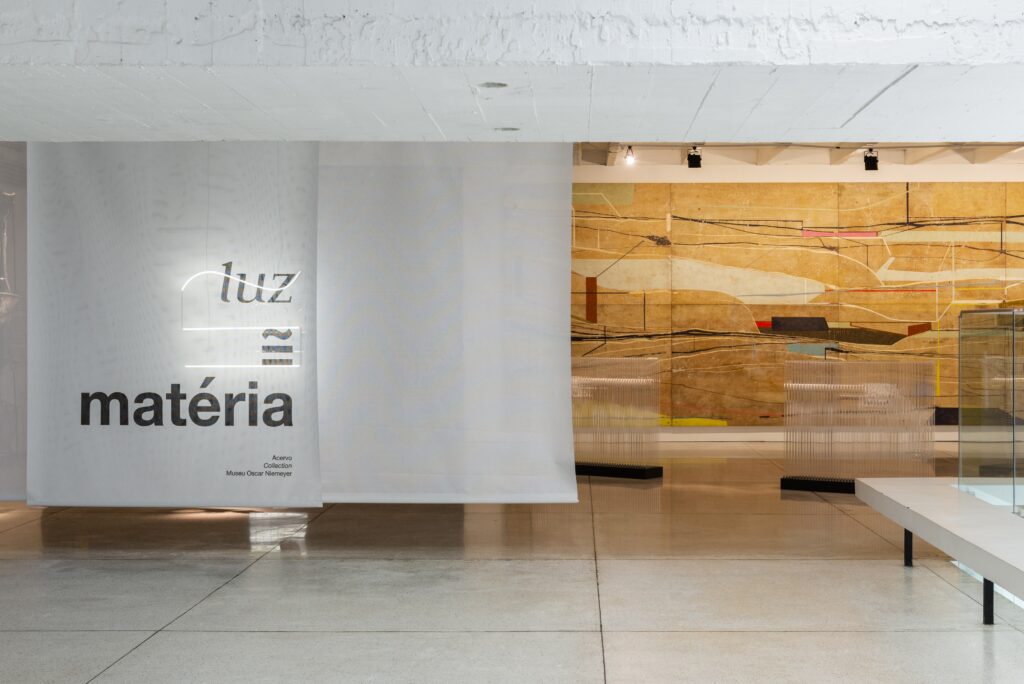
Schmaedecke’s unique perspective is rooted in her dual design training; after earning a Bachelor of Architecture from the Federal University of Paraná (UFPR), she spent years designing spatial, scenographic, and exhibition projects as a designer at ATO1LAB for institutions like the Oscar Niemeyer Museum.
“Architecture taught me to think in systems, not isolated objects,” she explains. “A brand identity is a system that has to work across physical spaces, screens, packaging, and signage. It has to hold up at every scale.”
This systemic thinking allows her to act as a critical “outside eye” for businesses that are often too close to their own stories to see them clearly. “Businesses are inside their own story every day, like fish in water,” Schmaedecke says. “The most useful thing a designer does is hold up a mirror and say, ‘This is what you look like to someone who doesn’t know you yet.'”
Hiring Designers Early On: A New Standard for Business
As designers are becoming increasingly important in our smartphone-based lives, Schmaedecke’s work sits at the intersection of strategy and design. She offers a roadmap for businesses looking to build lasting resonance. Her message to founders is clear: design is not a final coat of paint—it is the foundation.
For businesses looking to avoid the “most expensive mistake,” the solution isn’t just hiring a better designer; it’s giving them a seat at the table before the first brick is laid. Her advice to business owners is to sort out their priorities before hiring a designer for a project. “Businesses should figure out what they truly care about,” she said. “They shouldn’t think about what they want it to look like; what they need people to understand.”
Schmaedecke adds: “A lot of businesses come to a designer with visual references, a mood board, maybe a competitor’s website they admire, which is all helpful. But without clarity on what the business actually stands for, the work might look fine but it doesn’t hold up.”
Good design can change behavior, she notes. “A good brand identity doesn’t just sit on a business card, it gives people a reason to engage, to share, to come back,” she said.
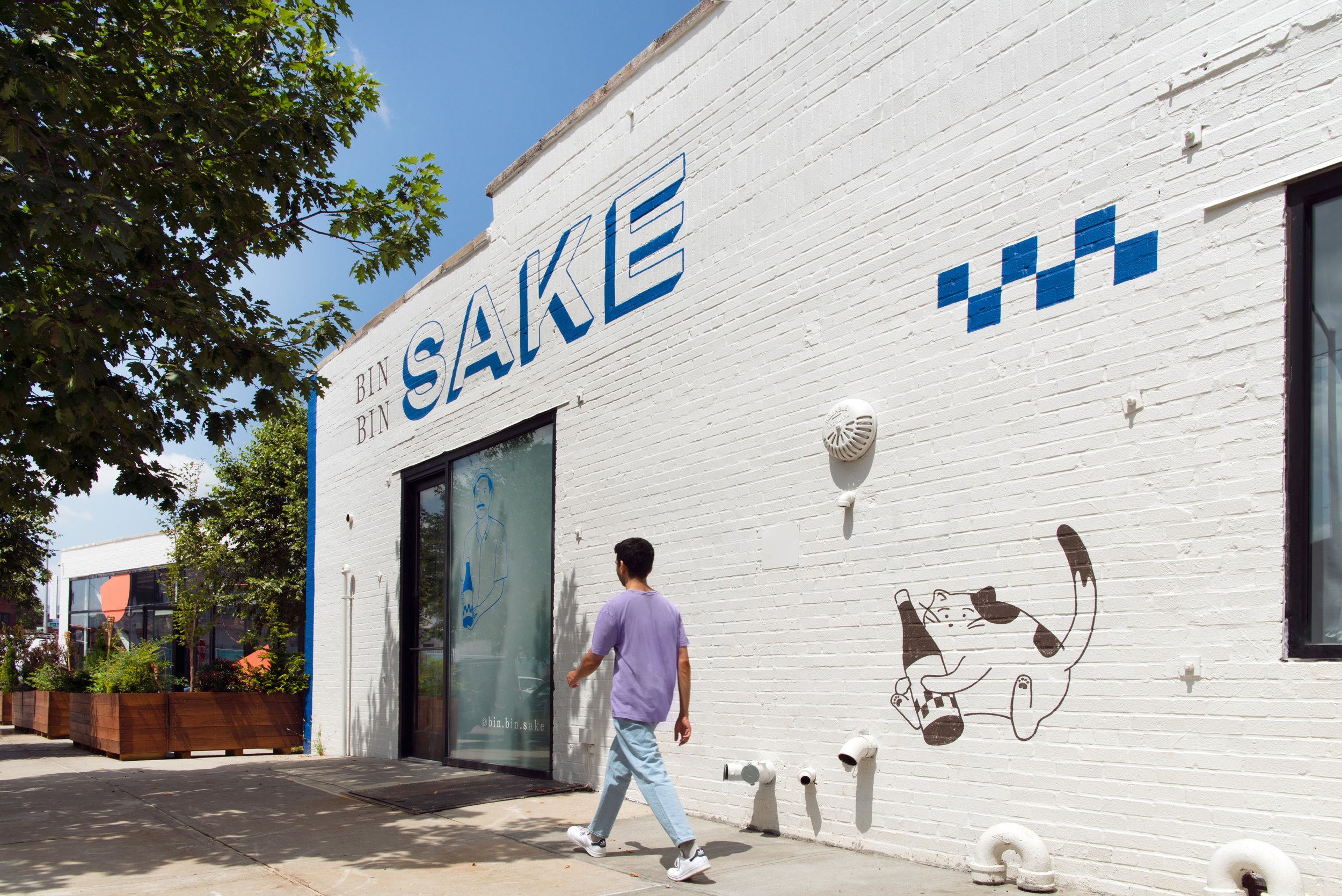
Schmaedecke points to her work at Isometric Studio on Bin Bin Sake, a Brooklyn sake shop, as an example. “We developed a character, a sake-lover cat, that became the entire personality of the business. People were posting photos of the tote bags next to their own cats. It wasn’t because the illustration was cute (though it was!), but moreso because the identity gave the brand a personality that people could actually interact with. That’s design moving the needle. It created a relationship between the business and its customers that didn’t exist before. When design only looks good, people scroll past it. When it works, they participate without feeling pressured to.”