

A shared vision can turn scattered efforts into focused action. Learn practical ways to give teams ownership, connect daily work to a larger mission, and track progress with clear measures. The article also includes insights from experts who have helped organizations build stronger alignment and lasting results.
- Give New Hires Day-One Access
- Center One Customer Example
- Show Proof of Global Reach
- Turn Rebrand Vision Into Weekly Wins
- Bring Clients Into the Room
- Build Credibility Through Guardrails
- Measure Crew Idle Minutes
- Post a Shared Quality Score
- Honor Founders’ Broader Promise
- Let Teams Shape the Recovery
- Let People Own the Big 3
- Balance Speed With Selective Standards
- Make the Mission Personal
- Make Eversafe Unmistakable
- Let Customers Expose Broken Travel
- Lead the Carbon-Neutral Charge
- Test Reviews With Real Money
- Set One Quarterly Metric
- Prove Commitment Through Daily Discipline
- Chart the Operating System
- Tie Tasks to Scott’s Message
- Define Roles to Protect Homes
- Unite Mentors Around Clinical Support
- Connect Cables to Wedding Vows
- Build Safer Systems With Input
Give New Hires Day-One Access
One situation was bringing HR, IT and hiring managers together to improve the first day for new employees. Our goal was simple: every new employee should have working access to the tools they need before their first morning. Sometimes each department completed its tasks, but the employee still had to wait because something was missed between teams.
I started by asking everyone where they faced delays and what information they needed from each other. Then we agreed that sending an access request did not mean the task was finished. The access had to work, and someone had to check it. Every open task also needed one person responsible for following it through.
To motivate the team, I connected the goal to a problem they all understood: last-minute messages and time spent chasing updates. I asked them to suggest one small improvement each week, so they had a say in how we changed the process.
I also gave credit for work that usually went unnoticed, such as catching a missing approval before it delayed a new employee. My main approach was to show people how their work helped the next person. This gave everyone a clear reason to support the same goal.
 Maggie Nelson, Head of People and Operations, Court Case Finder
Center One Customer Example
The vision that rallied our team wasn’t a mission statement. It was one customer story.
At one point, the G-Accon team was spread across a dozen priorities, and people were busy but not aligned. So instead of another planning deck, I shared a message from an accountant. Month-end used to take her days of exporting and cleaning data, and now she could build her client reports in an afternoon.
That gave everyone a picture. Engineering saw why sync reliability mattered more than new features. Support saw why fast onboarding mattered. Marketing saw what story to tell.
The strategy I keep coming back to is to make the goal concrete and human. “Grow revenue” doesn’t get anyone out of bed. “Give accountants their evenings back at month-end” does. When people can picture the person they’re helping, you don’t need to push them toward the goal. They pull toward it themselves.
 Andrey Kustarnikov, CEO at G-Accon, G-accon
Show Proof of Global Reach
When Shantanu and I started Tecknotrove in 2002, the idea that an Indian company could design and build its own simulators and sell them to customers around the world was not an obvious one. The bigger test came later, when we decided to grow beyond India and compete internationally. That meant changing how everyone worked: documentation to international standards, products adapted to different vehicles and regulations, and customers in very different time zones.
The strategy that worked best was making the goal concrete instead of inspirational. “Going global” means nothing to an engineer on the shop floor in Gujarat. What meant something was showing the team the specific simulator they had built, now in use at a customer site in another country, with operators training on it every day. When people saw their own work in that context, the vision stopped being something management talked about and became something they were already part of.
The second thing was involving the team in the hard parts, not just the celebrations. When an international project raised a problem we’d never faced, I wanted the people solving it in the room when we made decisions, not receiving instructions afterwards.
If I had to give one piece of advice, it would be this: people don’t rally around a slogan. They rally around evidence that the goal is real and that their work is what makes it happen.
 Payal Gupta, Co Founder, Tecknotrove
Turn Rebrand Vision Into Weekly Wins
As Digital Marketing Manager at Astro Pak, I rallied our team around a complete rebrand and digital transformation when we realized our messaging wasn’t connecting with next-generation engineers in pharma and aerospace. I started by sharing competitor analysis and customer feedback that showed we were being perceived as outdated, then painted a clear picture of what success would look like: becoming the go-to resource for precision cleaning innovation, not just a service provider. To keep everyone motivated through months of website overhauls, content creation, and process changes, I broke the vision into weekly wins we could celebrate together and made sure each team member owned a piece they were genuinely excited about. The key was connecting daily tasks back to that bigger story and showing how a marketing intern’s social post or a senior engineer’s technical article directly moved us toward being seen as industry thought leaders, not just vendors.
 Kevin Peguero, Digital Marketing Manager, Astro Pak
Bring Clients Into the Room
The fastest way to rally a team isn’t a speech about the vision. It’s making one person feel what’s at stake when the night goes right. I learned that at Poppy Planning, the hard way. We took on our first big multi-day corporate activation in Dallas and my team was stretched thin, a little rattled by the scale of it. I could feel the energy sagging in the planning meetings. So instead of giving another pep talk about excellence and client trust, I did something simpler. I brought the client in for ten minutes and let him tell my team, in his own words, why this event mattered to his company and what it would mean if it landed. You could watch the whole room shift in real time. Suddenly it wasn’t my goal they were chasing anymore. It was a real person’s.
After that I did two concrete things. I handed every lead full ownership of one piece (the arrivals experience, the AV run-of-show, the hospitality suite), so nobody was just executing my plan anymore, they were defending their own. And I kept a running thread where I called out small wins the moment they happened, not three weeks later at a debrief, because people work harder when the work is actually seen. The vision never did the motivating. The people connected to it did.
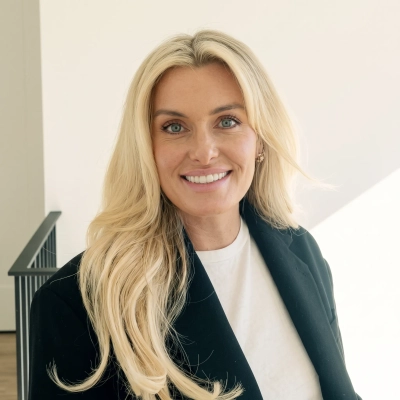 Emmy Byers, Founder and Managing Director, Poppy Planning
Build Credibility Through Guardrails
Protecting trust isn’t exactly a battle cry. It won’t fire up a creative team on a Monday morning, and honestly, I knew that before we even started. But in a space where one careless line can genuinely hurt someone’s money, that’s what I built around at STOCK UP! with LARRY JONES and figuring out how to make people actually excited about restraint was one of the harder problems I’ve had to work through.
When we were building out Money Moves and the content side of the show, the pull toward flashier takes never really disappeared. Hype spikes views. I’ve seen it happen enough times to know it’s real. I couldn’t just keep saying no to every pitch and expect anyone to stay motivated, so I reframed the whole thing. Our edge wasn’t volume or noise. It was being the voice still standing a year from now because we never burned a viewer. Trust compounds the way a good habit does (slowly at first, then faster than you’d expect), and I wanted the team to feel like they were building something that lasts, not just chasing a quarter’s worth of attention.
What actually moved people was ownership. I stopped policing every script and started teaching the guardrails instead like education and mechanics, never a trade call then let them run. Once that clicked, the standard stopped being mine. It became ours. The moment I knew it had really taken hold was when a newer team member caught a line drifting toward hype and flagged it before it ever reached me. After that, I stopped losing sleep over it. The counterintuitive part is that those guardrails grew the channel faster than the flashy approach would have. The 694K+ subscriber base is the proof.
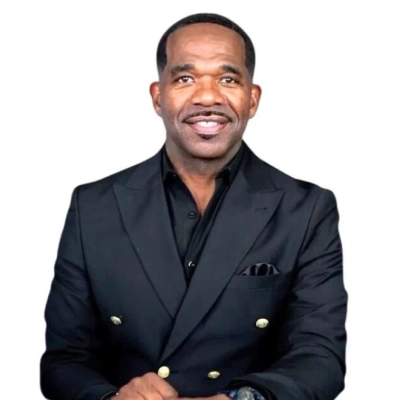 Larry Jones, Founder & Host, STOCK UP! with Larry Jones
Measure Crew Idle Minutes
The number I tracked and put in front of everyone was crew idle time per job, measured in minutes. Not some vague efficiency target. Just that one number, because a goal you can’t measure is basically a wish nobody feels responsible for. We were bleeding margin in the dead window between when a crew arrived on site and when they actually started moving materials. Nobody could see it, so nobody owned it. My thinking was pretty straightforward: every crew should treat that gap as the enemy. But you can’t ask people to fight something they can’t see.
So instead of a pep talk, I made it visible. We added an arrival timestamp and a “first material staged” timestamp to every job. The delays started showing up as plain numbers, grouped by foreman. A crew lead could pull up his own line and see exactly where he stood that week versus the week before. People don’t rally around “let’s be more efficient.” They rally around “here’s your number, here’s last week’s, let’s beat it.” Those are genuinely different conversations. The motivation came from making it theirs, not mine. When one supplier’s late drops kept showing up in the idle column week after week, I shifted their orders to an earlier delivery window and the number came down. The crews saw that their logging actually fixed something real in the field, not just fed a spreadsheet I was staring at alone. That’s the moment a goal stops being management’s and becomes the team’s. I’ve watched that flip happen and it’s not subtle. What I keep relearning is that you inspire a crew by handing them a scoreboard they trust, then getting out of the way while they chase it.
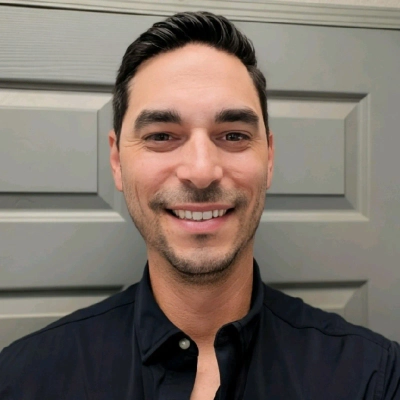 Matt Bueno, VP of Operations, Red Roan Roofing & Construction
Post a Shared Quality Score
The way I rallied my crew wasn’t with a speech about vision. It was by putting one number on the whiteboard in the shop and letting them watch it move. I run Koen Plumbing out of the North Dallas metro, serving Richardson, Plano, and Garland. A while back our callback rate was creeping up, meaning we were driving back to the same house because something wasn’t fixed right the first time. I could’ve called a meeting and lectured about quality. Instead I told the guys, flat out, here’s the one thing we’re going to beat this quarter, and I wrote the current callback number up where everybody saw it every morning. No finger-pointing at who caused what. Just a shared target we owned together.
What actually motivated them wasn’t me. It was each other. Once the number was public, a tech who pressure-tested every slab job didn’t want to be the reason it ticked back up. I backed it with real support, not pressure. When a callback did come in, we read the notes together and asked what step got skipped, treating it as a training gap instead of a screwup. One of my newer guys started double-checking fittings he used to eyeball, because he could see his work in that number now. The callbacks dropped noticeably within a couple of months. What I’d tell any owner is that people don’t rally around your vision, they rally around a goal they can see themselves moving.
 Heather Koen, President, Koen Plumbing, Inc.
Honor Founders’ Broader Promise
The clearest moment was when we rebuilt the organization into Waves of Courage. We weren’t just changing a name — we were asking a volunteer team that had spent two decades focused entirely on children to stretch wider, to say yes to adults, to community projects, to needs that didn’t fit a tidy category. That’s a harder ask than it sounds when people joined because of a specific mission they believed in deeply.
What worked was anchoring everything back to the founders’ line: *”We can’t add days to their lives, but we will add life to their days.”* That sentence doesn’t say children. It says lives. Once the team heard it that way, the broader scope felt like honoring the original intention, not abandoning it.
The second thing that helped was making the work visible and concrete. A ramp going up, a bill getting paid, a family getting to treatment — when volunteers can point to something real, they don’t need a speech. Ride the Brainwave runs on people who showed up because they saw what the previous year’s event actually did for a neighbor.
The honest version of rallying a team is just keeping the reason in front of them and getting out of the way.
 Jodi Frkovich, President, Waves of Courage
Let Teams Shape the Recovery
Two years in, we lost a big account that made up almost a third of our revenue in one shot. The team was rattled, understandably, so I called everyone into the warehouse and didn’t try to sugarcoat any of it. I told them the actual truth, which was that we could either shrink and play it safe, or double down on the thing that genuinely made us different.
We weren’t the cheapest, but we weren’t the biggest either. But we were the ones who actually understood how to move product across channels without breaking a promise, and that was the whole vision from that point on. Not growth for its own sake, but being the operator brands could trust when everything else around them was falling apart.
Then I asked them what we should cut and what we should build instead, and that question mattered a lot more than any speech I could have given. People don’t rally around a plan they didn’t help shape themselves. We ended up killing two service lines entirely and put all our energy into the categories we actually knew well. Toys, pet, and beauty.
Six months later we’d replaced that lost revenue, not because I had some great vision nobody else could see, but because the team believed the plan was theirs too.
 Kade Robertson, CEO, Viral Distributors
Let People Own the Big 3
Early on, I made the classic founder mistake. I’d share the big vision in a meeting, feel inspired, and assume everyone walked out just as fired up as me. They didn’t, because a vision that lives only in your head is just announced.
So I changed the approach completely. Instead of handing the team a goal from the top, I asked every person to write down three goals of their own tied to where we were headed. I call it “The BIG 3” here at WrittenlyHub. Suddenly, people had their own goals connected to the bigger direction.
The shift was almost immediate. People stopped waiting to be told what mattered and started deciding how they’d contribute. One person made client communication their thing, another owned the little touches that made us memorable, and it all rolled up into the same direction.
That’s the real trick to rallying a team. You motivate people by giving them a way to connect the bigger goal to the work they care about and want to own.
 Astha Verma, CEO & Founder, WrittenlyHub
Balance Speed With Selective Standards
In the first half of 2026, our virtual assistant placements more than doubled from Q1 to Q2. Growth like that looks exciting from the outside. From the inside, it’s the moment a team can quietly start cutting corners, because everyone is busy and the easiest way to go faster is to lower the bar.
So the goal I put in front of the team was short enough to repeat in one sentence. Move faster for clients without letting a weaker candidate through. Speed and standards together, not one traded for the other.
Three things made it stick. First, I wrote the standards down. We’re a remote team across time zones, so a vision that lives in my head or in one meeting doesn’t survive the week. Our role standards and screening criteria sit in one place everyone works from, so nobody has to guess what good looks like.
Second, I made both halves of the goal visible. Across January 2025 to July 2026 we placed 1 in 508 applicants and the median time to fill a role was 18 days. People could see how selective we were staying and how fast we were moving at the same time.
Third, trust. Trust isn’t a perk you hand out after someone proves themselves. It’s the operating cost of not managing adults like children. Once the goal was clear I stepped back and let the team decide how to hit it.
 Alon Pearl, Founder & CEO, VA Masters
Make the Mission Personal
My first team was a Penn State locker room. When I told my roommate, Damone Jones, about my dad’s cancer diagnosis, he asked why we didn’t do something about it. We were college football players with a platform, so we started a weightlifting fundraiser called Lift for Life. It raised $10,000 the first year and $50,000 the second.
Teammates showed up because the goal was concrete and personal. Nobody was asked to cure cancer. They were asked to show up and lift for someone they knew. That’s still how I lead. My strength is coaching and motivating more than managing, so I give clear direction, equip people with what they need, and trust them to run with it.
The other piece is example. I work out every morning and still play basketball, and I’ve found that consistency sets the tone better than any mandate. People pay more attention to what you do than to what you announce.
That same story still anchors PledgeIt. Our president co-founded Lift for Life with me, and some of our team knew my father. When the mission is real, you rarely have to manufacture motivation. Keep the mission in front of people, give them room to contribute, and let the work speak for itself.
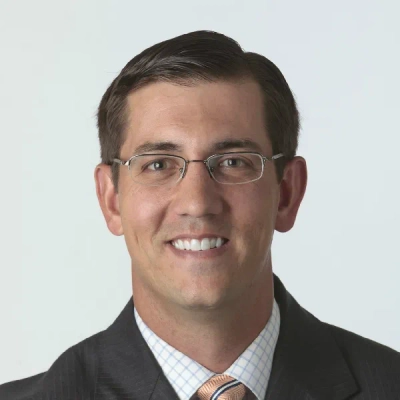 Scott Shirley, Founder & CEO, Pledge It
Make Eversafe Unmistakable
In february of 2023 a Florida broker registered with fmcsa as eversafe moving and storage llc and began doing business using our name. We found fake reviews were placed on our page, customers calling in confused about why we weren’t responding and my guys felt like their work was going to be attributed to somebody else. The rallying cry i gave them was simple; make the real eversafe impossible to confuse with anyone else. I signed review replies publicly under my own name using my direct land line. I responded to at least four of the imposter’s reviews three of which included his DOT and mc numbers. One Yelp customer the imposter had moved replaced her complaint with a five-star review on july 13th, 2024 after i called her to help work out who actually showed up at her door.
Labor is heavy in our business. People will show up harder for an actionable goal they can act on that shift than for a mission statement hanging on the wall. Fighting the fraud was my job. It was their job to be unmistakably the real One.
 Rob Rimeris, Founder, EverSafe Moving Co.
Let Customers Expose Broken Travel
When we launched Jettly’s marketplace, I needed everyone on the team to believe we could actually pull this off. So I showed them the numbers first. Traditional charter brokers were tacking on 20-30% margins while basically just making phone calls. Our tech could cut that down and save travelers real money.
I made every person on the team, designers, engineers, everyone, listen to actual customer calls. They needed to hear how much people hated the old process. That’s when it clicked for them. We weren’t building another booking site. We were fixing something that was legitimately broken.
The best way I’ve found to keep people motivated is showing them how their work directly affects customers. When your designer watches a user breeze through the new interface instead of going back and forth over email for two hours, they care more. Talk about the mission, sure, but back it up with real examples that prove it matters.
 Justin Crabbe, Founder, Jettly.com
Lead the Carbon-Neutral Charge
When we went carbon-neutral five years ago, I knew it would be expensive and complicated. A lot of the team wondered if clients would even notice. I didn’t pull out a deck full of charts to argue the point. I got everyone in a room and said, “We’re not doing this because it makes financial sense right now. We’re doing this because somebody needs to go first, and the big operators aren’t going to.” That seemed to click. I showed them emails from younger travelers asking about our environmental policies. What really changed things was putting up real-time carbon dashboards where everyone could track our actual numbers. When people can connect their day-to-day work to something beyond just booking luxury trips, they find their own reasons to care. Show people what you’re doing, don’t just talk about it.
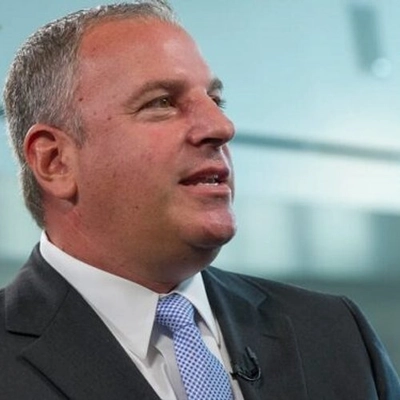 Dean Rotchin, CEO at BLACKJET, BlackJet
Test Reviews With Real Money
Three of us had started working together at TIC Investments as co-founders when we began to disagree over how much actual work each review required. One of the founding members believed in publishing quicker and with less work; what finally resolved the issue was an agreement by all parties involved on a common standard which could not be manipulated – every review is funded with our own money and is method-first. Each founder opened a live trading account, deposited their own funds, placed a live trade, timed the withdrawal of those funds themselves.
You cannot get your team to want to do better than the competition; however, you can get your team behind a method that worked or did not.
The debate arguments became much shorter after this; because the standard that we agreed upon did all of the debating for us – there were no longer subjective scoring battles.
If I were starting over today I would write that sentence down on day one instead of month six.
We lost time to debates which a single line would have taken care of quickly.
Thomas Drury, ACII, Co-Founder and Senior Trading Analyst at The Investors Centre
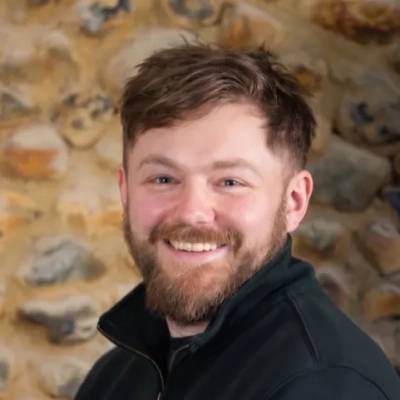 Thomas Drury ACII, Co-Founder & Senior Trading Analyst, The Investors Centre
Set One Quarterly Metric
A pivotal moment for me was when I merged SEOBro and Reddit Services from being two independent freelance businesses into a single discovery company using shared writers, strategists and operations personnel. There was no salary, equity or hierarchy that held the team together. The success of this transition came down to changing vague mission language to include a single, specific goal for each quarter. Each goal was represented by a single metric that included its own definitions/exclusions. Every contractor saw himself/herself inside of the goal.
When there were disagreements about which direction the two brands should go in, my decision making process was simplified. The quarterly metric wins, brand loyalty doesn’t.
Honestly, I thought people would continue to find motivation in doing the work based on how interesting they found it. They didn’t. Contractors drift when the goal is abstract. The first time the contractors could identify their contributions to meeting a clear objective in a weekly audit (same cadence as I do on all systems whether they’re having a good week or a bad week) most of the coordination issues related to the structure of the organization disappeared. Mission clarity is what replaces the org chart when you don’t have one.
 Roman Sydorenko, CEO, seobro
Prove Commitment Through Daily Discipline
The most challenging part was the eighteen months at The Investors Centre where everything failed. Three of us, full-time jobs, one side hustle which wasn’t working, and little evidence that we would have any success. What held it together was not a pep talk. A daily rule set, with early starts, fitness being a priority, afternoons reserved for family. Same schedule for everyone. The daily routine was the evidence of our commitment while we didn’t see any results yet.
I lead within the company and not above it. No credentials to hide behind; I did the same amount of work as everyone else and hired based on shared passion and spirit rather than current skills. By the time I left my sales position in August 2025 to go full-time, no one needed to be convinced that the vision was real; they had been living it for a year and a half.
Adam Woodhead, Co-Founder, Wolfstone Digital
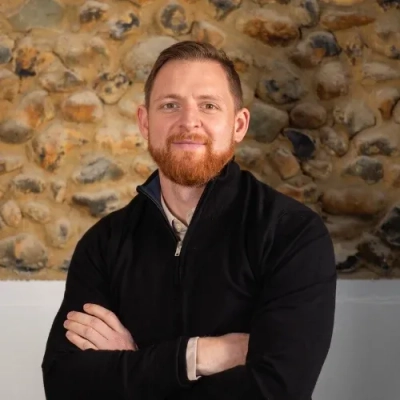 Adam Woodhead, Co-Founder, Wolfstone Digital
Chart the Operating System
When scaling 7 Figure Leap past the half-million mark I hit the exact point where the team and I were in full firefighter mode with no clear systems. I rallied everyone by pausing the whole operation for a short reset and asking the simple question of what we actually do as a company.
We then grabbed the biggest whiteboard we had and mapped sell and fulfill steps with sticky notes right in the room together. That single visual made the shared goal concrete instead of abstract.
The motivation came from letting the team see their own daily work as the foundation of the entire operating system instead of just another task list. Once they owned the map they stopped waiting for me to fix everything and started driving the next steps themselves.
 Dustin Riechmann, Founder, 7 Figure Leap
Tie Tasks to Scott’s Message
At WONDERFISH I built the Podcast Power Circuit service from my decade leading integrated marketing initiatives at Forbes, where creative campaigns only succeeded when everyone aligned on the same audience and message.
When we launched client Scott Abbott’s BOS-UP Moments book, our small team had to coordinate outreach, interview prep, and repurposed clips across multiple podcasts at once.
We kept everyone focused by tying every task directly to Scott’s core story of rebuilding after failure, then let each person own their piece like content extraction or host research.
This approach turned routine bookings into momentum that helped the book hit bestseller status, because the team saw how their individual work amplified one clear vision.
 James Colistra, Founder & Principal, WONDERFISH
Define Roles to Protect Homes
As a Firefighter EMT and the owner of Lassiter Roofing Team in Idaho, I had to rally our crew around consistently finishing complete replacements within a 1-to-3-day window without compromising our 5-year workmanship warranty.
I motivated the team by introducing structured role ownership from emergency response, ensuring our managers and installers had clear accountability for each phase of a metal, shingle, or flat roof installation.
Connecting our daily precision directly to safeguarding our neighbors’ homes and agricultural spaces in the Western Treasure Valley gave everyone a shared purpose rather than just a checklist of tasks.
 Kason Walton, Owner, Lassiter Roofing Team
Unite Mentors Around Clinical Support
Having owned two private practices over 30 years of patient consulting, I had to rally our coaching and clinical team around shifting from piecemeal instruction to an integrated three-pillar system.
I motivated the team by aligning everyone around a singular vision: eliminating practitioner burnout and isolation by ensuring our senior mentors review every complex case together rather than leaving clinicians to decide alone.
We backed that vision with our Thrive Nine assessments and done-for-you program infrastructure, showing our team that our true goal was saving clinicians years of building from scratch so they could safely transition without gambling their income.
 Garric Vosloo, CEO, Functional Medicine Fast Track
Connect Cables to Wedding Vows
Running Blue Ridge Sound across venues that look totally different — vineyard with no power, barn with a weird layout, open ceremony lawn — means your team has to buy into a plan they didn’t build themselves. The vision I rally around isn’t “make it loud,” it’s “make it invisible.” Nobody should notice the sound. They should just feel the moment.
The clearest example of this was coordinating a generator-supported outdoor ceremony. There’s no venue infrastructure to lean on, so every person involved has to trust the pre-mapped plan — cable routes, placement, backup paths — before anyone touches a knob. I got buy-in by walking through the *why* behind each decision during planning, not just assigning tasks. When people understand that the generator placement affects the cable route which affects the sound check window which affects the couple’s timeline, they stop treating their piece as isolated.
The strategy that actually works: connect individual roles to the moment that matters. Not “run the cable” but “this cable is what carries the mic when she says her vows.” That reframe changes how carefully someone works.
 Drew Edmondson, Owner, Blue Ridge Sound
Build Safer Systems With Input
I’ve had to do this as a founder in both dog training and marketing, but the clearest example was running a large-scale dog boarding, training, and grooming facility in LA. Different roles had different priorities, so I rallied everyone around one shared goal: safer, clearer, less stressful outcomes for every dog and human in the building.
The strategy was to make the vision operational, not inspirational wallpaper. We used shared language, written handling plans, quick team check-ins, and a culture where anyone could pause the process if something felt unsafe or unclear.
What motivated people was ownership. I didn’t just hand down rules; I asked trainers, groomers, and kennel staff what was breaking down in real life, then built systems around that feedback.
I use the same approach now at So Fetch Consulting: no vague “let’s grow” energy. Define the actual goal, show people how their work connects to it, track what matters, and remove the nonsense that keeps good people from doing good work.
 Karin Wright, Founder, So Fetch Consulting