
When you’re looking for a healthcare training program, you’re buying speed to employment and a cleaner hiring signal for employers who need proof that you can perform on day one. Discover healthcare training providers that publish outcomes so you can prioritize programs with the strongest job placement patterns.
Before you start looking at schools, try to anchor yourself in the bigger reality. Healthcare hiring is wide, with 1.9 million openings in the field every year, and demand shifts by role and region. So, you want a baseline source that stays steady across all of these variables.
Top Healthcare Certification Programs
These five programs are among the top in the industry and can help you get started on the right foot.
1. AIMS Education
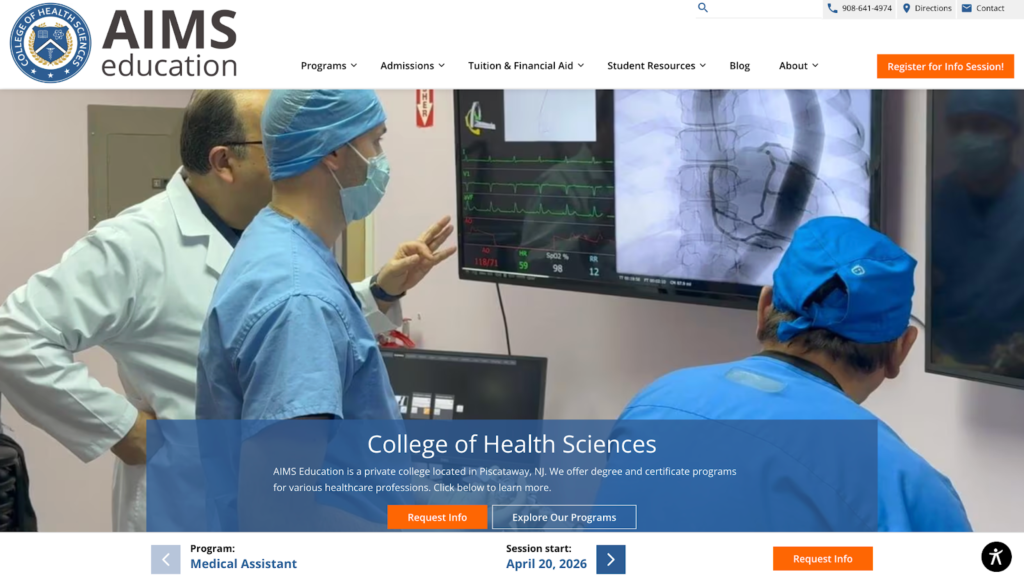
AIMS Education keeps the conversation practical. You’re looking at career training that leads into real credential pathways and outcomes you can review before you commit, which can help keep your decision grounded.
AIMS is licensed as a college and offers associate degrees in MRI technology, diagnostic medical sonography, cardiovascular technology, surgical technology and neurodiagnostic technology. AIMS also offers a certificate program for MRI technology. Graduates are eligible to take the ARMRIT MRI certification exam, and those with an associate degree can take the ARRT MRI certification exam. ARMRIT accredits the AIMS MRI program.
Key Features
- Outcomes page you can reference for MRI technology job placement rate examples
- MRI technology certificate and degree pathways in allied health
- Training built around clinical readiness and exam eligibility
2. Mayo Clinic School of Health Sciences
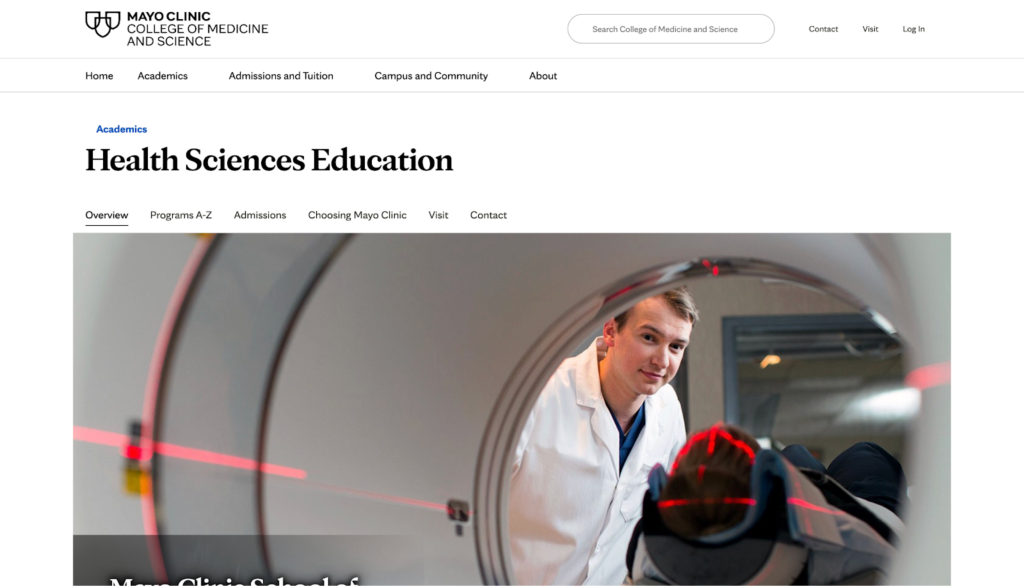
If your goal is maximum employer signal, Mayo Clinic School of Health Science carries weight. You’re choosing a training environment that sets high standards from day one. Some programs provide published outcome measures that help you validate placement patterns. However, you still need to conduct local checks because hiring practices vary by region.
Mayo programs are structured so that clinical training is not an afterthought. That is important when you’re thinking like a businessperson rather than merely a student.
Key Features
- Brand recognition that travels across markets
- Select programs publish outcomes measures that include placement data
- Training model tied to real clinical expectations
3. Kaiser Permanente School of Allied Health Sciences
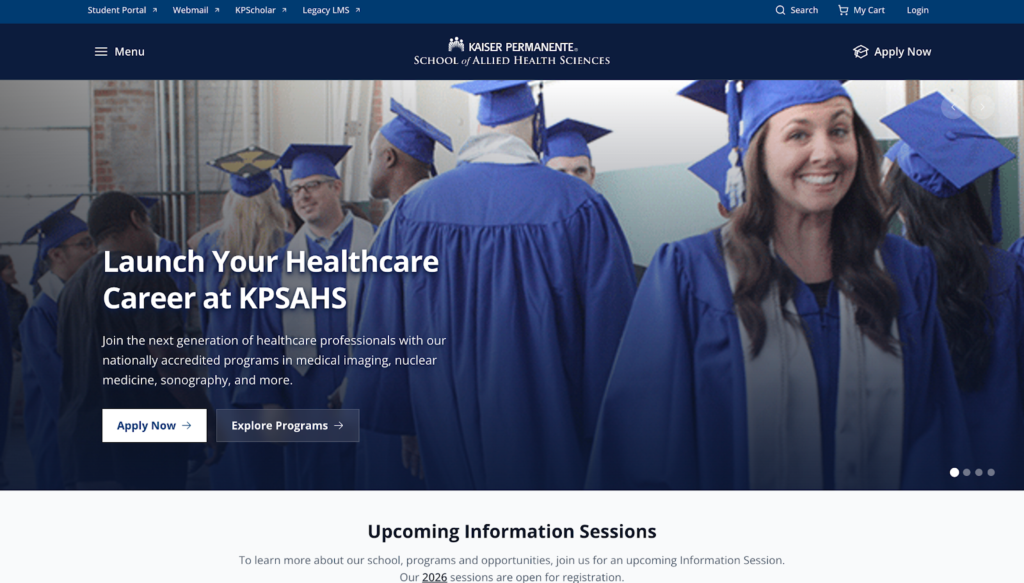
A school connected to a major healthcare system can change the feel of the entire training experience. This environment offers a real-world feel. When your program sits close to a working health system, you often get clearer exposure to real workflows, seeing standards and pace in real time.
Employers hire for training and fit, so practical training supports both. Kaiser Permanente School of Allied Health Sciences also has program outcome resources so you can compare what is reported and ask better questions during your enrollment calls.
Key Features
- Health system adjacent learning environment
- A program outcomes hub that supports verification
- Strong fit if Kaiser is a major employer in your area
4. Concorde Career College
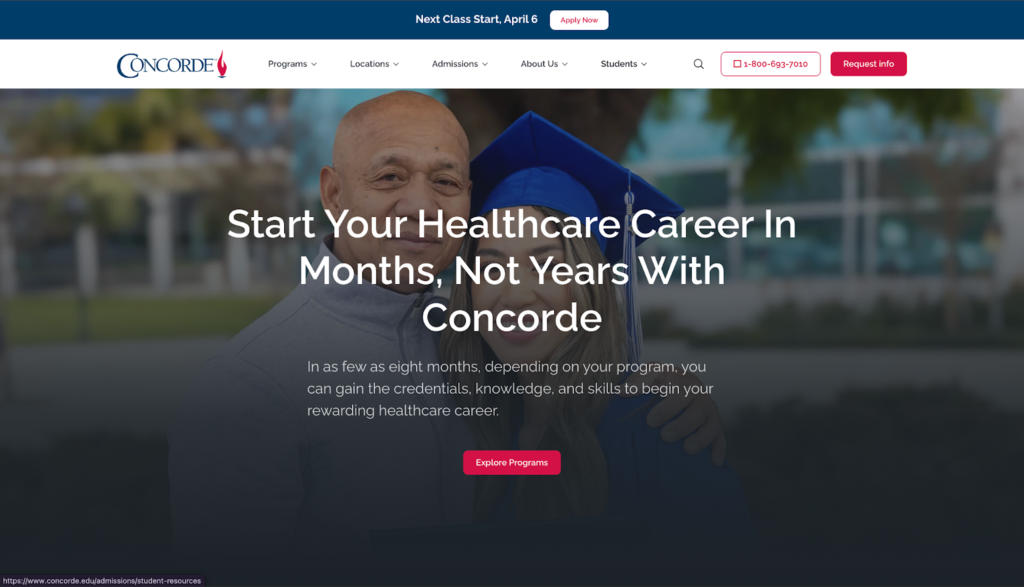
Concorde Career College is a great option if you want broader access and more campus locations. Concorde is well-known for career training across multiple markets, which can help if you need start date flexibility. It also means you may see more variation by campus, so you’ll want to verify outcomes at each one.
In some states, you can review public disclosures that include job placement rate examples, which is helpful because it gives you something concrete that you can match against local employer demand.
Key Features
- Multicampus footprint with healthcare training programs
- Best fit when geography and scheduling matter most
- Works well for students who want options
5. Carrington College
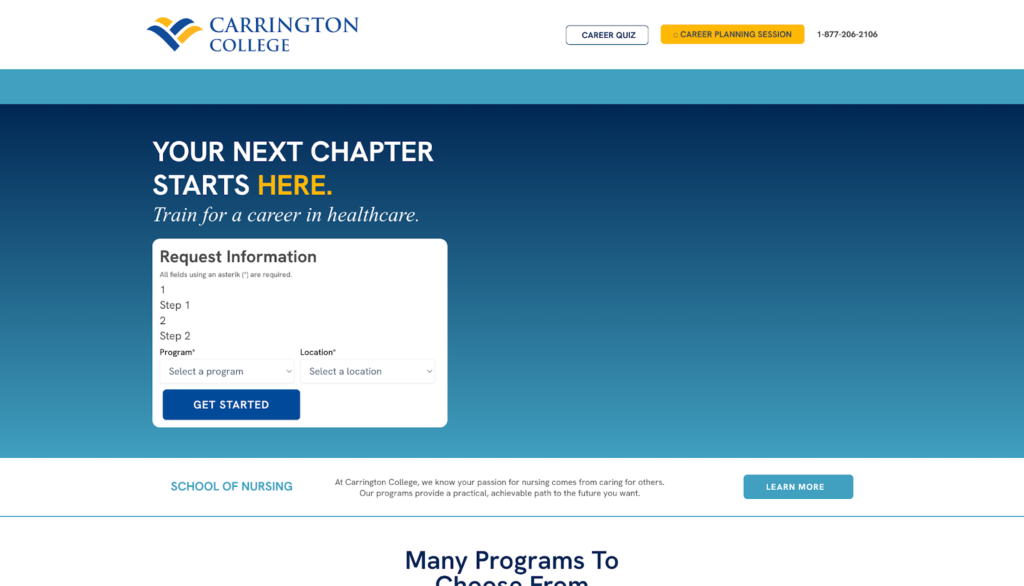
Placement is easier to trust when the school gives you something concrete to check. Carrington College can fit that lane, as it publishes a student consumer information hub. In some markets, you can also find program performance fact sheets that include employment or placement-related measures.
Carrington also works well when you want a straightforward career education model. You pick a path, confirm the requirements and ask the right questions to avoid surprises later.
Key Features
- A student consumer information hub that supports due diligence
- Performance fact sheets are available in some states and locations
- Good fit when you want documented metrics to review
At a Glance
Compare your options side by side to make the most informed decision.
| Provider | Standout Training Paths | Placement Signals |
| AIMS Education | MRI technology certificate and select associate degrees in allied health | Published outcomes content for MRI technology, including job placement rate examples |
| Mayo Clinic School of Health Sciences | High-rigor health sciences programs | Some programs publish outcome measures that include placement stats |
| Kaiser Permanente School of Allied Health Sciences | Allied health programs linked to major health systems | Program outcomes hub and public reporting references |
| Concorde Career College | Broad campus footprint and career training programs | State disclosures in some markets show placement rate examples |
| Carrington College | Career education with documented consumer support | Program performance fact sheets in some markets show placement examples |
How These Schools Were Chosen
Job placement rate can mean different things depending on who reports it. Some schools publish outcomes directly, while others do this through state disclosures. You want proof you can verify and training that maps to how healthcare employers hire, so here’s what was weighted most:
- Published outcomes or disclosures
- Credential alignment
- Clinical training
- Career-readiness support
- Program clarity
Frequently Asked Questions
Here are some common questions about healthcare training certification programs.
What does job placement usually mean?
It’s typically the percentage of graduates who obtained employment in the field within a defined period. Ask what counts as employed and for an exact time frame.
What time window should you look for?
Most reporting uses a set window after graduation. Ask for a written definition and compare across programs using the same timeline.
Do certificates or associate degrees lead to better placement?
It depends on the role and your market. In some areas, a degree can be more advantageous. In others, a focused certificate can still be a solid path.
The Write Prescription
You’re choosing a credential and a hiring signal. Start with programs that publish outcomes or disclosures and narrow by region. You can also narrow by credential pathway and clinical training. Ask for the definitions in writing and then compare programs to find the one that best fits you.