In the history of cinema, the frame has almost always moved in one direction: wider. From the academy ratio of early Hollywood to the sweeping vistas of Cinerama and IMAX, the goal of the cinematographer was to capture the breadth of the world. However, as we approach 2026, a new paradigm is shifting the literal and figurative orientation of the industry. The screen is no longer a horizontal window on a wall; it is a vertical mirror in the palm of the hand.
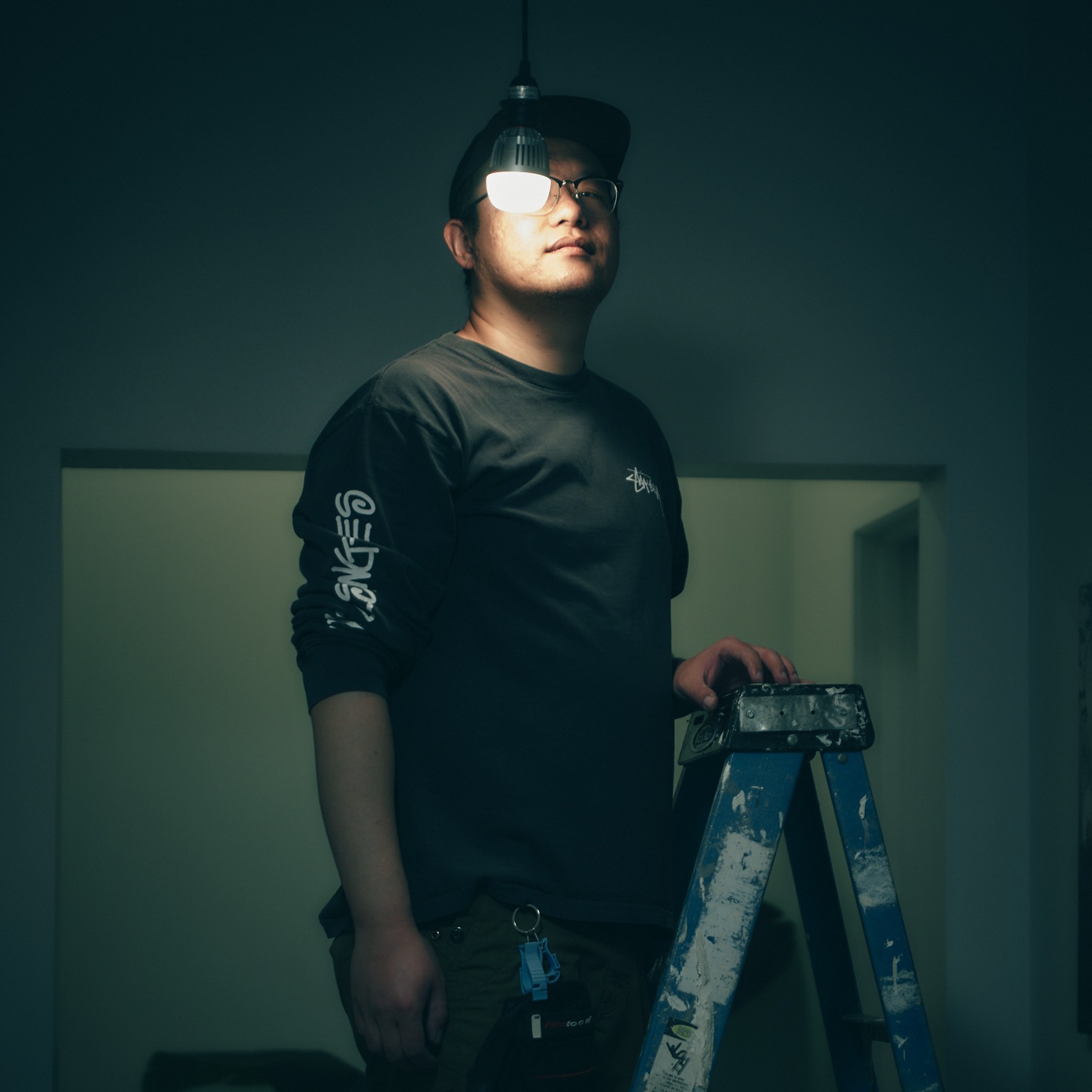
A key player in this evolution is Bin Luo, an award-winning cinematographer whose work spans traditional narrative features and the burgeoning world of vertical dramas. Based in Los Angeles with roots in the competitive media landscape of China, Luo is uniquely positioned to explain why the 9:16 format is not a limitation of the craft, but its next great frontier.
The Evolution of Attention: Why Vertical Cinema Is the New Standard
For years, vertical video was dismissed as the domain of amateur social media posts and “snackable” content. But according to Luo, the media landscape in 2026 has matured into a sophisticated ecosystem of storytelling. The reason for this sudden dominance in the U.S. market, he argues, is rooted in the fundamental shift of human behavior.
“Vertical series are going to grow fast in the US because attention patterns have changed,” Luo observes. “Entertainment is no longer confined to a fixed time block. People consume stories between meetings, in transit, or while multitasking.”
This isn’t just about shrinking a movie to fit a phone; it’s about a fundamental restructuring of narrative rhythm. Luo notes that a two-minute episode can now carry significant emotional weight if it is crafted with precision. “It is not about shortening cinema,” he explains. “It is about adapting narrative rhythm to the way people actually live. Storytelling follows behavior.”
From 16:9 to 9:16: A New Visual Grammar
Luo first encountered the potential of the vertical format when it was being pioneered in China. Transitioning from the 16:9 standard TV format—where he found success with award-winning projects like Jasmine and 7 Minutes—to the 9:16 vertical frame required a complete reevaluation of his toolkit.
“Coming from traditional cinema, where the frame has historically grown wider, adapting to 9:16 felt challenging at first,” Luo admits. “The visual grammar is different. Composition, blocking, even emotional distance shifts.”
In traditional cinematography, space is used to establish geography and scale. In the vertical format, that horizontal information disappears. Rather than seeing this as a loss, Luo views it as a “demand for precision.” He describes his approach to vertical framing as “sculptural.” In 9:16, the focus is pulled tight to the subject; the background becomes a secondary support rather than a sprawling environment. “What you remove becomes as important as what you show,” he says.
The Technology of 2026: Speed Meets Sophistication
As a cinematographer, Luo is acutely aware of how technology dictates the limits of the possible. By 2026, the technology supporting vertical drama has caught up to—and in some ways surpassed—traditional television workflows. Platforms like Drama Box, Sereal+, and Best Short now host series that command millions of views per episode, and the technical requirements for these projects have reached professional parity with mainstream TV.
“From a technology perspective, cinematography in 2026 is evolving across the entire ecosystem,” says Luo. The shift isn’t just in the cameras, but in the connectivity of the set. “Lighting equipment is more powerful, compact, and adaptable. Wireless control, battery efficiency, and modular systems allow crews to move faster while maintaining high production value.”
Luo highlights that AI is now influencing the full pipeline, from planning and on-set adjustments to post-production refinement. For vertical dramas, which are often shot and released within a two-week window, this efficiency is vital. “It’s about aligning the entire workflow to move efficiently without losing control,” he notes. The high-pressure environment of vertical production requires a cinematographer to be a master of the “compressed” schedule, ensuring that speed does not come at the expense of visual intent.
The Rise of a New Talent Ecosystem
One of the most significant changes Luo has observed is the professionalization of the vertical format. Organizations like the Screen Actors Guild (SAG) are paying closer attention to these series, reflecting a broader recognition that the format is now professionally grounded.
“Vertical series have gradually developed their own ecosystem of actors, many of whom have built strong followings on social media,” Luo explains. This synergy between viral influence and narrative craft is creating a new class of “mobile-first” stars. For Luo, working with these actors requires a collaborative spirit that bridges the gap between social media popularity and cinematic performance.
In fact, for Luo, the role of the cinematographer has always been one of leadership—a philosophy he carries into his work as the co-founder of Southside Pictures. Together with his partner Rios Chow, Luo has expanded the production company from Kunming to Shanghai and Taipei.
“Cinematography becomes a leadership role because it helps translate the director’s vision into something the whole crew can execute together,” Luo says. His business background at Southside Pictures informs his creative choices; he understands market trends, audience behavior, and the need for strategic decision-making.
This blend of high-art sensibility and pragmatism is evident in his award-winning short film Jasmine. The film, which earned him Best Cinematography at the MLC Awards and Best Narrative Short at LAHFF, was a masterclass in restraint. Shot largely in black and white, it only transitions to color at the very end. “I treated the black and white world almost like a graphic frame,” Luo recalls. This same sense of “graphic” precision is what he now applies to the vertical screen.
The Legacy of the Film Frame
Drawing inspiration from legends like Roger Deakins and Bradford Young, Bin Luo remains a student of light. Whether he is working on a sweeping narrative feature or a high-octane vertical series for a mobile platform, his goal remains the same: to create impactful visuals that resonate deeply with audiences.
As we look toward the remainder of 2026, Luo sees the vertical drama not as a replacement for cinema, but as a vital evolution. Much like when television first entered households, there were fears it would kill the movie theater. Instead, cinema evolved.
“Vertical drama does the same,” said Luo. “It does not threaten storytelling. It pushes it forward and creates more room for diverse artistic voices.”