

Business growth often starts with changing how challenges are viewed and handled. This article shares practical strategies for turning uncertainty, setbacks, and constraints into progress. Insights from experts in the field show how focused action, clear measures, and regular practice can support lasting success.
- Review Weekly Proof of Progress
- Use Constraints to Design Solutions
- Challenge Fear Narratives, Then Act
- Turn Setbacks Into Measurable Experiments
- Detect, Disrupt, Decide, Then Move
- Let Your Story Create Opportunity
- Clarify What You Truly Want
- Define the Problem Before You React
- Build Skills Through Regular Practice
- Seek Perspective, Then Take Action
- Embrace Flexibility Amid Uncertainty
- Examine Beliefs That Block Progress
- Track Signed Cases, Not Leads
- Document Handoffs for Independence
- Deliver an Early Client Win
- Rehearse Assertive Language Under Pressure
- Measure What You Can Control
- Make Low-Risk Bets on Change
- Earn Trust With Upfront Prices
- Start With Part-Time Remote Help
- Create Safety to Explore Ideas
- Treat Mistakes as Tuition
- Use Data to Replace Scarcity
- Package Outcomes, Not Hours
- Delegate Energy Drains to Experts
Review Weekly Proof of Progress
Mindset is the engine behind business success. Skills and strategy matter, but when confidence dips, as it does for every founder and professional, mindset determines whether you stall or adapt and keep moving. In nearly 20 years of recruitment and career coaching, I’ve seen equally talented people reach very different outcomes based on how they interpret setbacks: as proof they’re not good enough, or as information to learn from.
When I help clients build a growth mindset, I don’t start with positive thinking. I start with evidence. My key strategy is a 15-minute Friday review. Each week, write down what you achieved, who you helped, and what worked well, however small. Then reframe one challenge: swap “Why isn’t this working?” for “What proof of impact do I already have, and what can I adjust?”
It works because a growth mindset is built by noticing progress, not waiting for a big win. Over time, this habit replaces vague self-doubt with tangible proof of capability, and the next step feels clearer and more doable. I’ve used it myself while building my own business, and it remains one of the most reliable resets I know.
 Elizabeth Lenihan MSc, BBS (Hons), Career Strategist & Talent Solutions Consultant, Elizabeth Lenihan
Use Constraints to Design Solutions
My main strategy is to treat constraints as design inputs.
A growth mindset sets apart companies that continuously improve from those that repeat past practices. Since joining York Bridge Concepts 15 years ago, first in field operations and now leading our bridge consultancy, I have observed that successful teams and clients treat each project as a learning opportunity, not just a task to finish.
My transition from operations to consultancy illustrates this approach. Instead of viewing sales as a gap to fill, I leveraged my practical experience understanding website behavior, identifying project pitfalls, and recognizing success factors. This turned my background into an asset.
People often approach me with challenges, such as wetlands, complex permitting, or concerns about sensitive environments. Rather than viewing these as obstacles, I encourage seeing them as valuable information for better solutions. For example, a protected wetland suggests using a low-impact, top-down construction method, while a difficult site calls for a custom design instead of a standard approach.
Decisions are made more quickly and results are more durable when clients shift from asking “what’s stopping us?” to “what is this site telling us?”
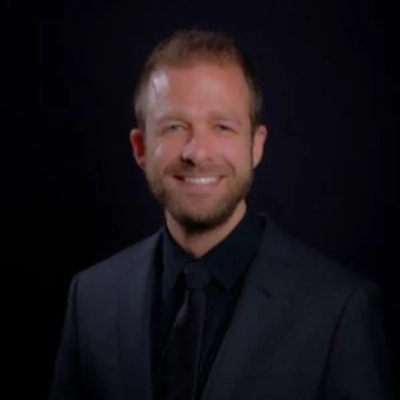 Brian Kennedy, Director of Bridge Consultancy, York Bridge Concepts
Challenge Fear Narratives, Then Act
What holds leaders back most often is the story they’ve started telling themselves about what they can and can’t do.
Mindset matters in business because leaders work in uncertainty almost every day. A new opportunity or a hard setback can set off doubt quickly. In uncertainty, the human mind fills unknowns with fear. That’s normal. It becomes a problem when fear starts making the decisions.
With clients, the strategy I rely on most is to challenge the story and then take the next step.
A client might say, “I’m not ready for that role,” or “If I try this and it fails, people will wonder whether I belong here.” I don’t rush to reassure them. I get curious instead. What evidence supports that belief, and what evidence cuts against it? Is this a fact or a fear? What would you try if you didn’t have to get it perfect the first time?
Those questions help separate what’s actually happening from the story fear is telling.
Insight only gets a leader part of the way, though. So the conversation ends with one step they can take now. It might be the hard conversation they’ve been putting off. It might be raising their hand for an assignment, or making a decision without every answer in hand.
I’ve found that confidence usually follows action, and I learned it myself. When I started my coaching business, I felt like a used car salesman every time I mentioned my services. The story I told myself was that asking for business made me pushy. When I tested that story, it didn’t hold up. So I stopped selling and focused on building relationships and adding value, and people started reaching out to me on their own.
Many of the leaders I coach struggle with the same thing when they need to speak up for themselves, whether that means asking for a promotion or putting an idea in front of their board.
Setbacks get the same treatment. Instead of asking, “What does this failure say about me?” my clients learn to ask, “What did I learn, and what will I do differently?” For me, that question is where a growth mindset actually shows up.
Leaders don’t need to get rid of every doubt before they move. They need to notice it and look at the belief underneath. Then they can decide whether that belief deserves a vote. In my experience, most people never feel fully ready. The ones who grow take the next step anyway.
 Gearl Loden, Leadership Consultant/Speaker, Loden Leadership + Consulting
Turn Setbacks Into Measurable Experiments
Mindset plays a practical role in business success because it shapes what an owner does when something isn’t working. A missed sales goal can lead to “I’m bad at sales,” or it can prompt a closer look at where prospects lose interest. Those two responses lead to very different decisions.
At Willowcross Consulting, I help clients develop a growth mindset through a simple strategy: turn a setback into a small, measurable experiment. We start by separating the facts from the story the owner is telling themselves. Then we choose one change to test.
For example, if a service business is getting inquiries but few bookings, the owner may assume their prices are too high. Before changing prices, we look at how quickly inquiries receive a response, whether the next step is clear, and where the conversation stops. The experiment might be to respond within one business day using a clearer message for the next two weeks, then compare the booking rate.
That process builds confidence from evidence. It also makes progress manageable. A business owner does not have to believe every decision will work; they need a way to learn from the results and make the next decision with better information.
 Dani Landers, Principal Consultant, Willowcross Consulting LLC
Detect, Disrupt, Decide, Then Move
Mindset is the filter that determines whether our best business ideas move from wants to haves or just stay stuck on paper. As an entrepreneur, it’s easy to run right into what I call a cognitive traffic jam when we’re growing our businesses. Those jams are the things like self-doubt or overwhelm where your brain pumps the brakes and locks you into a fixed mindset.
To support my clients in shifting back into the open space of a growth mindset, we run a quick experiment called Detect. Disrupt. Decide.
First, we Detect what’s happening in the body. If your breath is shallow or your shoulders are up by your ears, your nervous system is sounding an alarm, and creative thinking gets much harder in that state. Settle the body first so the thinking part of your brain can come back to the table.
Next, we Disrupt the traffic jam. Instead of seeing the mental roadblock as a personal flaw or a dead end, we treat it like useful data. We get curious about what the hesitation is really pointing to, which starts to take the bite out of it.
Finally, we Decide on one small, doable step. Action builds momentum and motivation, so pick one step that feels manageable. Something that gets you moving through the hesitation so you’re turning that want into a have.
 Pam Aks M.S., PCC, RMT, Certified Neuroscience-Informed Mindset Coach, What’s Within U, LLC
Let Your Story Create Opportunity
I left a steady nonprofit job at 60 to launch my agency because I needed to find my own Why. That decision made clear how mindset turns late starts or unusual backgrounds into real business strengths.
My mix of accounting, decades of drumming, and on-the-job web skills let me relate to service firms and nonprofits on both the numbers and creative sides. Embracing that full story instead of hiding my age or past created the trust that kept almost every client for nine years.
I help clients develop the same outlook by spending time upfront learning their Why and expectations. We then build sites that support their growth rather than just adding code.
One key strategy is treating your personal story as evolving, not fixed, so new experiences keep feeding fresh opportunities and relationships.
 Fred Z. Poritsky, Chief Idea Consultant, FZP Digital
Clarify What You Truly Want
Mindset matters in business, but I don’t think it’s something you simply install. A growth mindset shows up in what you actually do when you’re faced with a decision, uncertainty, or a setback.
Most of my clients aren’t short on ambition. They’re chasing someone else’s number: a revenue target, a title, a milestone they picked up from a competitor and never once stopped to examine. That’s usually what looks like a fixed mindset from the outside: someone defending a goal they never actually chose.
One strategy I use with clients is to pause before jumping into strategy and ask: “What are you actually trying to protect or build here?” Stability’s different from freedom. Reputation’s different from growth. Once the real objective is clear, we can make better decisions, and that clarity often creates the mindset shift people were looking for in the first place.
 Kirana Sidin,CCP, Author | Strategic Life Coach | Speaker, Good Life Coaching
Define the Problem Before You React
Mindset is what stops a bad month turning into a reason to quit. The founders I’ve seen keep going stop treating a bad result as a verdict on themselves. What works is getting them to write the actual problem in one sentence before they react to it. That one sentence usually shows the fix was never as personal as it felt.
 Lilach Bullock, AI Implementation Consultant and Fractional CMO, Lilach Bullock
Build Skills Through Regular Practice
As founder of Skills 2 Grow, I believe mindset is central to business success because investing in personal growth builds the confidence that drives better decisions. To help clients develop a growth mindset I focus their work on consistent learning and development rather than one-off fixes. One key strategy I use is a simple, regular learning plan that ties specific skills to immediate business actions. By practicing and applying new skills on a schedule, clients gain confidence and steady progress over time.
 Julian Frincu FIOEE • MCMI • MIC • MABM • MABP • MIoL, Founder & Business consultant, Skills 2 Grow
Seek Perspective, Then Take Action
Mindset matters in business because it shapes what you notice, what you think is possible, and what you do next.
A lot of the time, the blocker isn’t capability. It’s the story someone has attached to the situation: “I’m not ready”, “I need more experience”, “I’m not that kind of person”.
One of the simplest things you can do is step outside yourself for a minute.
Ask: What would I tell a friend in this situation? Or if someone I respected was facing exactly the same thing, what would I tell them to do? It’s amazing how quickly the answer can become clearer when you take some of the emotion and self-judgement out of it.
I also like borrowing evidence from other people. The people you admire didn’t start where they are now. They got there by doing things, learning, getting some things wrong, adjusting and building confidence as they went.
That can be useful proof that where you are right now is okay. You don’t need to have the whole path figured out.
So come back to the now. What’s one small thing you can do today that moves you forward? Maybe it’s a conversation, sending the email, making the decision, trying something and seeing what happens.
Mindset is often built through doing the small things well. Confidence doesn’t always come first. Sometimes you act, get a bit of evidence that you can do it, and that starts to change what you believe is possible.
 Andrew May, Founder & Executive Coach, Parallel Perspective
Embrace Flexibility Amid Uncertainty
Flexibility is key which allows one to navigate the short term and long term planning needs. When people become too fixated on performing work a certain way or achieving set outcomes, this starts limiting one’s ability to rationalize contingency measures when needed. Business is like life, curve balls exist which require us to pay attention in real-time while maintaing a healthy outlook for how to efficiently work well with people and ideas.
Clients are reminded when they integrate a sensible degree of flexibility in their business planning and execution, the results can yield better than expected. This trickles down to financial performance and the quality of relationships which are strengthened in the process, among a few other benefits. A short sighted mindset will increase chances of oversight and unexpected complications when navigating business operations day to day. Flexibility also helps professionals offset high risk when leveraging self awareness in the process.
 Sasha Laghonh, Founder & Sr. Advisor to C-Suite & Entrepreneurs, Sasha Talks
Examine Beliefs That Block Progress
We react to workplace challenges based on beliefs that have kept us safe in the past. If a leader’s foundational beliefs (their mindset) are misaligned with their current corporate environment, their go-to behaviours become a liability. A true growth mindset means gaining the profound self-awareness required to recognise when the “scaffolding” of past behaviours is actually hindering current progress.
 Kevin Conway, Executive Coach, Kevin Conway Coaching
Track Signed Cases, Not Leads
My best client almost quit in month three.
Not seeing results. Dashboard was flat.
One question: how many cases had he actually signed?
Silence.
We pulled intake records. Cross-referenced manually. Two hours.
Eleven cases from $4,200 in ad spend.
He hadn’t known.
That’s the only mindset piece I come back to.
You’re measuring something. Make sure it connects to revenue.
Most law firm owners watch leads. Not cases.
The firms that grow track cost per signed case.
One number.
 Abram Ninoyan, Founder & Senior Performance Marketer, Gavel Grow Inc
Document Handoffs for Independence
Mindset decides whether a leader builds the business or stays stuck inside it. The belief I see most often in founders is “no one else can do this the right way.” It keeps them doing everyone’s job, and it limits growth more than most market conditions do.
The strategy I use with clients is to build mindset with systems, not willpower. We start with a simple exercise: write down everything you did last week, then mark what only you can do. Seeing it on paper moves the conversation from “I can’t let go” to “here’s what I’m ready to hand off.”
Then we make the new habit easy to keep. A documented process and a clear owner show the leader that the work still gets done without them. Each good handoff builds trust, and that confidence is what a growth mindset looks like day to day.
I learned this myself. I’ve had to start over and rebuild, and what carried me through was structure more than motivation.
 Gabrielle Frachiseur MS, CHES, Founder & CEO, ProTask Solutions
Deliver an Early Client Win
Give a new client one small win on day one and their mindset will follow.
I’m not a mindset coach but I built Portico, which onboards clients, and what stands out in that work is that confidence follows evidence. People feel capable when they can see something finished, and a client’s first week is no different. So ask for one easy thing right away, like confirming contact details or signing the first document, and say what happens next.
The mistake to avoid is a long intake with nothing visibly finished, because the client feels behind before the work has started. A small first step turns “this is going to be a lot” into “this is moving”, and every later request lands better.
Vlad Kuzin
Founder of Portico
Rehearse Assertive Language Under Pressure
Mindset often decides whether a capable professional is heard at all.
I’m a neurolinguist with 27 years of experience, and I work with senior professionals who have built careers in English that isn’t their first language. Their skills are rarely the problem. Their vocabulary is rarely the problem either. What holds them back is a belief that sits underneath: “my English isn’t good enough, so I have to prove more.”
That belief stays quiet in a relaxed conversation. It switches on when the stakes rise: an interview, a pay negotiation, a presentation two levels up. And it changes how people speak. They stop stating and start proving. More detail, more justification, more hedging, “we” instead of “I”. They believe it sounds diligent. The listener hears lower seniority, often within the first minute, before the argument itself has even landed.
This is why general confidence work so often fails here. You can tell someone to “believe in yourself”, but the belief doesn’t live in the abstract. It lives in one specific moment of one specific conversation.
My key strategy: work on the belief exactly where it shows up.
First, I ask clients to record two or three minutes of a real conversation that went wrong, unedited, with every pause and search for a word.
Second, we find the single point where they moved from stating to proving. It is almost always one sentence. Seeing it in their own speech is often the first time they realise the problem was never their English.
Third, we build a different sentence for that exact moment, in their own words, and rehearse it out loud until it holds under pressure.
A growth mindset becomes real when people can see precisely where their old story speaks for them, and practise replacing it. Belief follows behaviour faster than behaviour follows belief.
 Natasha Grant, Founder & Creator
Measure What You Can Control
Most people think mindset is about confidence. In my experience it’s really about how you handle the boring stretch when nothing is working yet, and that’s the part that decides whether a business survives. I learned this the slow and hard way. Early on at STOCK UP! with LARRY JONES, I’d pour a day into a video, publish it, and watch it go nowhere. The fixed-mindset reaction is to read that silence as a verdict on you. The growth-mindset version is to read it as data, publish again tomorrow, and trust that the reps compound. That second response is the entire difference, and it’s a muscle, not a personality trait. The YouTube channel reached 694K+ subscribers because I kept treating flops as information instead of failures.
The strategy I come back to with people is to separate the thing you control from the thing you don’t. You don’t control whether a video lands or a trade moves your way. You control whether you showed up, whether you did the work, whether you learned something from the miss. I teach new investors the same habit, where the mistake isn’t losing on a bad call, it’s letting one bad call convince you to quit learning. Shrink your scorecard down to what you can actually influence, and the growth mindset takes care of itself.
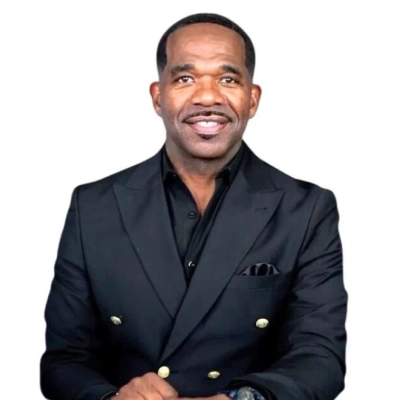 Larry Jones, Founder & Host, STOCK UP! with Larry Jones
Make Low-Risk Bets on Change
The fixed mindset I see most often in clients isn’t fear of change. It’s the belief that change has to happen all at once. Leaders put off improvements for years because they assume the only real fix is replacing everything, and that feels too big to start. One payments client of ours was stuck there: a full replacement of their legacy platform would have taken 18 to 24 months. Instead, we added new modules one at a time alongside the old system while it kept running. There was no downtime, manual work fell by over 40%, and transaction costs came down by up to half.
My key strategy is to make the first bet small enough that failing would be cheap. Once a team sees one piece work in production, the conversation changes. They stop asking whether change is possible and start asking what to improve next. That shift tends to last longer than any motivational talk.
 Vlad Mironov, Head of Customer Success, Jelvix
Earn Trust With Upfront Prices
Mindset shaped the kind of business we built. Homeowners are tired of tradies who don’t turn up and invoices that don’t match the quote. When we started Elite Electrical, we could have accepted that as the way the industry works. We saw it as a standard we could beat instead. In a service business, a growth mindset means treating a problem everyone puts up with as a reason to do things differently.
It’s why we built the business on upfront flat-fee quotes, multi-trade licensing and a lifetime workmanship guarantee. We also follow one simple rule, which is to treat every client’s house the way you’d want your own treated.
We work with Brisbane homeowners rather than corporate teams, so for our clients the shift is in how they think about their homes. Plenty of people dread calling an electrician or AC technician. They expect to be ripped off or let down, so they wait until something breaks.
Our key strategy is radical transparency. Every client gets a flat-fee quote before any work begins, so there’s no surprise invoice at the end. Once cost stops being the unknown, people stop patching problems after a breakdown and start planning electrical safety and solar upgrades.
 Blaide Knox, Director, Elite Electrical Maintenance and Airconditioning
Start With Part-Time Remote Help
Mindset shows up first in how a founder spends their own time. Most small business owners start out doing everything themselves, and the hardest shift is accepting that doing it all yourself is not the same as growing. For small businesses that can’t afford high local hiring costs, remote hiring isn’t about replacing workers. It’s the mindset I tell our clients that hiring virtual assistants (VAs) or hiring remotely is the first step that helps a founder stop losing time on basic tasks and start focusing on growing the business.
The one strategy I’d share with other founders and business woners is to treat growth as something you test rather than something you bet on. Start hiring VAs part-time. Buy the exact help they need and try new work routines without big financial risk and add hours of virtual assistants as revenue grows. In fact, based on our data through July 2026, 41% of our clients (founders and business owners) start hiring assistants at 80 hours a month and scale the hours as the business grows.
 Alon Pearl, Founder & CEO, VA Masters
Create Safety to Explore Ideas
I learned about mindset before I ever ran a business. When my dad was diagnosed with a rare kidney cancer, we were told nothing could be done. It takes about $2 billion to bring a new drug to market, and my Penn State teammates and I raised $10,000 in our first year. On paper, that was nothing. What I saw was that simply taking action gave people hope, and that effort was later credited as a catalyst for the first new treatment in the field.
The one strategy I rely on comes straight from sports: relieve the fear of failure so people can play with freedom. Athletes who are afraid of making the mistake usually make it. Business teams work the same way.
At PledgeIt, that means a real safe space to fail. People bring ideas from outside their job description and test them without worrying about being punished if they don’t work. We’re direct about results, and everyone knows where they stand, but a missed experiment gets treated as information.
 Scott Shirley, Founder & CEO, Pledge It
Treat Mistakes as Tuition
The founders who make it aren’t the ones with the sharpest plan on day one. They’re the ones who treat every mess-up as tuition instead of proof they were never cut out for it.
One example here is me. I built Poppy Planning without outside money, so mindset wasn’t some inspiring concept I’d read about somewhere. It was the only thing I actually had on the hard days. Early on I underpriced a wedding so badly I basically worked it for free. Two choices in that moment: decide I was bad at business, or decide I’d just paid to learn exactly how to price the next one. I picked the second. That reframe is what separates the people who quit at year two from the ones still standing at year ten.
When I say “clients,” I mean my own team and the corporate leaders I plan for. The thing I come back to most is separating the decision from the person. When a planner of mine botches a vendor timeline, I don’t ask “why did you mess up.” I ask “what would you do differently next time” and then I actually let her run the next one. You build that muscle by handing people a second at-bat right after the strikeout, not by sitting them on the bench for a debrief. One planner who once completely froze under a florist delay now handles our trickiest weekends, because I let her fail forward instead of pulling the reins back (genuinely hard not to step in at the time, but I’m glad I held off). Treat mistakes as data, hand people the next chance quickly. Confidence grows faster than you’d expect.
 Emmy Byers, Founder and Managing Director, Poppy Planning
Use Data to Replace Scarcity
In aviation marketplaces, mindset separates operators who adapt from those who get left behind. I’ve watched this happen repeatedly at Jettly. We don’t do mindset coaching, but we do help charter operators move away from scarcity thinking. One way: we show them data. When operators see actual booking patterns and demand across our network, they stop hoarding inventory and start working together. They realize the market is larger than they assumed. I tell them, “Your competition isn’t other operators on the platform. It’s the old system of opaque pricing and limited access.” That shift in perspective changes how they operate. Business growth comes from replacing assumptions with evidence and then acting on it.
 Justin Crabbe, Founder, Jettly.com
Package Outcomes, Not Hours
Many founders think they have capacity limitations; however, most of their capacity limitations are actually disguised packaging issues. When a founder says “I cannot grow because I am only one person”, the actual limit is usually how the work is being sold, and not how much work exists.
This happened to me too. For many years, I billed myself hourly as an independent SEO consultant. I believed my only option for growing my business was to hire additional people. Therefore, I thought growth would be limited because I was selling time instead of outcomes. But, my thinking changed once I no longer rented out my expertise by the hour, but rather created packaged products (offered) with specific scopes and defined deliverables. This allowed me to operate both SEOBRO and RedditServices as one owner/employee versus creating a larger agency where I had to hire other employees. Once I simplified delivery on these services, I also improved profit margins so that they were no longer tied to my calendar.
The process I take clients through is identical. List all of your thoughts about why you believe you cannot do something based on “I can’t because…”, and identify whether the constraint is truly a constraint (i.e., will still exist if you sell the work differently or package the work differently), or if the constraint disappears if you change how you price or productize the work. Most of them disappear.
 Roman Sydorenko, CEO, seobro
Delegate Energy Drains to Experts
In my work with founders like Scott Abbott, I’ve seen mindset shift from “I must handle every task” to “I focus where I create the most value.” This change turned his book launch into a bestseller through targeted podcast appearances without him managing outreach.
I help clients build that growth mindset by matching them with partners who handle the heavy lifting on content repurposing and pitching. Scott used the 10-80-10 approach to vet systems and experts, freeing time for coaching and writing while still hitting top shows.
One key strategy is to audit your calendar for tasks that drain energy yet aren’t your core strength, then delegate them intentionally. That single step lets founders test new channels and compound their authority faster than working solo.
 James Colistra, Founder & Principal, WONDERFISH