The Dead Hand update quickly became one of the most talked-about topics in CS2. In the span of one week, Valve pushed out two major patches, and together they made it clear that cases are starting to take a back seat. The market reacted almost immediately, players shifted their attention to new offers, prices, and the overall way skins are obtained, and the community once again started talking about the direction Valve is taking with the skin economy. Updates like this have a clear effect on interest in items, the perception of rarity, value, and entry into the market. Dead Hand already looks like an important moment for the whole skin ecosystem, and the effect of the release will be visible in prices, demand, and player behavior over the next few weeks.
What the Dead Hand Collection Brings
The collection has a clear visual identity
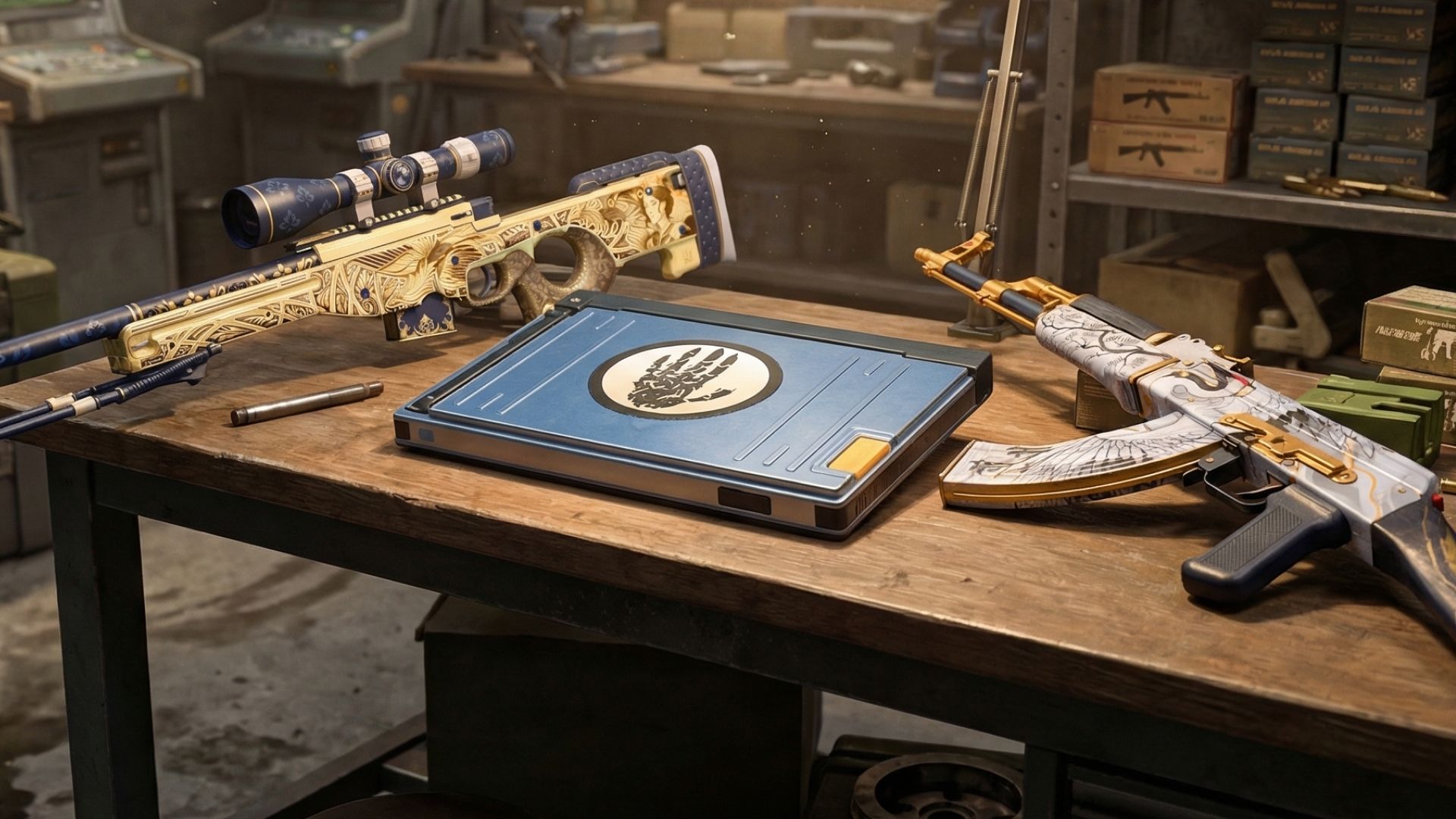
Dead Hand stood out right away thanks to a brighter and more cohesive style. In Valve’s official patch notes, the collection is presented as a major new release with 17 finishes and 22 gloves as rare special items, and that comes through clearly in the skin lineup itself. One collection brings together Eastern influences, graffiti, anime-style aesthetics, gold detailing, cold blue tones, and shimmering finishes. That is why AWP | Queen’s Gambit, Glock-18 | Fully Tuned, P90 | Deathgaze, P250 | Kintsugi, AK-47 | Crane Flight, and MP9 | Urban Sovereign quickly stood out and started drawing attention.
The gloves took almost all of the attention right away
The new gloves almost immediately became the main talking point around Dead Hand. The whole lineup feels bolder than most usual updates because of its strong use of color and very different moods across the set. There are pairs for expensive red, white, blue, and gold loadouts, along with Eastern patterns, waves, glossy finishes, bright camo, and intentionally unusual designs like Hand Sweaters and Garden Gloves. Because of that, the discussion quickly shifted to favorite pairs, future combos, and early price expectations.
The Path to Skins Keeps Changing
Dead Hand became the second Terminal release in CS2 after Genesis and showed that Valve is locking this model in as a permanent part of the game. Items from the collection come through the Dead Hand Terminal, which is available in the weekly drop, and inside it the player gets a series of offers and decides right away what to take. This format pulls players into the process faster and ties their attention more closely to a specific item, its condition, and its price. For the market, this means a very noisy start and a more gradual settling after that, because new terminals keep coming through weekly drops, and the number of items keeps growing with them. Because of that, interest in the near future will stay focused on the strongest skins and the most noticeable gloves, while the rest of the collection will begin finding a calmer price level.
The March Patch Affected the Game Itself
In the same week, Valve also moved the competitive side of CS2 forward. In the March 4 update, Inferno got a wider Balcony on A, Graveyard was closed off, and clipping was adjusted at the small window near Second Mid Balcony. These changes directly affect how the A site is read, how the approach is defended, and how retakes play out. Against that backdrop, ESL Pro League Season 23 was underway, with Inferno included in the map pool for the final stage of the tournament. For the game itself, that is a strong signal. In one week, Valve updated both the path to skins and one of the most sensitive points on a competitive map.
The Market Got an Uneasy Start
The opening rush
Right after the release, the market was left in an uncertain state. The new items were already being discussed very actively, but there was still no full picture of prices because they were under a 7-day trade hold. At the same time, Valve’s March 4 update changed another important part of the flow, letting items stay in a player’s inventory even while listed on the Steam Market. Because of that, the first conclusions were based on screenshots of offers, isolated examples, and the general hype around the collection.
Price lines in motion
Glove offers almost immediately became the main topic. In the first openings, field-tested pairs showed up below $250 and well-worn ones below $130, so the discussion quickly shifted to where the real price level for Dead Hand actually sits. For those tracking early price swings, a closer look at some CS2 skins show just how sharply values can move after a major collection drop. The biggest questions for now are tied to higher wear tiers and the most noticeable designs. As more weekly drops come in and more openings happen, some of the gloves should cool off, especially outside the most talked-about pairs.
The next round is already taking shape
Signals in the code
In February, dataminers noticed new strings tied to mission points and old mission tokens. Finds like these have long been associated with operation-style logic, so talk about operations returning to CS2 became serious again. This is still not a Valve announcement, but the set of references itself looks like preparation for a larger task system inside the client.
More than file noise
The same findings also included mentions of a new client and a new game coordinator. That matters more than the usual noise around files because details like these usually point to infrastructure being prepared, not random tests. If Valve is really moving CS2 toward its next major stage, then Dead Hand looks like part of a broader shift, where the game gets both a new way to deliver content and a base for seasonal systems with missions.
The market’s longer rhythm
If an operation-style format or a new client layer with missions really follows Dead Hand, interest in skins will likely get a longer wave than a regular collection drop. Systems like these keep players in the game longer, push discussion around rare items further, and raise attention toward favorite loadouts and new collections faster. In that kind of environment, the market usually starts moving much more sharply as soon as the game picks up a new seasonal impulse. That is why Dead Hand already looks like a possible entry point into the next big cycle for all of CS2.
The future is already here
For CS2, the direction itself matters most right now. The game is gradually moving toward a more unified system where cosmetics, in-game activity, and community attention work more closely together. In that kind of environment, the value of skins depends more on overall interest in the game, the pace of updates, and how long attention stays around new releases. That is what becomes the foundation for long-term interest in collections, loadouts, and rare items. If Valve keeps its current pace, the market will react faster to each new step, and the role of skins inside CS2 will become even more visible in the coming months.