The clock is ticking on a 48‑hour film festival set in New York. Crew members scramble, lines are still in flux, and the city hums outside. In the middle of the chaos, actor Martha Argyriou builds a supporting character with such clarity and emotional weight that the performance goes on to earn recognition in the competition for The Panic in Prospect Park. For Argyriou, the project became a calling card for what happens when deep psychological insight and classical training meet the urgency of independent filmmaking.
That intersection defines Argyriou’s career. Based in New York City, she works across theatre, film, television, and commercial media, moving from Shakespeare and Chekhov to Greek comedies and contemporary indie stories with unusual ease. At the heart of this range lies a foundation that is rare even by industry standards: a BSc in Psychology, an MSc in Forensic Psychology, and years of intensive conservatory training on both sides of the Atlantic.
Psychology as a Secret Weapon
Argyriou’s academic path might seem unconventional for an actor, but it has become one of her greatest assets. Psychology and forensic psychology have trained her to think in layers — about trauma, power, behavior, and the invisible forces that shape people’s choices. Instead of playing “types,” she approaches characters as complex case studies, asking what drives them, what they conceal, and how those internal conflicts live in the body. This background sharpens her sense of stakes and makes even supporting roles feel lived‑in and specific.
On the training side, Argyriou completed the two‑year conservatory program at HB Studio in New York City and the Summer Conservatory at the Stella Adler Studio of Acting, while also working extensively with Drama Classes London. There, she immersed herself in scene study, character development, text analysis, movement, and voice, building a toolkit rooted in truthful acting and ensemble awareness. Early experiences in Greece and California further expanded her range, giving her a foundation in both classical and modern repertoire long before she settled into New York’s indie landscape.
What distinguishes Argyriou’s practice is how she bridges that conservatory discipline with the realities of professional production. She carries the rigor of studio work — careful text breakdowns, physical and vocal preparation, deep backstory building — into fast‑paced environments where time and resources are limited. Rather than being thrown by constraints, she uses them as a framework for precision, arriving ready to collaborate, adjust, and deliver under pressure.
A Versatile Force on Stage and Screen
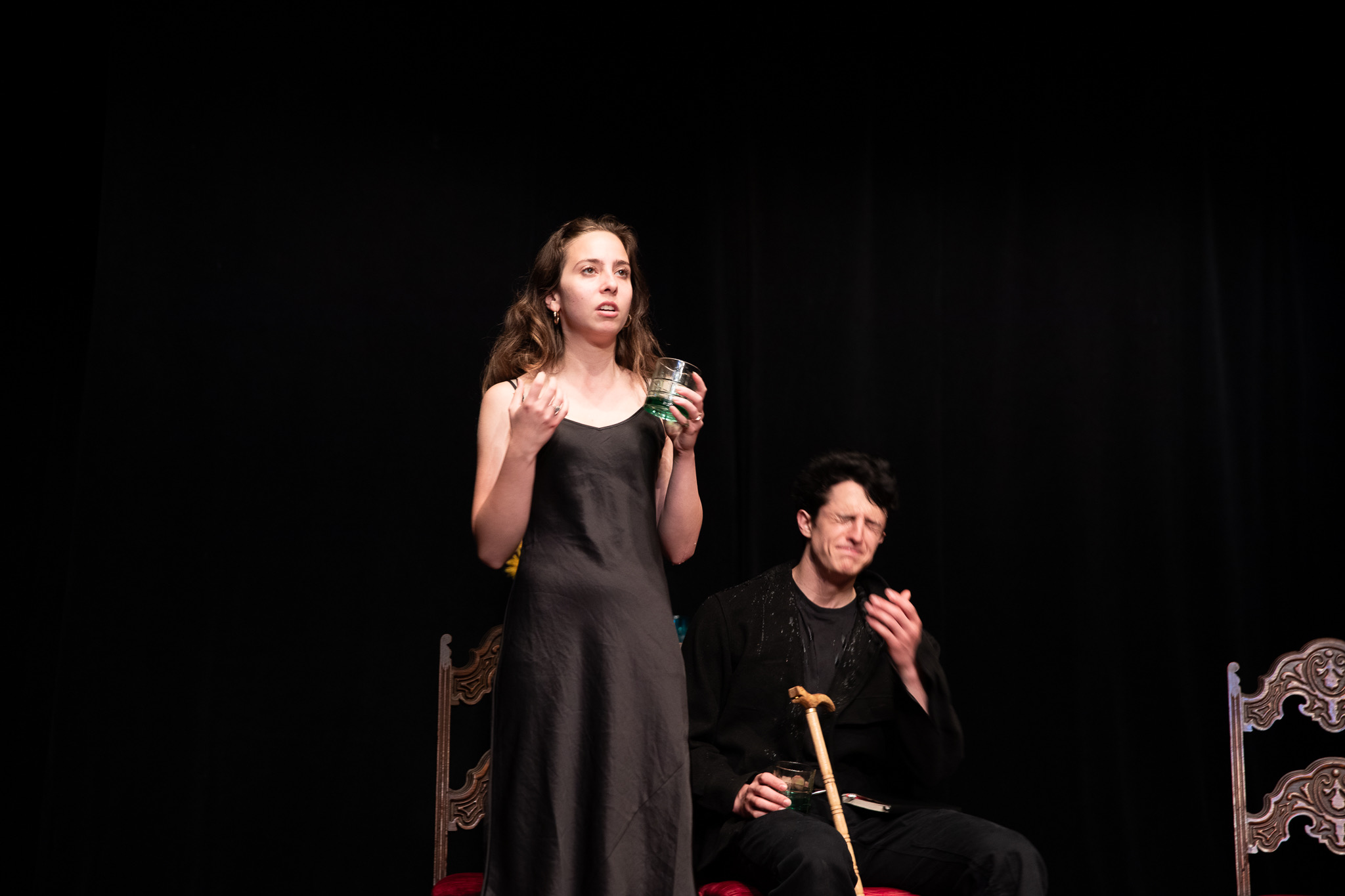
Argyriou’s stage career maps that philosophy in action. In New York, she has portrayed Lena in The Insatiable, Masha in The Seagull, the Head of Security in Lysistrata White House, Mrs. Vaso in Papa Rum, Eleni in Second Ride, and Maria in Grandpa Has High Blood Pressure, along with multi‑character ensemble work in productions such as Outside/In. These roles have taken her to spaces including the Hellenic Cultural Center, HB Playwrights Theatre, Thespis Theatre, Unpolished Theatre, Vino Theatre, The Maker’s Space, and The Tank, placing her squarely in the ecosystem where new voices, international perspectives, and experimental forms collide.
On these stages, versatility is not just about range of genre; it is also about language and sound. Argyriou is fluent in Greek and English, with a native Greek accent and international English as well as additional dialects, allowing her to move between cultural contexts without breaking the truth of a character. Whether inhabiting a classical role in an English‑language production or grounding a contemporary Greek comedy in Astoria, she uses accent and vocal color as tools to locate each character precisely in their world.
Her physical background adds another dimension. Years of competitive swimming, soccer, basketball, and horse riding, combined with improvisation and heightened physical and comedic training, give Argyriou’s performances a kinetic confidence. On stage, that translates into bold, committed choices that feel rooted in real physical experience; on screen, it becomes a finely tuned awareness of how small shifts in posture and gesture read in the frame.
Building a Breakout Trajectory
Beyond the festival circuit, Argyriou’s screen work includes earlier projects in London and a growing slate of New York–based film and commercial roles. A recent turn as an influencer character in a B&H campaign showcased her ability to inhabit contemporary, media‑savvy personas with natural ease. The leap from Chekhovian melancholy to modern content culture might seem wide, but for Argyriou it is all part of the same craft: building characters whose inner logic is sound, whose physical life is specific, and whose presence feels real whether the audience is in a black box theater or scrolling on a phone.
What truly ties her choices together is the kind of material she seeks out. Argyriou is drawn to stories that balance humor with emotional depth, explore complex interpersonal dynamics, and center contemporary and underrepresented perspectives, particularly in cross‑cultural, immigrant, and diaspora contexts. That focus has led her toward ensemble‑driven projects where collaboration is key and where actors are invited to participate in shaping the tone and rhythm of the work rather than simply executing a preconceived plan.
As she looks ahead to upcoming productions such as Sexy Sadie at The Maker’s Space and Ice Cream for Breakfast at Vino Theatre, Martha Argyriou stands at an inflection point. Her résumé already reflects festival recognition, a deep bench of New York stage credits, and an increasingly visible on‑camera presence. The combination of academic insight, classical technique, multilingual fluency, and international experience positions her as an up‑and‑coming actress with far more than promise as she brings a fully formed artistic perspective to every room she enters.
In an industry hungry for performers who can carry the weight of complex, character‑driven narratives, Argyriou’s profile is hard to ignore. She represents a new kind of screen and stage presence, one forged at the intersection of psychology and performance, discipline, and improvisation, local stages and global stories. For audiences and collaborators alike, the most compelling question is not whether she will break through, but just how far this blend of indie grit and classical grounding will take her.