
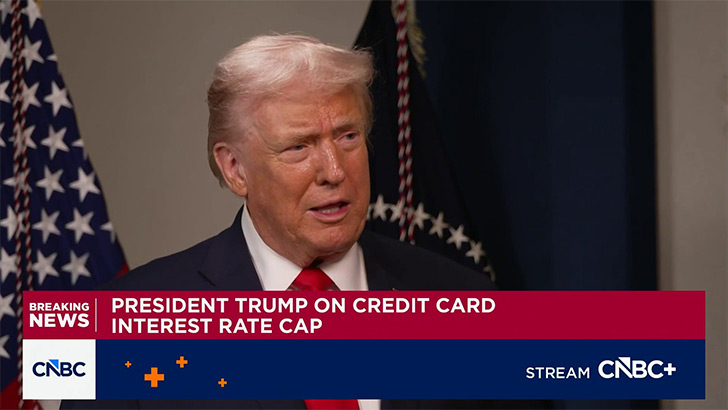
A new proposal by the Trump administration to cap credit card interest rates at 10% is gaining attention in Washington. Supporters say it would give relief to Americans dealing with rising costs and growing debt. On paper, the idea seems simple: lower rates should mean lower monthly payments.
But according to Ari Page, a business credit expert and the founder of Fund&Grow, the reality may be far more complicated.
In his recent analysis, Ari Page warns that this type of policy could actually harm the very people it is meant to help. He explains that while a rate cap may offer short-term relief, it could quickly lead to long-term consequences that restrict access to credit and weaken the economy.
Understanding How Credit Cards Really Work
To understand the issue, Page says we first need to look at how credit card companies operate.
“A credit card company makes money by giving you access to capital, and charging you interest while that debt remains outstanding.”
This system is built around risk. Lenders use credit scores to decide how likely a borrower is to repay their debt. The higher the score, the lower the risk, and usually the lower the interest rate. The opposite is also true.
“That’s because your credit score is a proxy for risk to the lender.”
Page explains that lenders must balance risk carefully. If too many borrowers fail to repay their loans, the company loses both the interest it expected to earn and the original money it lent out.
“This is necessary because a single default can wipe out all of the profit generated from dozens of accounts that pay on time.”
In other words, the current system spreads risk across many borrowers. Higher interest rates for riskier borrowers help cover the losses when some accounts fail.
The Math Behind the Industry
Page argues that the biggest issue with a 10% cap is simple: the numbers do not add up.
“The math simply doesn’t work,” he explains
Page breaks down the real costs lenders face. First, banks must pay to borrow the money they lend out. This cost is tied to the Federal Reserve’s prime rate, which he notes is currently 6.75%.
Then there are operating expenses. Running a credit card program involves staffing, fraud prevention, and customer service. These costs add another 4% to 5%.
Finally, lenders must account for borrowers who do not repay their debt. This is called the charge-off rate. For subprime borrowers, Page cites that the NY Fed reports a rate of 9.3%.
When these costs are combined, the total cost to lend money reaches over 20%.
“If the government forces banks to cap interest rates at 10%, a lender would take a guaranteed 10% loss on every dollar lent to a subprime borrower.”
Even for borrowers with strong credit, the numbers still do not work.
“Under a 10% cap, lending to a prime borrower is still a guaranteed loss.”
This creates a major problem. If lenders cannot make a profit, they cannot continue offering credit in the same way.
What Happens If the Cap Is Enforced
Page believes that lenders would quickly adjust their behavior if a cap were introduced.
“Credit card companies would be forced to change how they offer credit, or more precisely, who they offer it to.”
The most likely outcome is that lenders would stop offering credit to higher-risk borrowers. These are often the people who rely most on credit cards during tough times.
“Due to the risk, they would immediately drop clients with lower credit scores because they’re the most likely to default.”
As a result, access to credit would shrink. Instead of helping more people, the policy could leave many without any access at all.
“This means only borrowers with the absolute highest credit scores would be able to get credit.”
Business owners often depend on access to credit, both to fund activities needed to scale a business and to keep the business afloat during lean times.
David Bell, who runs the national workplace drug testing company USA Mobile Drug Testing, says, “Access to business credit gives me the flexibility I need to adapt to rapidly changing market conditions. I believe this proposed cap on interest rates would eliminate or severely reduce my access to the capital I need, when I need it most, and that puts me, my employees, vendors, and clients at risk.”
Another business owner, Tatiana Zagorovski, who is both a real estate investor and a business technology expert, warns that many entrepreneurs rely on credit for acquisitions, and anything that limits that can devastate their businesses.
“She explains, “I use credit cards for the things you’d expect, like software, supplies, and memberships, but most people don’t realize that entrepreneurs also use this type of credit to purchase real estate, which is a foundational part of my business.”
Lessons From Past Rate Caps
Page points to real-world examples to show how rate caps can affect credit access.
When states like Illinois and South Dakota set caps at 36%, the results were clear. Subprime borrowers saw their debt balances drop, but not because they paid off debt. Instead, they lost access to credit.
“A New York Fed study found that subprime borrowers in those states saw their debt balances decline by nearly 17%, and the number of open accounts dropped by 20%.”
Page warns that a 10% cap would have an even stronger impact.
“If a 36% cap causes that much damage, a 10% cap would obliterate the market.”
Industry estimates suggest that up to 85% of credit card accounts could be closed or reduced under such a policy.
The Ripple Effect on the Economy
The effects would not stop with individual consumers. Page says the broader economy could also suffer.
Small businesses, in particular, depend heavily on credit cards. Many use them to cover expenses, invest in growth, and manage cash flow during slow periods.
“If consumer credit is restricted, small business credit is simultaneously choked off.”
Without access to credit, businesses may be forced to cut costs. This could lead to layoffs and higher unemployment.
“Without access to this credit, many will be forced to make layoffs, which means an increase in unemployment.”
Page describes this as a dangerous cycle. Less credit leads to less spending, which slows the economy further.
“It creates a dangerous downward spiral.”
Other Hidden Consequences
There are also smaller, but still important, effects to consider.
To stay afloat, banks would likely eliminate rewards programs such as cash-back offers and travel perks. These benefits are often funded by interest revenue.
“And as a side effect, banks would immediately eliminate all cash-back and travel rewards programs just to survive the losses.”
While these perks may seem minor, they are a key part of how many consumers use credit cards today.
A Deeper Issue: Financial Literacy
Page also highlights a larger problem behind the debate: a lack of financial understanding among the public.
“Unfortunately, most people lack basic financial literacy, so they don’t understand this and many other financial topics.”
He argues that this makes it easier for policymakers to promote ideas that sound helpful but may have unintended consequences.
“It’s also why absurd ideas like capping credit card rates make it so easy for politicians to win votes by proposing them.”
A Dire Warning About Government Intervention
At the core of Page’s argument is a broader concern about government involvement in the economy.
“Our economy today is shaky. There’s no debate on that. But the solution isn’t more government intervention—that’s the cause.”
He believes that artificial limits on pricing can disrupt the balance of the market and create more harm than good.
“Putting an artificial cap on interest rates will only hurt the people it’s being proposed to supposedly protect.”
The idea of capping credit card interest rates may sound appealing, especially during times of economic stress. Lower rates promise relief and fairness. But as Ari Page’s analysis shows, the reality is more complex.
By ignoring the basic math and risk behind lending, a 10% cap could reduce access to credit, hurt small businesses, and weaken the broader economy.
The debate over interest rate caps is likely to continue. But if Page is right, policymakers may need to look beyond simple solutions and consider the deeper impacts before moving forward.