Each year, oncology generates a volume of data that far exceeds what any one physician can meaningfully absorb. Across disease sites, studies introduce new combinations, refine existing regimens, and explore increasingly narrow molecular subsets. The sheer scale of output creates a paradox: more information does not automatically translate into clearer decisions.
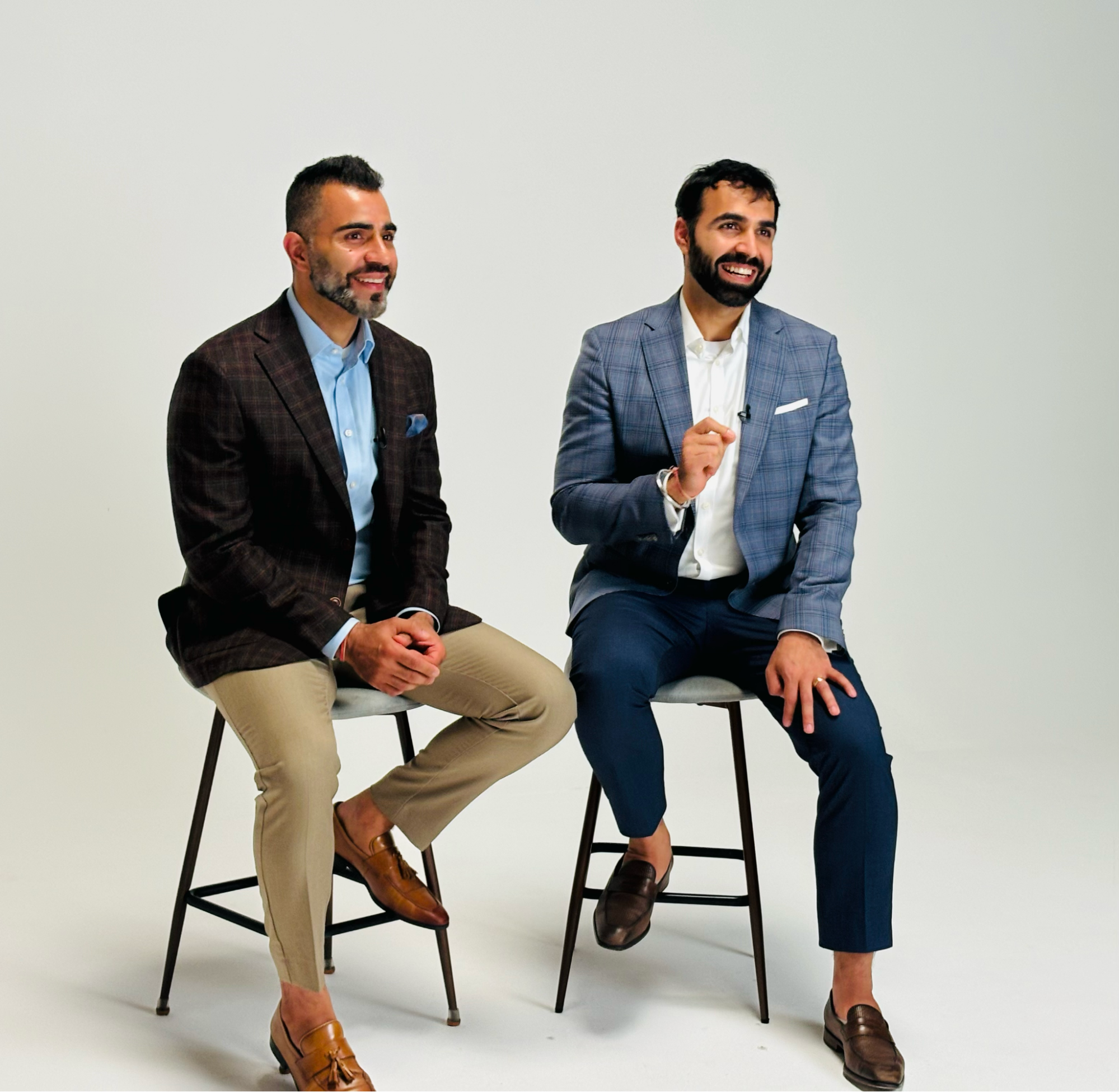
For Rahul and Rohit Gosain, the question is never how much data was presented. It is how much of it changes what they recommend to a patient the next morning.
On their Oncology Brothers platform, Drs. Rahul and Rohit Gosain turn this mindset into a repeatable framework: before, during, and after each major conference, they scan thousands of abstracts but only elevate those that will realistically change what a community oncologist does in clinic on Monday morning. This is the filter behind their “Practice-Changing Highlights” series across breast, gastrointestinal, genitourinary, lung, and hematologic cancers.
In an environment defined by volume, their emphasis is not reaction. It is prioritization.
Not Every Positive Study Changes Practice
A study can meet its primary endpoint and still not be practice-changing. This distinction is critical. Statistical significance alone does not guarantee clinical impact.
When reviewing conference data, the first layer of filtering involves understanding the endpoint. Was overall survival improved, or was the signal limited to progression-free survival? Was the trial powered appropriately? Were the results consistent across prespecified subgroups? How mature is the follow-up?
For example, in their GI conference discussion, they highlight how some trials reinforce existing standards rather than redefine them. A study may confirm that current management remains appropriate. That confirmation is valuable but does not require immediate algorithm modification.
Practice-changing data must clear a higher threshold than statistical positivity.
Endpoint Hierarchy Matters
In oncology, not all endpoints carry equal weight. Overall survival remains the most definitive measure of benefit. Event-free survival, disease-free survival, and progression-free survival provide meaningful signals but require context. Response rate can be compelling in certain refractory settings but insufficient in curative-intent disease.
When filtering abstracts, the Oncology Brothers prioritize trials demonstrating survival improvement, particularly when the benefit is clinically meaningful in absolute terms. A hazard ratio must be interpreted alongside median differences and real-world implications.
An improvement measured in weeks may not justify increased toxicity. An improvement measured in years may.
This endpoint hierarchy prevents overreaction to early signals.
Patient Population Defines Relevance
Another critical filter involves applicability. Conference presentations frequently focus on highly selected patient populations defined by biomarker status, prior treatment exposure, or geographic enrollment patterns. While these studies advance knowledge, their immediate relevance to broad community practice varies.
A therapy studied exclusively in patients with a rare molecular alteration may affect a small subset of clinic patients. That does not diminish its importance, but it shapes how urgently it must be incorporated.
Similarly, results from single-country studies or resource-rich academic environments may require adaptation before translation into diverse community settings.
Filtering requires asking not only “Is this positive?” but “Who does this help, and how often will I encounter that scenario?”
Reproducibility and Consistency
One conference presentation rarely settles a question definitively. The Oncology Brothers often examine whether findings align with prior data or contradict established evidence. A single positive trial that diverges sharply from earlier studies may warrant caution until further confirmation emerges.
Conversely, when multiple independent trials point in the same direction, confidence increases. Consistency across disease sites, lines of therapy, or related mechanisms strengthens the case for adoption.
This broader contextualization prevents impulsive shifts based on isolated results.
Safety Profiles in Context
Even when efficacy signals are strong, safety must be interpreted carefully. Conference slides may summarize adverse events, but implementation requires deeper understanding. Are toxicities manageable with routine monitoring? Do they require subspecialty coordination? Are discontinuation rates high?
Filtering includes assessing whether the benefit-to-risk ratio supports widespread use or selective application. A regimen with modest efficacy but significant grade 3 and 4 toxicities may remain appropriate for specific patients rather than becoming universal standard.
This step ensures that enthusiasm remains proportional to tolerability.
Reinforcing Current Standards
An often-overlooked outcome of large conferences is reinforcement. Many studies validate existing approaches, demonstrating that current standards remain appropriate. In their conference discussions, the Oncology Brothers explicitly identify these moments. Reinforcement prevents unnecessary churn in practice and strengthens clinician confidence.
Stability in oncology care is not stagnation. It reflects the cumulative strength of evidence supporting established regimens.
Recognizing reinforcement as a positive outcome is part of disciplined filtering.
From Abstract to Algorithm
The journey from conference abstract to clinical algorithm requires more than presentation. Data must undergo peer review, regulatory assessment, guideline incorporation, and real-world observation. Insurance coverage and institutional protocols must align.
By the time a study meaningfully changes treatment, it has typically survived multiple layers of scrutiny. The Oncology Brothers’ approach mirrors that progression. They spotlight findings that appear poised to alter standards while clearly identifying those that remain exploratory.
This measured evaluation protects against premature adoption while ensuring readiness when evidence matures.
Precision Over Volume
The sheer number of abstracts presented at oncology conferences can create the illusion of constant upheaval. In reality, progress is incremental and selective. Each year brings meaningful advances, but only a handful redefine care pathways.
Filtering through the noise takes judgment, experience, and a clear sense of what really matters for patients. The Oncology Brothers bring that lens to their podcasts, videos, and live events, so community oncologists can quickly see which studies actually deserve a place in their day-to-day practice and how to plug them into real-world treatment pathways. In a world where every major meeting generates hundreds of abstracts, their aim is straightforward: make sure the few that truly move the needle for patients don’t stay in the plenary hall, but show up in the community clinic.