
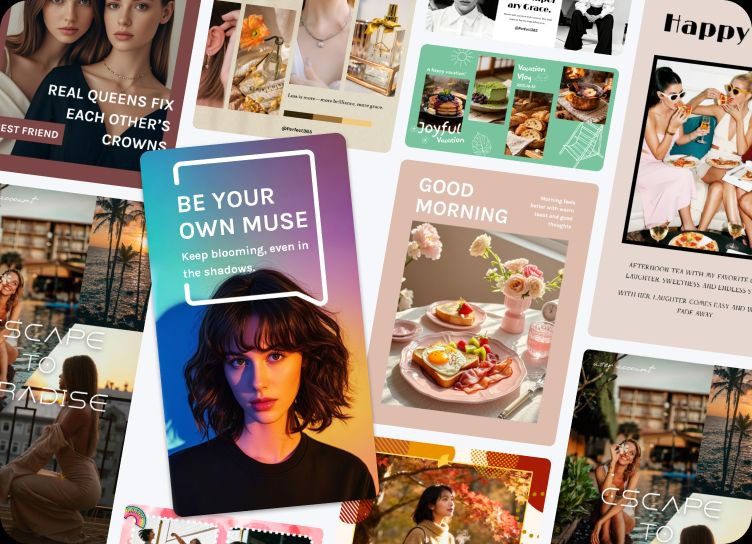
Perfect365, best known for its consumer beauty-editing tools, is moving into a broader category of visual creation with the release of DesignAI. The tool is a browser-based editor that focuses on speed, simplicity, and low friction, all of which reflect how visual content is produced today. The timing is deliberate. The holiday season typically brings a spike in social posts, digital promotions, and event announcements, which has created demand for tools that let users create clean graphics with minimal ramp-up time.
DesignAI opens immediately in a browser, requires no login, and offers templates sized for major platforms. That puts it in direct conversation with a growing segment of users who want professional-looking visuals without navigating the complexity of full design software. This shift also signals that Perfect365 sees opportunity beyond face filters and photo effects, extending its brand into the broader workflow of digital communication.
A Tool Designed to Remove Friction From Basic Visual Work
DesignAI’s strongest feature is its emphasis on reducing the steps required to make a usable graphic. Rather than asking users to start from a blank canvas, the editor presents presets already matched to Instagram, Facebook, TikTok, and other common formats. This addresses a straightforward but persistent issue: most people do not struggle to come up with an idea, they struggle with the time required to format it correctly across platforms.
Seasonal templates are also central to the launch. Perfect365 has stocked the tool with updated designs for major holidays, a practical move given the volume of content posted during the final months of the year. Instead of promoting the idea of “festive creativity,” DesignAI positions these templates as quick solutions for users who need to publish announcements, invites, or promotions without treating design as a full project.
AI-assisted features such as background removal and automatic adjustments further streamline the workflow. These tools are not presented as artistic enhancements but as utilities that speed up repetitive steps. For most users who only need graphics for simple posts or small-scale branding, these shortcuts eliminate the need to learn a deeper toolset. It reflects a larger trend in design software, where efficiency has become as important as capability.
A Strategic Shift for a Company Known for Mobile Beauty Tech
DesignAI also represents a notable pivot in platform strategy. Perfect365 built its reputation through mobile-first products that focused on personal aesthetics. By creating a desktop-optimized browser editor, the company is targeting a different kind of user: someone who produces content in batches, works across multiple tabs, and prefers a larger screen for layout work. That change signals an understanding that modern visual creation often happens in the same place as email, analytics dashboards, and social scheduling tools.
The no-account model is equally strategic. It lowers the barrier to trial, making it easy for users to test the tool at the exact moment a design task comes up. This approach mirrors the shift toward lightweight, instantly available creative utilities that have become popular among small businesses, students, and independent creators.
Perfect365 plans to offer DesignAI for free for a limited time, which broadens the potential user base during the highest-volume posting period of the year. The real test will come later as the tool competes with established platforms that offer deeper feature sets or long-term familiarity. What Perfect365 brings to the table is speed, an uncluttered workflow, and a focus on helping users complete straightforward visual tasks without requiring them to become designers.
DesignAI positions Perfect365 in a different corner of the market than its beauty-tech origins, aligning the brand with the growing category of fast-turnaround visual tools. If the editor finds adoption, it may signal that users increasingly value immediacy over complexity in their everyday design work.