
The United States is approaching an unprecedented energy crossroads. Demand is accelerating in ways the grid was never built to withstand. Data centers are multiplying. Artificial intelligence systems require massive amounts of electricity. Electric vehicles are reshaping residential consumption. Much of the national infrastructure was constructed generations ago and now faces mounting strain.
This is not a distant problem. It is a present one. The country needs a faster path to energy resilience, yet the systems required to get there remain fractured and slow.
Within this landscape emerges a surprising figure. Not a longstanding energy executive. Not a policy leader. Instead, he is a Brazilian entrepreneur who arrived in Massachusetts to learn English and ended up studying the fragility of America’s energy future with uncommon urgency.
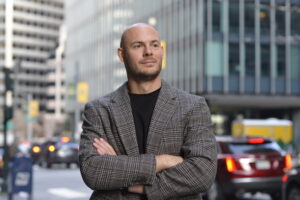
His name is Gabriel Espindola, and his company, Sunate, is quietly becoming a foundational tool for the next chapter of renewable energy adoption.
The Vision: A Founder Motivated by National Energy Security
Espindola’s purpose is grounded and clear. He believes the United States is heading toward an energy shortage without sufficient near-term solutions. Nuclear power will take years to scale. Hydropower offers limited expansion. Natural gas remains volatile due to export demands. Large infrastructure projects are hindered by extensive permitting and construction timelines.
Solar is the only solution ready to scale quickly enough to provide relief.
To Espindola, the question is not whether solar can help stabilize the country’s grid. The question is whether the industry has the operational tools necessary to deploy installations at the pace the country now requires.
Sunate is his answer to that question. It is a platform designed to help solar companies sell more, install faster, and ultimately accelerate the adoption curve that will support national resilience.
Sunate: A Technology Platform Designed to Accelerate Adoption at Scale
Sunate emerged from Espindola’s deep dive into the solar sales process, where he discovered the overlooked bottleneck slowing the entire industry. Most solar companies rely on door-to-door outreach. Sales representatives spend hours speaking with homeowners only to learn that many roofs are too old, too shaded, or structurally incompatible with solar. Worse, in some neighborhoods, the electrical infrastructure itself cannot support additional solar load.
The problem was not demand. It was data.
Sunate solves this by consolidating public data, satellite imagery, internal datasets, and computer vision into a single algorithm. Before a salesperson contacts a homeowner, Sunate identifies:
- Roof age and condition
- Structural orientation and shading indicators
- Average electricity bill
- Homeowner information and verification
- Permit history
- Street-level transformer capacity and infrastructure limitations
This transforms the sales workflow. Instead of guessing which homes qualify, representatives focus on viable properties. One early customer recorded a four times increase in successful deals.
Sunate’s roadmap extends beyond sales. The company plans to automate permitting, documentation, and communication with utilities using AI-driven agents. The long installation timeline that frustrates both homeowners and installers is being redesigned with precision.
Sunate is not simply a tool. It is renewable infrastructure, built to help a critical sector move with the speed that the current moment demands.
From Brazil to the U.S.: A Founder with a Global Perspective on Renewable Energy
Espindola’s path into the American renewable sector is as unexpected as it is compelling. He grew up in a poor neighborhood in Brazil, a place where technology entrepreneurship was a distant idea. He speaks candidly about navigating challenges that shaped his determination. His mother taught school. His father worked in law enforcement. The odds were not designed to produce a founder building technology for the American energy grid.
After selling his first startup and completing the handoff, he moved to Massachusetts so he could learn English and better understand the world beyond the one he grew up in. While taking language classes twice a week, he began attending public energy lectures at Harvard and immersing himself in the architecture of the U.S. grid.
He was learning two languages at once. English, and the technical intricacies of renewable infrastructure.
His international background now gives him a rare lens. He sees the vulnerabilities of the U.S. energy system with clarity, yet he also views the country with gratitude and possibility. That combination shapes Sunate’s mission and contributes directly to the company’s national relevance.
Early Traction: VC Investment, Product Roadmap, and Strategic Positioning
Sunate incorporated in 2025 and launched its product only months later. The company quickly expanded to other states in the country and increased revenue by 150% month over month. Its early momentum caught the attention of Antler New York, one of the largest early-stage venture capital firms in the world.
Antler manages one billion dollars in global capital and is known for backing companies that tackle complex structural issues. Sunate’s acceptance into the portfolio serves as both validation and acceleration. The firm’s extended network, which recently grew to include leaders such as Eduardo Saverin, adds further strategic weight to the company’s trajectory.
The team now plans to expand its platform, deepen its automation engine, and build the operational technology required to support solar adoption at scale.
Thought Leadership: Why Renewable Energy Needs Founder-Led Voices
Espindola understands that building a platform is only one part of his responsibility. The solar industry is burdened by cultural misconceptions and political narratives that distort its purpose. Many homeowners reject solar before learning the facts. Some distrust the technology. Others misunderstand its impact.
He believes the industry needs founders who can speak across these divides. Voices that can make solar less political and more practical. Voices that can explain why renewable adoption is critical for energy independence. Voices that can humanize the long-term stakes.
He hopes to become one of those voices. Not as a spokesperson for a trend, but as an educator committed to national resilience.
Closing: A Founder Working to Build the Future of American Energy
Espindola does not describe his mission with fanfare. He explains it calmly, as someone who has spent countless hours studying the problem and mapping the solution. He envisions a future in which solar adoption rises quickly enough to support the country’s shifting demands. A future that gives nuclear and hydrogen technologies the time they need to mature. A future where American innovation is not limited by energy scarcity.
Sunate is the system he is building to support that vision. A platform designed to strengthen the country by empowering the companies that bring renewable energy to American neighborhoods every day.
In a moment defined by rising consumption and aging infrastructure, the United States needs founders capable of building technology that can scale with the stakes. Gabriel Espindola is one of them, working steadily to ensure that the country has the energy foundation required for the future it is racing toward.